
Using a music copyright checker is your first line of defense. Think of it as a bouncer for your SoundCloud channel. Before you premiere a track, this tool quickly checks if it's sneaking in uncleared samples or copyrighted material. A simple scan is the difference between a smooth premiere and a channel-killing copyright strike.
The short answer: a music copyright checker scans a track’s audio fingerprint against databases of released music and flags matches before you publish. Free tools like Mubert’s checker, TubePilot, and EasySong cover quick scans. For a SoundCloud channel, pair an automated scan with a manual metadata check on every submission.
Why copyright vetting protects your premiere business

When you run a premiere or repost channel, you are acting as a publisher. Every single track you upload carries a potential risk. If a submission from an artist contains an unauthorized sample, it's your channel that SoundCloud's automated systems will flag.
You are responsible for the content you distribute. Ignoring this can get expensive, fast. A proactive approach is essential for any channel owner who treats premieres and reposts as a business.
The real risks of uncleared music
A single bad track can set off a chain reaction that threatens your channel. Let's look at the primary copyright risks channel owners face. A checker directly helps reduce these risks.
Quick Guide to Copyright Risk for Premiere Channels
| Risk Type | Potential Consequence | How a Checker Helps |
|---|---|---|
| Copyright Strikes | Too many strikes lead to SoundCloud suspending or permanently deleting your channel. Years of work, gone. | Identifies infringing content before you upload it, preventing strikes from happening in the first place. |
| Takedown Notices | Your premiere gets removed, sometimes hours after going live. This looks unprofessional to your audience and the artist. | Flags potential issues during your vetting process, giving you a chance to reject the track or ask for clearance. |
| Reputation Damage | Labels and artists won't work with channels that get their music taken down. Your credibility plummets. | Shows you operate professionally and take rights seriously, building trust with high-quality partners. |
| Admin Headaches | Wasting hours dealing with disputes and contacting artists instead of curating music. | Reduces the time spent on damage control, freeing you up to focus on your premiere business. |
As you can see, the consequences are severe. A proactive approach is not just smart; it's essential for survival.
The risks in detail
The consequences of uploading infringing content are direct threats to your channel's stability.
- Channel Strikes and Takedowns: SoundCloud's Content ID system is automated. It finds and removes infringing content without warning. Accumulate enough strikes, and you'll face a temporary ban or permanent deletion.
- Loss of Credibility: Nothing damages your reputation faster than having tracks pulled. Serious labels and artists want reliable partners, not channels that put their releases at risk.
- Wasted Time and Effort: Dealing with takedown notices and frustrated artists is a massive administrative drain. It’s time you should be spending curating music and building your business.
Adopting a professional standard
Viewing copyright vetting as a core business function is the mental shift that separates a hobbyist from a professional. It’s a proactive step that builds immense trust with the high-quality labels and artists you want to work with. They appreciate a channel that takes rights management seriously.
For example, the Netherlands has a foundational copyright law from 1912. A 2019 court ruling made it clear: even a two-second sample requires explicit permission. This highlights why you cannot make assumptions about what is allowed.
By putting a solid checking process in place, you create a safe harbor for your business. You can accept submissions, collect payments, and run your channel with confidence. That is what it means to run your premiere channel like a real business.
Differentiate between checker tool types
Not all copyright checkers are created equal. As a channel owner, knowing the difference between the tools separates a professional vetting process from a risky guess. Your choice of tools will come down to your submission volume and risk tolerance.
Audio fingerprinting checkers
This is your first and most powerful line of automated defense. Audio fingerprinting tools create a unique digital “fingerprint” of any track you submit. They run that fingerprint against a massive database of copyrighted songs.
The process is incredibly fast. It’s brilliant at finding direct matches. If an artist submits a track that uses an exact copy of a commercial song, a fingerprinting checker will almost certainly flag it.
How Audio Fingerprinting Works:
- Analysis: The tool scans the acoustic properties of the audio file.
- Fingerprint Creation: It generates a one-of-a-kind digital signature based on the sound itself.
- Database Comparison: This signature is then compared against a vast library of existing fingerprints from known copyrighted works.
- Match Reporting: If a match is found, the system reports it, often with details on the original track.
This technology acts as a high-speed filter. It’s perfect for catching the most blatant infringement before it ever gets near your channel.
Metadata and PRO database searches
While fingerprinting is great for what you can hear, another layer of diligence comes from checking what you can see. This includes the track’s metadata and its registration status with a Performance Rights Organisation (PRO). This is a more hands-on process but uncovers crucial ownership information.
An International Standard Recording Code (ISRC) is a unique code assigned to every official sound recording. If a track has an ISRC, it’s a clue that it has been professionally registered. You can use simple metadata-reading software to check submitted files for these codes.
Beyond that, you can manually search the databases of PROs like SENA in the Netherlands. These organizations manage performance rights for artists and labels. If an artist or track shows up in a PRO database, it confirms their professional standing.
Understanding the role of these groups is vital. For example, performance rights in the Netherlands consistently make up around 20% of the country's total recorded-music income. This figure from SENA, the Dutch neighbouring rights society, highlights the massive economic role these rights play. You can learn more about these revenue structures from SENA's own reporting.
Distinguishing between tool types
An audio fingerprinting tool is the machine that scans a suitcase for banned items. A metadata or PRO search is the customs agent who checks your passport and travel history. They are verifying identity and background.
Both are essential for a complete check.
Key Takeaway: A solid vetting workflow combines automated speed with manual diligence. Use audio fingerprinting to screen every submission for obvious copies. Then, use metadata and PRO searches for a deeper dive. This two-step process gives your channel a much stronger shield against copyright issues.
The best music copyright checker tools in 2026
Knowing the tool types is half the job. Here are the checkers that actually get used, and what each one is good at.
Mubert copyright checker is a free upload-and-scan tool aimed at YouTube creators. Drop in a file and it reports whether the track is likely to trigger a Content ID claim. Fast and free, but tuned for YouTube’s database rather than SoundCloud’s.
TubePilot copyright music checker works the same way and is popular with video editors who need a quick yes or no before publishing. Good for spot checks, light on detail in the match report.
EasySong comes at it from the licensing side. Instead of scanning audio, it searches song ownership records, which makes it the right tool when you know the track title and need to find who controls the rights or how to license a cover.
ACRCloud is the professional option. Its audio fingerprinting API powers many of the free checkers above, and it offers direct file scanning with detailed match reports. If you vet a high volume of submissions, this is the database most worth paying for.
YouTube Content ID is not a standalone checker, but uploading a track as unlisted is a common free workaround: if Content ID flags it there, you can expect trouble everywhere else too.
For a premiere channel, the practical setup is one fingerprinting tool for the automated scan plus a metadata search for anything the scan misses. The workflow below shows how to chain them.
Build an actionable vetting workflow for submissions
If your inbox is a chaotic mess of email threads, it's time to build a real process. Moving from amateur to pro means having a repeatable system. A solid vetting workflow combines automated checks with human review to build a shield for your channel.
This system signals to artists and labels that you run a professional operation, which attracts higher-quality music. It also creates a defensible record for every track, giving you peace of mind. Let's break down a simple, three-stage workflow.
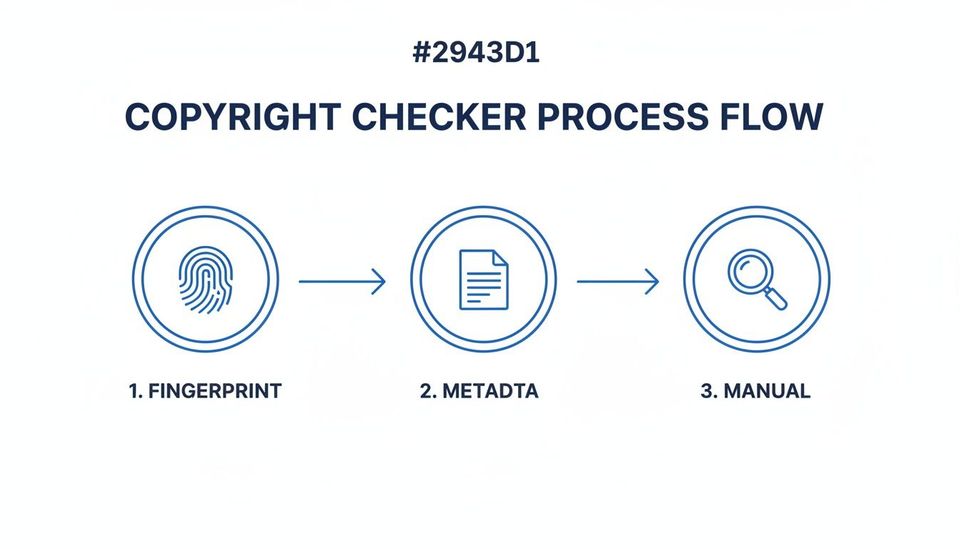
This process layers your checks-automated, metadata, and manual-to catch issues before they become your problem.
Stage 1: The initial automated scan
Your first line of defense must be fast and automatic. The second a track lands in your system, it should hit an audio fingerprinting service. This is your high-speed filter.
This step immediately catches tracks that lift direct, unaltered samples from major commercial releases. It weeds out a huge number of risky submissions with zero manual effort. Make this step non-negotiable for every track.
Stage 2: The manual metadata review
Once a track clears the automated scan, it’s time for a quick human check. This is not a deep forensic analysis. It's about letting a trained eye spot red flags that automated tools can miss.
Here’s what you’re scanning for:
- Complete Information: Artist name, track title, label info. Missing info is your first sign something is off.
- ISRC and IPI Numbers: An ISRC (International Standard Recording Code) is a good sign. It suggests the track has been officially registered.
- Consistent Naming: Does the file name match the title in the submission form? Mismatches can mean simple disorganization or an attempt to hide a track's identity.
- Artwork and Credits: Are all producers and featured artists credited? Missing credits are a massive warning sign for future ownership disputes.
Pro Tip: Create a simple checklist for your manual review. This standardizes the process, ensuring you don't miss a critical detail when you’re busy. It turns a random glance into a professional quality check.
Stage 3: Communicating for documentation
What happens when a track gets flagged? You don't just hit "reject." This is where you communicate professionally.
Reach out and be specific. Avoid accusatory language. You're a curator with a standard to maintain. For tips on spotting other issues, check our guide on using a fake followers checker.
Here’s how you can phrase your requests:
- For Flagged Samples: "Our copyright check flagged a potential sample in your track. Could you send over the documentation confirming you've cleared the rights? A sample clearance letter or license agreement would be perfect."
- For Unclear Ownership: "To finish our vetting process, can you please confirm you hold all necessary rights for this track? If there are other rights holders involved, we'll need their confirmation as well."
This kind of structured workflow replaces a backlog of DMs with a clean, manageable booking system. It's why platforms like Premierely exist-to handle the entire process from submission to scheduling in one dashboard.
When you establish these steps, you’re not just posting music anymore. You’re running a business.
Automate copyright checks within your booking platform
Manual copyright checks are a total time sink. They break your focus and create a bottleneck. The real goal is to build that copyright check right into your submission process.
This turns a chore into a smooth, automated part of your operation.
When you use a dedicated premiere booking platform, you bring your whole workflow under one roof. You get a single, efficient system that not only cuts your booking admin from hours to minutes but also builds a professional record. A smart submission process is a non-negotiable part of any professional music submission platform.
Creating the first layer of accountability
Your submission form is the front door to your channel. That makes it the perfect place to set copyright rules from the start. This is your first chance to set clear expectations with artists and labels.
The most direct way to do this is with a mandatory checkbox. Before anyone can send you a track, they must click a box confirming they own or control all necessary rights.
By requiring submitters to attest to ownership, you're creating a contractual agreement. This simple step shifts initial responsibility to the person submitting the music and creates a documented record of their claim.
This simple action acts as your first filter. It forces submitters to stop and think about whether they've cleared that sample or if their co-producer has signed off. It can weed out problems before they ever hit your inbox.
Integrating automated scans upon submission
An artist's word is a good start, but verification makes your process bulletproof. The real power move is integrating a music copyright checker directly into your submission workflow. The best setup triggers an automated scan the second a track gets uploaded.
This whole process should be invisible to the artist but visible on your dashboard. As soon as their audio file lands, it gets sent to a third-party audio fingerprinting service. The results are then automatically attached to that submission in your system.
This integrated approach pays off immediately:
- Immediate Flagging: You know within minutes if a track contains copyrighted material. No more finding out days later.
- Reduced Manual Work: The system does the tedious work for you. This frees you up to focus on curation.
- Centralised Records: All info-the artist’s details, their copyright promise, and the scan results-is all stored in one clean, organised place.
Building a defensible record for every premiere
This automated system builds a complete history for every single track. Fast forward six months and imagine a copyright issue pops up. Instead of searching old emails, you pull up a single dashboard view.
That record will show:
- The exact time and date the track was submitted.
- The submitter’s explicit, timestamped confirmation that they held the rights.
- The clean, impartial result from your automated music copyright checker.
This level of detail shows you’re a professional who takes rights management seriously. It protects your channel by proving you have a consistent vetting process. For channel owners running premieres as a business, this kind of organised record-keeping is essential.
How to create a clear copyright policy for your channel
If you're running your premiere channel like a real business, you need a professional policy. Moving past informal chats to a clear, public copyright policy is a signal that you take your operation seriously.
A well-written policy tells artists and labels exactly what to expect. It lays out your rules, explains that you use a music copyright checker, and makes it clear what happens if a track doesn't pass. This document cuts down on arguments and attracts a higher caliber of submitter.
Core components of your copyright policy
Your policy needs to be simple and direct. The goal here is clarity, not confusion. It's about protecting your channel in a way everyone can understand.
At a minimum, your policy must hit three essential points:
- Zero-Tolerance on Infringement: Make it clear that you don’t touch tracks with uncleared samples or other copyright issues. This is the foundation of your policy.
- Your Right to Vet and Reject: State that every submission gets checked. You must explicitly reserve the right to reject any track that fails this check.
- Submitter Liability: The person or label sending you the music is 100% liable for any copyright claims that pop up. This clause shields your channel from the fallout of their mistakes.
Display this policy on your submission page. Make it a link or something they must acknowledge before sending a track. It immediately shows you’re a serious operator.
A sample copyright policy template
Feel free to adapt this template for your channel. The key is to keep it straightforward so there are no misunderstandings.
Our Copyright Policy
To protect our channel, our community, and the artists we feature, we enforce a strict copyright policy. All submissions must follow these rules:
We reserve the right to reject any submission that does not meet these standards. Thanks for helping us keep the community respectful and legally sound.
- Original Work Only: By submitting your music, you guarantee you own or control 100% of the rights to both the composition and the master recording.
- No Uncleared Samples: We scan every submission with a music copyright checker. Any track found with unauthorised samples will be rejected on the spot.
- Submitter Responsibility: You, the submitter, are solely responsible for the content you provide. You agree to hold our channel harmless from any and all copyright claims that may arise from your submission.
Setting a professional standard
Think of this policy as a filter. It instantly signals professionalism, which tends to scare off amateur submitters who are careless about rights. It attracts serious labels and artists who know the business and appreciate your diligence.
Showing you do your homework is more important than ever. A 2026 report noted that while music piracy in the EU has stabilized, audio ripping still makes up nearly half of all access to pirated music. A solid policy is your first line of defense.
Answer common copyright questions from channel owners
Even with the best vetting process, you will run into tricky copyright situations. It’s part of the job. You need fast, practical answers to protect your work.
Can I premiere a remix or a bootleg?
This is a big one, and the short answer is: probably not.
Remixes and bootlegs are a minefield. For a remix to be legit, the artist needs a formal license from every single person who owns the original. A bootleg is almost always just an unauthorized edit, making it an instant "no."
Unless the artist can hand you a PDF of the actual license agreement, you should reject the track. Don't take their word for it. Automated systems are ruthless at flagging the original song underneath, and the takedown risk is too high.
What if a track passes the checker but still feels "off"?
Your gut is one of the best tools you have. A music copyright checker is fantastic for catching obvious matches, but it has blind spots. It might not pick up on a heavily warped sample or a melody that’s been re-played.
If a track clears the scan but something feels off:
- Trust Your Instincts: Just say no. It’s always better to be too careful than to risk a channel strike.
- Ask for Proof: If you’re on the fence, ask for the project files. Ask them to show you how they made the sound.
- Check Their History: Does their profile look real? An empty profile with one banger track is a massive red flag.
Always remember your channel's reputation is on the line. A "no" based on instinct is a valid business decision.
How do I handle a copyright claim after a premiere?
It happens. Even with all your checks, a claim might get through. When it does, don't panic.
- Take the Track Down Immediately: Don’t argue. Pulling the content is the first step to preventing a formal strike.
- Contact the Submitter: Let the artist or label know about the claim. Point them back to your copyright policy.
- Don’t Play Mediator: It's not your job to figure out their legal mess. The responsibility is on the submitter.
- Document Everything: Keep a record of the claim notice and all your emails.
Is an "attribution" or "credit" enough to use a sample?
No. Absolutely not. This is one of the most common and dangerous myths in music.
Tossing a "credit to the original artist" in your SoundCloud description gives you zero legal protection. Copyright requires a formal, negotiated license, not a casual shout-out. Any artist who tells you "giving credit" is their legal justification should be shown the door.
Premierely helps you accept track submissions, collect payments, and schedule uploads – all from one dashboard. It turns your manual grind into an automated, professional system.