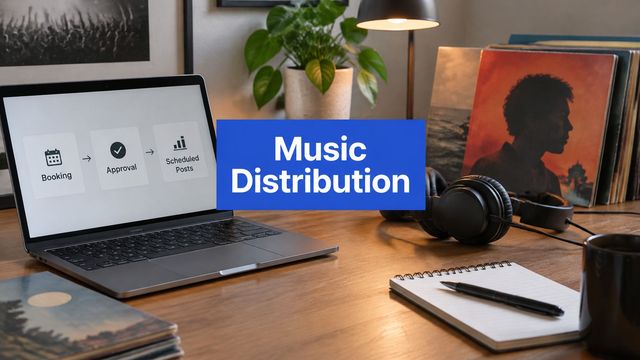

A label sends over a strong track on Monday. By Wednesday, the artwork is still stuck in DMs, payment has not cleared, and your repost slot for Friday is already half-booked. That is the core problem with music promotion platforms for music curators. Exposure is only part of it, because the real work is keeping submissions, approvals, payments, and publishing organized well enough to run the channel like a business.
That is the lens for this list. I’m judging each platform from the operator side: the person handling premiere requests, repost deals, gated downloads, and release timing across a busy inbox. Some tools help you get attention. Some help you run the actual workflow. Very few do both well.
The trade-off matters. A platform can be great for artist discovery and still be a poor fit for a curator who needs structured intake, payment collection, and scheduling. Others are useful higher up the funnel but add manual work once a track is approved. If you also build extra promo assets around releases, creating music videos using AI can support the campaign side around your drops.
More releases are competing for the same premiere slots, repost inventory, and audience attention. That puts pressure on your process.
If you are already feeling that pressure, it helps to map the full premiere workflow for curators before choosing tools. The best platform for your business model depends on what is slowing you down: getting better submissions, filtering them faster, collecting payment without chasing people, or making sure approved tracks go live on time.
1. Premierely
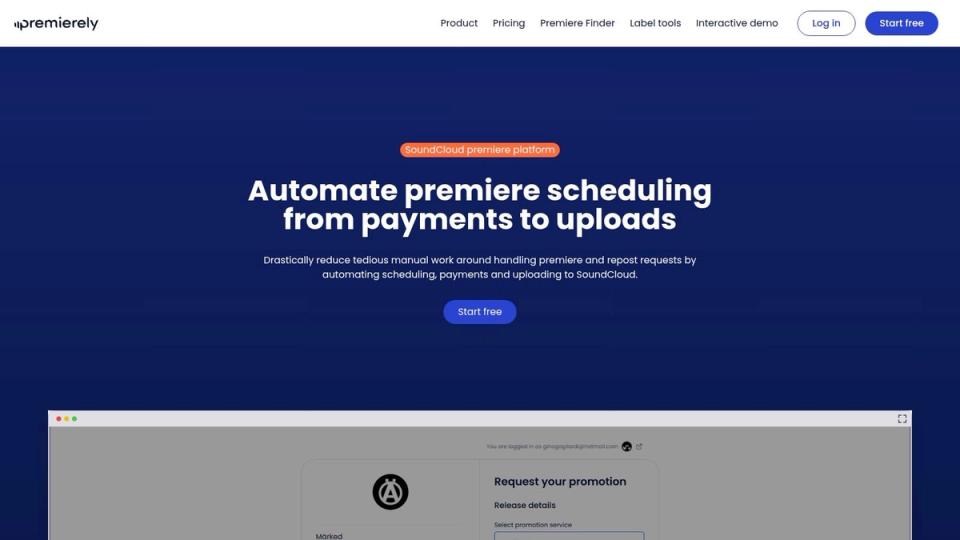
Premierely is the premiere booking system for music curators, and it is the one tool on this list built for the curator side of the deal rather than the artist side. Most music promotion platforms help an artist get attention. They do not help a curator take bookings, collect money, approve tracks, and publish on schedule across every channel the curator runs.
If your current setup is Gmail, DMs, a spreadsheet, a notes app, payment links, and manual uploads, Premierely replaces that with one queue. The booker fills in a fixed form, you listen and approve or reject, and the rest runs from that approval.
Why it fits premiere operators
The product is built around the workflow you already have. A booker sends the title and the track link through your booking page, pays on your storefront if you charge, and uploads the audio, artwork and press text only after you approve, so you never handle files for a premiere you turned down. Premierely formats the title and description to your channel's convention, puts the premiere on the calendar, and publishes it at the time you set.
That approval is also what separates Premierely from a spreadsheet. One approval schedules the premiere and publishes it to SoundCloud, Instagram and YouTube, with each render produced automatically from the artwork and the track: the audio goes to SoundCloud, a vertical Story goes to Instagram, and a landscape video plus a vertical Short go to YouTube, so you never export or upload anything a second time. On top of that, you can sell TikTok posts and stories as booking packages that you fulfil yourself. If you want the curator view on the workflow, this guide to a SoundCloud premiere is worth reading. If you also cut TikTok clips into your own promo edits, our free TikTok video downloader saves the clean MP4 without the watermark.
Practical rule: If you sell premieres regularly, admin will limit you long before demand does.
Another strength is that it treats the two-sided business properly. Labels and artists need a clean way to submit, and curators need control over scheduling and communication, where most tools only solve one side.
Where Premierely is strongest
- Booking workflow: A booking form and an approve or reject queue replace email requests.
- Payments: Storefront pricing with Stripe checkout, so the booker pays before anything is scheduled, or you run free premieres and skip pricing entirely.
- Scheduling: A calendar that keeps premieres and reposts from colliding.
- Publishing: One approval publishes the premiere to every channel you have connected, in the format each one expects.
- Audience capture: Download gates that require a follow, like, repost or comment, or an email address, before the download.
- Find leads: Tracks other curators declined enter a shared pool you can browse by genre for free. Claiming one so it books at your pricing is rolling out on Pro.
- Analytics, link in bio and a chat connector: Revenue and gate analytics, a link-in-bio page, and on Plus an MCP connector so you can run download gates from Claude or any MCP client.
The free plan is €0 with a 5% fee on paid bookings plus 21% Dutch VAT on that fee, and it caps you at one published booking a day, three active download gates, three paid inbound bookings a month and five link-in-bio links. Plus is €5 a month or €50 a year and lifts the gate and link caps. Pro is €10 a month or €100 a year, lifts the booking caps, and adds the Instagram, YouTube and TikTok side, revenue analytics, custom form fields and the AI title and description rewrite. Pro is free for the first 14 days and does not ask for a card, so you can run the paid workflow on a real premiere before you decide.
Trade-offs to know
Premierely is built for the curator side of the deal. If your business depends on artist discovery, broad ad buying or DSP campaign reporting, it is not trying to be that, and you will still pair it with a reach tool from this list.
The other trade-off is the plan split. Instagram, YouTube, YouTube Shorts, TikTok and the video overlay builder are all Pro features and some are still rolling out to accounts, while the free plan publishes one booking a day. The booking form, the approval queue, the calendar and SoundCloud publishing all run on the free plan, so the workflow works before you pay, and the multi-channel publishing is what you pay for.
2. Promote on SoundCloud
For SoundCloud specifically, our guide to the best SoundCloud promotion services goes deeper than this cross-platform roundup.
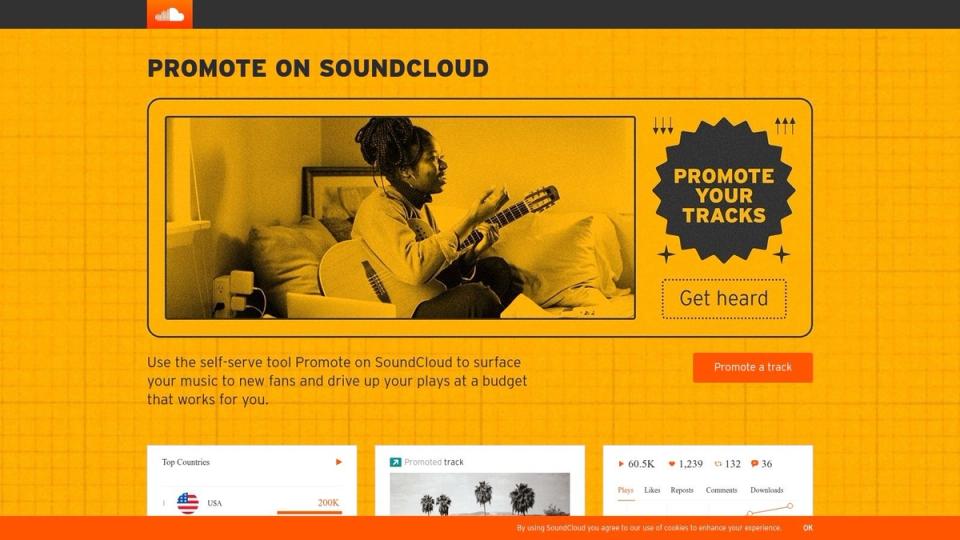
Promote on SoundCloud is useful when your problem is reach, not operations. It gives you native ad inventory on SoundCloud, which makes it more relevant to a curator than a lot of off-platform ad tools.
You can target by age, gender, location, device, and genre, then place tracks into listeners’ Streams and mobile homepages. That’s useful if you’re pushing a flagship premiere, a repost package, or a channel release that needs extra distribution inside the platform itself.
Best use case
This works best after your booking process is already under control. It won’t fix payment chasing, approval workflows, or upload admin. It helps you buy attention.
That distinction matters because many operators buy promo too early. If your internal process is messy, paid reach just puts more pressure on a weak system.
Native promotion can help a strong release move further. It won’t rescue a sloppy release schedule.
The upside is policy alignment. You’re using SoundCloud’s own ad product, on SoundCloud inventory, with clear targeting options. The downside is that performance still comes down to the asset and the targeting choices. A weak premiere, bad artwork, or vague audience setup will still burn budget.
Where it falls short for curators
- No booking system: Artists still need another place to submit and pay.
- No calendar layer: You still manage premiere timing elsewhere.
- No upload automation: It won’t post for you.
- No gate mechanics: It doesn’t turn downloads into follows, reposts, or email capture.
Use it if your channel already runs cleanly and you want to amplify select releases. Don’t use it as a substitute for operations software.
3. Repost by SoundCloud
A common situation looks like this. A channel starts by selling premieres or reposts, then slowly takes on label work, distro questions, and revenue splits. At that point, Repost by SoundCloud starts to make more sense.
It sits closer to distribution and monetization than to premiere operations. That distinction matters for curators because a repost business has two separate jobs. One is getting artists booked, paid, approved, and scheduled. The other is handling releases after the post goes live.
What it does well
Repost by SoundCloud is useful if your channel also functions like a small label. It keeps distribution, royalty handling, and parts of the release stack near the same ecosystem your audience already uses. That can reduce tool sprawl and make release follow-up easier.
I would treat it as an expansion tool, not a booking tool. If you are comparing service types, this guide to SoundCloud repost vs premiere workflows explains the operator-side difference clearly.
The trade-off for premiere and repost sellers
For pure channel operations, Repost by SoundCloud leaves the hardest admin work untouched. Artists still need a place to submit. You still need a way to collect fees before locking a slot. You still need an approval flow and a posting calendar your team can trust.
That is the limitation. Repost helps after you decide to support a release. It does very little to organize the intake process that decides which releases make it onto your channel in the first place.
A curator wearing both hats can still get value here. If you curate premieres, sell reposts, and occasionally distribute records, Repost by SoundCloud can cover the release side better than the client side.
Use it if your business is part channel, part label. Skip it if the day-to-day problem is still inbox clutter, payment chasing, and manual scheduling.
4. RepostExchange
RepostExchange is one of the few music promotion platforms that still feels native to the SoundCloud crowd. It’s credit-based, community-driven, and especially common in niche electronic circles where early traction on a track can matter.
For curators, the appeal is obvious. You can push activity around uploads without building a full ad campaign. You can also stay in a SoundCloud-focused environment instead of forcing every release into Spotify-first logic.
Where it helps
It’s useful for testing whether a track gets any response beyond your core audience. If a premiere lands flat even inside a repost network, that’s worth noticing. The tool also gives you genre and repost filters, which can help cut down irrelevant activity.
But quality control is the whole game here. Some repost activity looks like real scene support. Some looks thin and transactional. Curators need to be careful because their brand sits on top of every track they co-sign.
- Good fit: Underground genres, early momentum, SoundCloud-focused campaigns.
- Weak fit: Premium channel brands that need tighter control over who touches a release.
- Watch-out: Don’t mistake network activity for audience loyalty.
The bigger issue is that RepostExchange is still a promotional layer, not an operational one. It won’t organize your submissions, collect your booking fees, or automate your posting calendar. It can sit beside your workflow, but it won’t run it.
5. Hypeddit
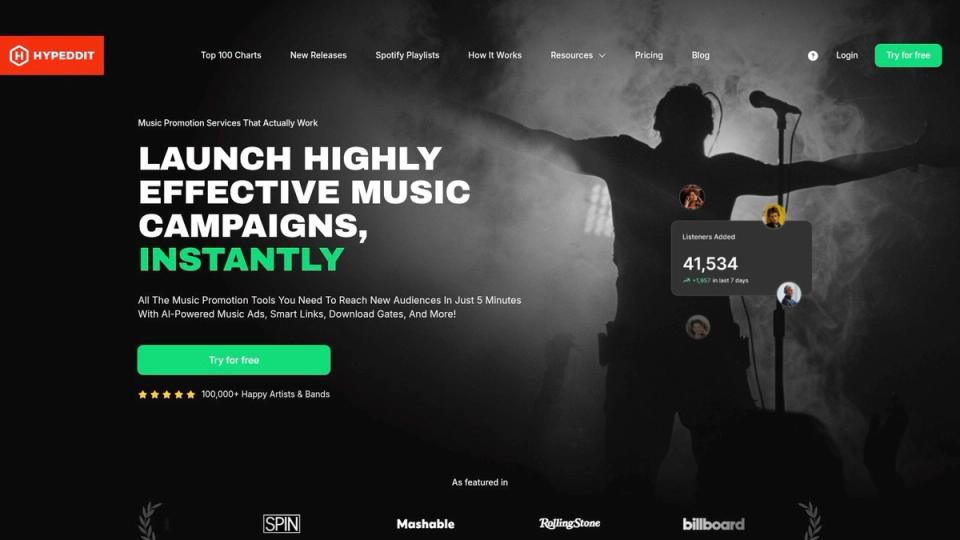
A common curator problem looks like this. The premiere goes live, the track gets decent plays, people ask for the download, and your team ends up sending files manually or losing those listeners entirely. Hypeddit fixes that part of the workflow.
For a SoundCloud premiere or repost business, Hypeddit is mainly a gate and fan capture tool. It helps turn attention into a follow, repost, like, email signup, or download claim. That matters if your value to artists is more than posting a track once and hoping the algorithm carries it.
It works best for channels that package releases with a clear incentive. Free downloads, remix stems, edits, and exclusive content give the gate a reason to exist. Without that, conversion drops fast, and the friction starts to hurt the release instead of helping it.
I would use Hypeddit for audience capture, not operations.
That distinction matters. If artists are paying your channel for premieres or repost support, you still need a way to collect submissions, approve tracks, take payment, and schedule posts. Hypeddit does not run that side of the business. It starts after the asset is ready and the campaign is about to go out.
There is also a brand trade-off. Aggressive gating can make a channel look cheap, especially if every upload asks for multiple actions before giving fans anything back. Selective use works better. Put gates on releases with real demand, not on every track in the inbox.
A good fit is a channel that already gets download requests and wants to capture fan data around stronger releases. A weak fit is an operator trying to use it as a client management system. It will help you monetize attention around a premiere, but it will not organize the business behind that premiere.
6. Feature.fm
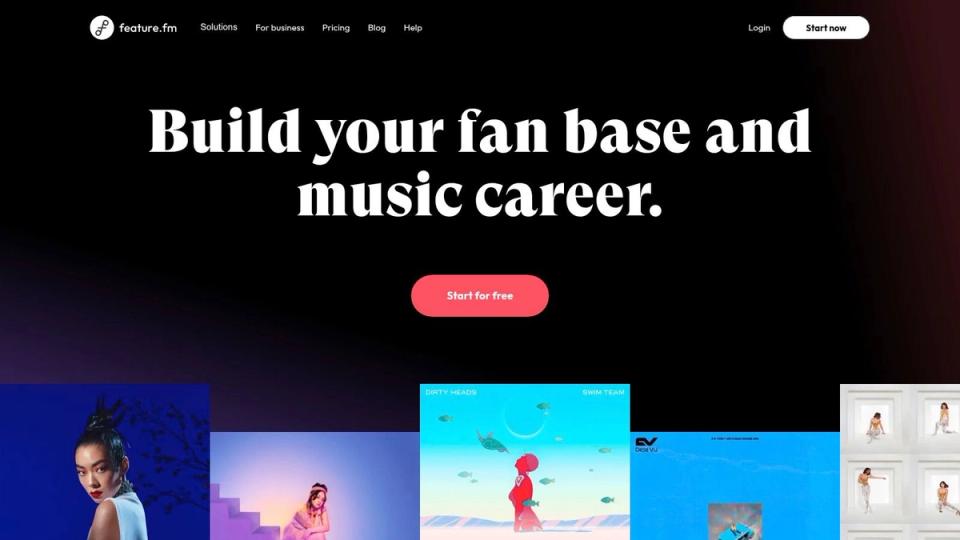
An artist pays for a premiere, the post goes live, and half the audience wants Spotify while the rest wants SoundCloud, YouTube, or a sign-up page. That routing problem is where Feature.fm helps.
For a curator, Feature.fm is a campaign layer. It gives you smart links, pre-saves, redirect rules, retargeting pixels, and audience tracking that basic bio links do not handle well. If your channel sells more than a repost and you need to show artists where traffic went after the post, that added visibility is useful.
Its strength is distribution after the asset is approved and scheduled. You can send fans to different destinations, collect data across releases, and keep one release page updated instead of swapping links everywhere manually. Channels that bundle premieres with cross-platform promo usually get more value here than channels that only care about the SoundCloud upload itself.
The trade-off is obvious once you run operations at volume. Feature.fm does not solve inbox triage, client approvals, payment collection, or premiere scheduling. If the main bottleneck is managing submissions from artists, you still need a proper music submission workflow for premieres and reposts.
That is why I would treat Feature.fm as support software, not the core system for a premiere business.
- Use it if: You package releases as multi-platform campaigns and need better link control and tracking.
- Skip it if: Your day is being lost to chasing files, confirming payments, and manually scheduling posts.
- Expect: More setup than a simple link-in-bio tool, especially if you want pixels, audience sync, and reporting set up correctly.
Feature.fm is strong at campaign routing and attribution. It is weak at the operational work that keeps a SoundCloud premiere or repost business running.
7. SubmitHub
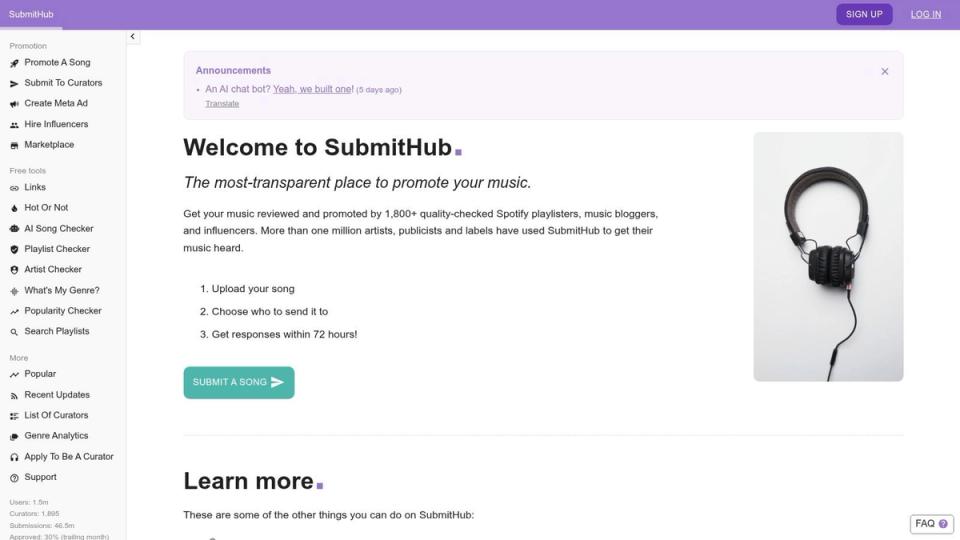
SubmitHub is useful when you want outside ears, coverage, playlist consideration, or curator feedback at scale. It’s not built for curators specifically, but it does intersect with the submission economy.
That’s why curators should understand it. A lot of labels and artists already know this model. They’re comfortable submitting through a structured form, paying for access, and accepting that not every pitch gets approved. If you run your own music submission platform process, that behavior pattern matters.
What it’s good for
As a discovery and outreach tool, SubmitHub is practical. It gives artists a way to test reactions, collect feedback, and potentially pick up coverage. That can complement a premiere if the release also needs blog, playlist, or influencer reach around the SoundCloud post.
There’s also a hard reality here. Artists with 10,000 or more followers invested an average of $14,000 on music marketing in 2023 and spent about 30 hours per month on marketing activities, according to Two Story Melody's music marketing analysis. Serious operators and serious artists already treat promotion like work. SubmitHub fits that mindset.
What it doesn’t solve
For curators, SubmitHub still sits on the artist side of the table. It doesn’t help you:
- Collect booking payments for your own channel
- Schedule premiere slots
- Automate SoundCloud uploads
- Run repost timing from one dashboard
Use SubmitHub if your release needs external validation or media outreach. Don’t use it as the backbone of a paid premiere business.
8. Groover
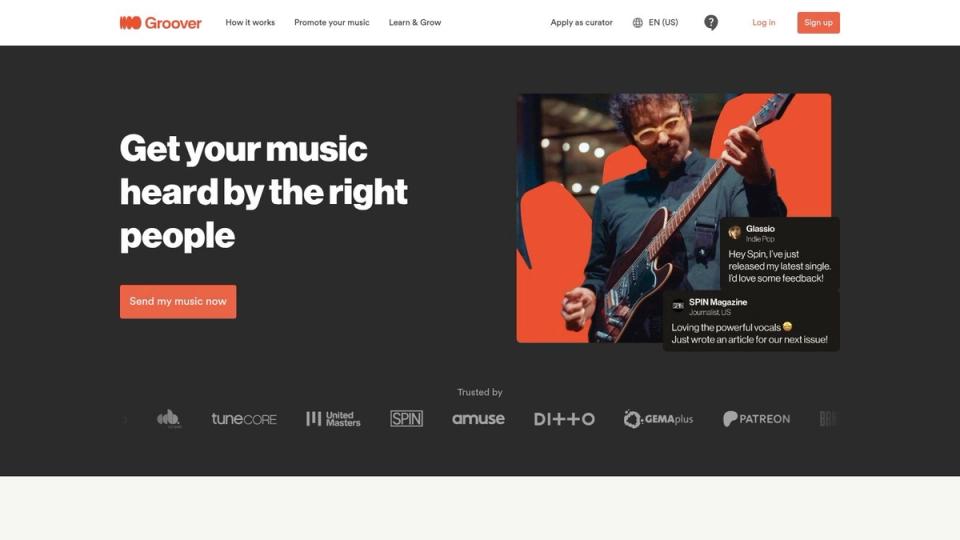
A common client request goes like this. They book a premiere on your SoundCloud channel, then ask if you can also get the track in front of blogs, radio, or playlist curators before release day. Groover fits that part of the job.
It is a curator outreach platform with a cleaner, more editorial feel than some alternatives. Artists and labels can send tracks to media contacts, curators, radios, and industry gatekeepers, with feedback built into the process. For a curator, that matters because it gives clients a second service layer around the premiere instead of forcing you to handle manual outreach yourself.
Where Groover helps
Groover works best when your business is broader than posting audio files to SoundCloud. If you sell premiere slots to labels, managers, or serious independent artists, you will run into campaigns that need more than one post. They want coverage, reactions, and a sense that the release is being pushed outside your channel too.
That is the practical value here. Groover can support the campaign around the premiere, especially when the client wants validation from external tastemakers before or after the SoundCloud drop.
The workflow is also easier to manage than building lists by hand.
Where it breaks for premiere operators
Groover does not solve the operator side of the business. It does not give you a storefront for paid premiere bookings. It does not collect payments for your repost package. It does not manage a release calendar built around slot availability. It does not publish to SoundCloud for you.
Those gaps matter more than they seem. The bottleneck in a premiere or repost business is rarely finding people to contact. It is handling submissions, confirming who paid, assigning dates, and making sure the right track goes live on the right channel at the right time.
Practical verdict
Use Groover if you want to add outreach around a premiere package. Skip it if you need software to run the channel itself.
I would treat it as a client campaign tool, not an operations tool. Good for extending the value of a release. Weak for managing the work that consumes a curator's week.
9. Playlist Push
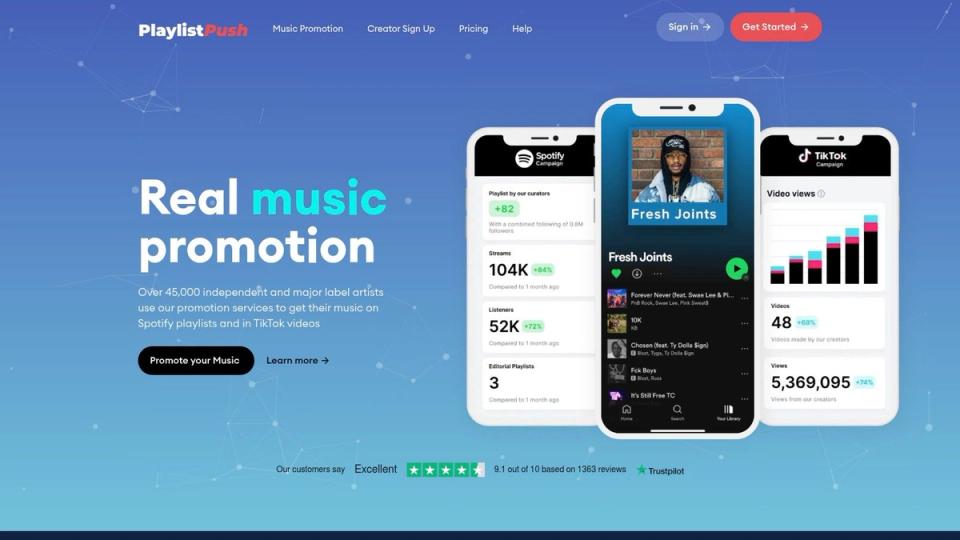
A label buys a premiere slot on your SoundCloud channel, then asks the next question. Can you also help on Spotify? That is the situation where Playlist Push enters the conversation.
Playlist Push is built for playlist pitching, not for running a SoundCloud premiere desk. For curators, that makes it a secondary tool, not an operating system. It can add value if you sell broader release support, but it does not solve the admin work behind premieres or repost packages.
Where it fits
The best use case is a bundled campaign. A client wants the social proof of a SoundCloud premiere and the reach of playlist placements on DSPs. Playlist Push gives you a way to cover the Spotify side without building your own curator list.
That can make your offer easier to sell, especially to labels that care about release week momentum across multiple platforms.
What it does not solve
From an operator standpoint, the gap is pretty clear. Playlist Push does not handle the work that clogs a busy curator's inbox and calendar:
- Submission intake
- Payment collection
- Premiere slot management
- Repost order tracking
- SoundCloud publishing workflow
Those are the tasks that determine whether your business runs cleanly or turns into a chain of DMs, screenshots, and missed dates.
Practical verdict
Use Playlist Push if your channel sells promotion as part of a wider release package. Skip it if you need software to run premieres and reposts at volume.
I would position it as a client-facing add-on. It can strengthen the campaign. It will not manage the business.
10. LabelRadar
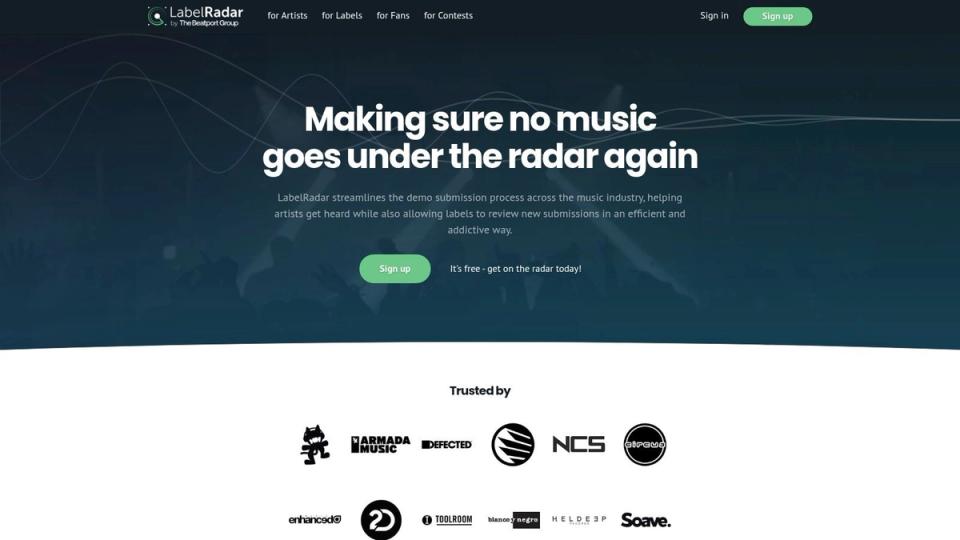
LabelRadar is the most scene-specific tool in this list. It’s built around demo submission and discovery, especially in electronic music. That makes it familiar territory for the same labels and producers who often use SoundCloud premieres.
For a curator, LabelRadar isn’t really a promo engine. It’s more of a relationship and discovery layer.
Why it matters in electronic music
If your channel sits in techno, house, trance, or another electronic niche, LabelRadar overlaps with your audience and your clients. It helps producers reach labels and A&Rs, and that can put your channel in the same release path if you’re known for premieres.
That niche matters because broad music promotion content still tends to ignore SoundCloud-specific tools for curators, even though electronic communities rely on them heavily. The gap is especially obvious around paid premieres, repost timing, and download gate workflows, as noted in this analysis of gaps in music promotion coverage.
Electronic channels often don't need another generic promo dashboard. They need a better way to handle submissions from labels already active in the scene.
Where to keep expectations realistic
LabelRadar won’t deliver traffic the way ads or playlist pitching can. It also won’t run your operation. Think of it as a discovery channel and credibility layer inside dance music, not a replacement for booking software or growth infrastructure.
Top 10 Music Promotion Platforms Comparison
| Product | Core features / Workflow | Quality (★) | Price / Value (💰) | Target audience (👥) | Unique selling point (✨) |
|---|---|---|---|---|---|
| 🏆 Premierely | Booking form and approve/reject queue, storefront with Stripe checkout, shared premiere/repost calendar, AI titles, publishing to every channel you run on approval, download gates, Find leads | ★★★★☆ centralized, founder-led ops | 💰 Free (€0) + 5% fee on paid bookings; Pro €10/mo or €100/yr, 14-day trial | 👥 Music curators - labels, promoters and channels selling premieres and reposts | ✨ One approval schedules the premiere and publishes it to every channel you have connected, each render produced automatically |
| Promote on SoundCloud | Native self-serve ads placing tracks in Streams & homepages with demographic/genre targeting | ★★★☆☆ native reach; creative-dependent | 💰 Min spend varies; CPM/ad budget model | 👥 Artists & labels buying platform-native reach on SoundCloud | ✨ Direct Stream/homepage placements with platform compliance |
| Repost by SoundCloud | Distribution to DSPs, monetization, integrated SoundCloud artist tools | ★★★☆☆ simple integration; some payout frictions reported | 💰 Revenue-share model (keep ~80% from non‑SC DSPs) | 👥 Artists/labels wanting distribution + SC integration | ✨ Single vendor for SC + DSP distribution & monetization |
| RepostExchange | Peer-to-peer repost marketplace; credit system & targeting filters | ★★☆☆☆ variable quality; niche usefulness | 💰 Credits model; free-to-use with optional Pro upgrades | 👥 Underground/electronic artists seeking early repost traction | ✨ Community-powered repost network for genre matches |
| Hypeddit | Download/link gates, smart links, AI ad templates, email capture & pixels | ★★★☆☆ fast deploy; effectiveness depends on gate setup | 💰 Freemium; paid tiers for unlimited gates & advanced tools | 👥 Artists/labels wanting value-exchange follower capture across platforms | ✨ Robust gate tooling to request SC follows/likes/reposts |
| Feature.fm | Smart links, pre-saves, landing pages, retargeting pixels, roster tooling | ★★★★☆ professional analytics & retargeting | 💰 Paid tiers (business/enterprise pricing) | 👥 Labels, marketers, teams needing data portability & retargeting | ✨ Deep analytics + retargeting and conditional redirects |
| SubmitHub | Submissions marketplace (free standard / paid premium with SLAs) | ★★★☆☆ useful for press & quotes; variable outcomes | 💰 Per-submission fees; premium guarantees/refunds | 👥 Artists seeking blogs, playlist curators, influencers & press | ✨ SLA-backed curator feedback and transparent stats |
| Groover | Access to curators, Grooviz credits, SLA with auto credit returns | ★★★★☆ high reply rates; good UX for targeting | 💰 Credit packs (EUR); refunds if no curator reply | 👥 Artists seeking curated feedback, radio & media exposure | ✨ Strong SLA and automatic credit return on no-response |
| Playlist Push | Genre-targeted pitching to playlist curators; campaign builder & budgeting | ★★★☆☆ scalable if budgeted; results vary by fit | 💰 Campaign budgets commonly $400–$500+ | 👥 Artists targeting Spotify/Apple playlist placements | ✨ Vetted curator network with transparent compensation guidance |
| LabelRadar | Demo submissions to labels/A&R, platform-run contests; Beatport-backed | ★★★☆☆ focused for electronic; label outcomes vary | 💰 Free usage options; contest mechanics vary | 👥 Electronic/dance producers seeking label demos & A&R | ✨ Beatport Group backing + low-friction access to electronic labels |
Choose the platform that fits your business model
Friday afternoon is when weak systems show themselves. Three artists are chasing status updates, one paid slot still needs a file, next week’s premiere has the wrong artwork attached, and your publishing queue is sitting in five different tabs. For a curator, the main question is not which platform has the most features. It is which one removes the admin that slows bookings down and creates mistakes.
I group these tools by the job they do.
Operating tools run the business. A premiere or repost channel needs submission intake, payment collection, release scheduling, asset management, and publishing in one workflow. If your revenue comes from selling slots, this layer matters first because every manual handoff adds delay, refund risk, or a missed post.
Reach tools help after the release is already organized. Promote on SoundCloud, RepostExchange, and Playlist Push can help tracks travel further, but they do not fix a messy intake process. I have seen channels buy more exposure before fixing operations, and it usually creates more back-and-forth with artists, not less.
Support tools sit around the core workflow. Hypeddit and Feature.fm help with gates, links, and campaign routing. SubmitHub and Groover can add media or curator feedback. LabelRadar is useful if your audience overlaps with electronic producers chasing label attention. These are useful add-ons, but none of them replaces a system built for taking paid premiere submissions, approving them, and posting on time.
As noted earlier, analysts expect continued growth across music promotion software and services. That matters for one reason. More independent releases mean more inbound submissions, and higher submission volume punishes manual channel workflows fast.
For a premiere or repost business, the practical split is simple. Use promotion platforms to expand reach, use support platforms for specific campaign tasks, and run the business itself on software that was built for curators.
A dedicated tool like Premierely fits that job because it covers the operational gaps the other platforms leave open: a booking form, paid bookings through Stripe, release scheduling, publishing to every channel you run from one approval, and gated downloads tied to follows, reposts, likes, comments, or email capture. That is the stack that keeps a channel organized while revenue grows.
If you also want ideas for off-platform campaign planning, these YouTube music promotion strategies can complement your release stack.
If you run premieres or reposts, Premierely is the cleanest place to start. It is built for curators who treat bookings like a business rather than a side inbox. You accept submissions, collect payments, schedule the premiere, publish it to every channel you run, and use download gates to collect emails or require follows, likes, comments, and reposts before download.