
From Spotify charts to SoundCloud strategy, the top 40 on spotify is more useful than most channel owners treat it. If you run premieres or reposts, these playlists are not just for passive listening. They help you spot timing, packaging, and crossover patterns before submissions hit your inbox. That matters when labels want placement, artists want reposts, and you still need to pick tracks that fit your audience.
A lot of channel owners already watch charts casually. The gap is turning that habit into a working system. The playlists below help you read mainstream demand, local Dutch movement, and early breakout signals. Then you can use that information to shape what you accept, how you position it, and which tracks deserve a premiere slot instead of a repost. If you also work short-form promotion into your release cycle, these viral video marketing strategies for music help support the same chart-aware approach.
1. Qmusic Top 40
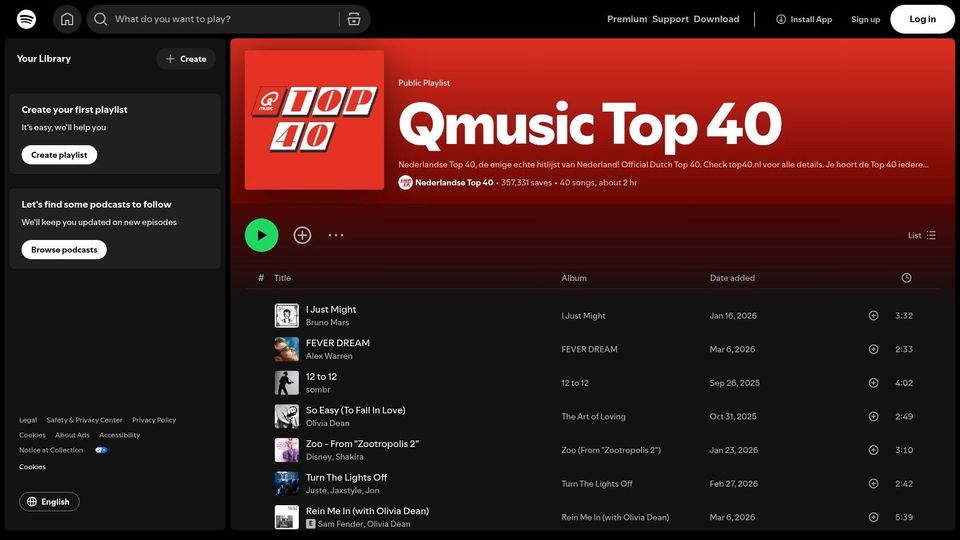
A label sends you a decent premiere. The track is solid, the artist has momentum, and the email says they want Dutch reach. Before you promise a slot, the Qmusic Top 40 playlist on Spotify gives you a fast market check. It shows what broad Dutch listeners are already accepting at scale.
That matters if you run a SoundCloud premiere channel as a business, not a hobby. You are not only picking good music. You are judging whether a record can be framed in a way that makes sense to labels, artists, and your audience at the same time.
Where it helps most
Qmusic Top 40 is useful as a packaging reference.
Listen for how quickly songs establish the core idea. Watch how features are used to widen appeal without confusing the audience. Check how the release is framed across title, artwork, and artist pairing. Those details carry over to premiere channels more than many owners admit, especially when you are working with melodic house, commercial dance, vocal-led electronic, or pop-adjacent submissions.
This is a key distinction. The playlist is not a map for what to sign. It is a reference for how records that reach mass Dutch audiences are presented.
What to pull from it
If your channel gets buried in submissions, use Qmusic Top 40 to tighten your acceptance criteria:
- Hook clarity: the main idea shows up early and does not need a second listen to make sense
- Audience fit: the record has an obvious listener group, rather than trying to please everyone
- Collab logic: featured artists add reach or context, instead of padding the credit line
- Release readiness: the full package feels finished enough to support reposts, short-form clips, and partner pitching
That last point matters in practice. A strong track with weak framing creates extra work for your team. You end up rewriting the angle, rebuilding the visual pitch, and explaining the audience fit the artist should have made obvious.
What it does not do well
Qmusic Top 40 will not help much with underground discovery. If your edge comes from leftfield club records or niche scenes, this playlist is too polished and too broad to guide taste.
Use it as calibration instead. Compare your last 10 accepted premieres against the playlist and check for clear intros, memorable toplines, and stronger release framing. That exercise usually exposes why one submission feels easy to back and another feels like a risk, even when both are well produced.
For channel owners, the takeaway is not to chase bigger names. It is to recognise crossover pull. Records that can sit close to wider pop or dance behaviour are easier to position, easier to sell to partners, and often easier to grow beyond your core followers.
2. Nummer 1
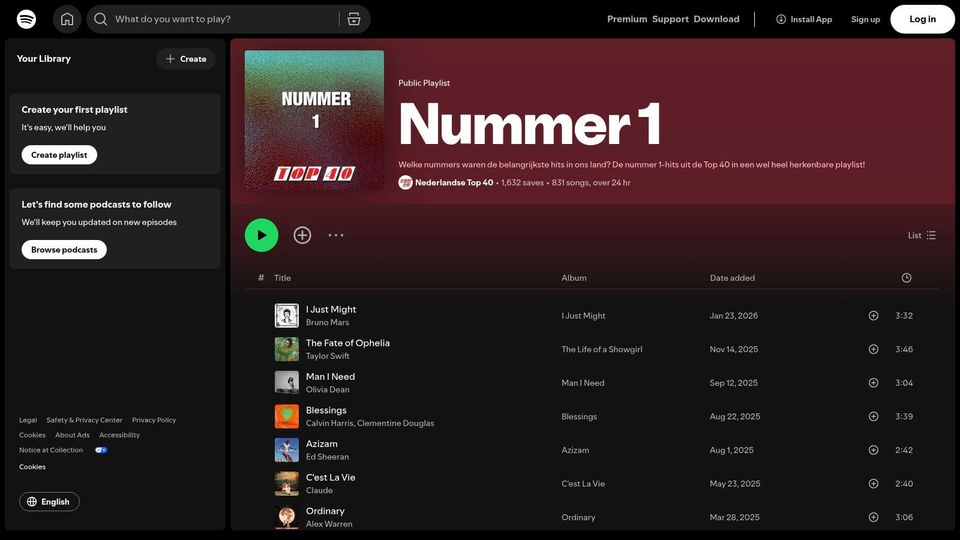
A channel owner usually sees the problem fast. A submission sounds polished, the artist calls it a priority release, but nothing about it feels big enough to carry a premiere slot. The Nummer 1 playlist by Nederlandse Top 40 helps solve that problem because it shows only tracks that converted attention into chart leadership.
That makes it useful for a different job than the broader lists. Qmusic Top 40 helps with general crossover calibration. Nummer 1 is stricter. It is where you study what a winning record needs before you spend channel inventory, thumbnail space, upload copy, and promo time on it.
How to use it for A&R
Use this playlist as a stress test for submissions that claim mainstream upside. Put an incoming track next to a few recent number-one records and check for the gaps that will create work for your team later:
- Immediate payoff: the song gives listeners a reason to stay within the first moments
- Memorability: the vocal, topline, or lead motif is easy to recall after one pass
- Playback confidence: the mix, arrangement, and energy hold up outside a niche setting
- Commercial framing: the artist, artwork, and release angle support a wider push
This matters if you run a SoundCloud premiere channel as a business, not just a taste page. Number-one records are rarely carried by music alone. They arrive with a clear audience, a simple story, and assets that make reposting easy. Smaller acts can still win your slot, but then the track has to be much easier to position.
Why it works
Nummer 1 cuts out the middle tier. You are not reviewing songs that had a decent week. You are reviewing songs that reached the top, which is a better reference point when you need to decide whether a release deserves homepage placement, paid support, or partner outreach.
I use it less to ask, "Is this good?" and more to ask, "Will this be easy to sell?" Those are different questions. Plenty of good submissions create friction because the hook takes too long, the branding is vague, or the artist profile gives promoters nothing to work with.
If a label says a track is chart-ready, this playlist is a fast way to test whether they mean market-ready or just well produced.
It also keeps expectations honest. Number-one behavior usually comes with built-in audience memory, repeat-listening appeal, and a release package that already knows its target listener. For SoundCloud channel owners, the practical lesson is clear. If the artist does not have that scale yet, your premiere strategy has to replace it with tighter positioning, sharper creative, and a more deliberate rollout.
3. Global Top 40
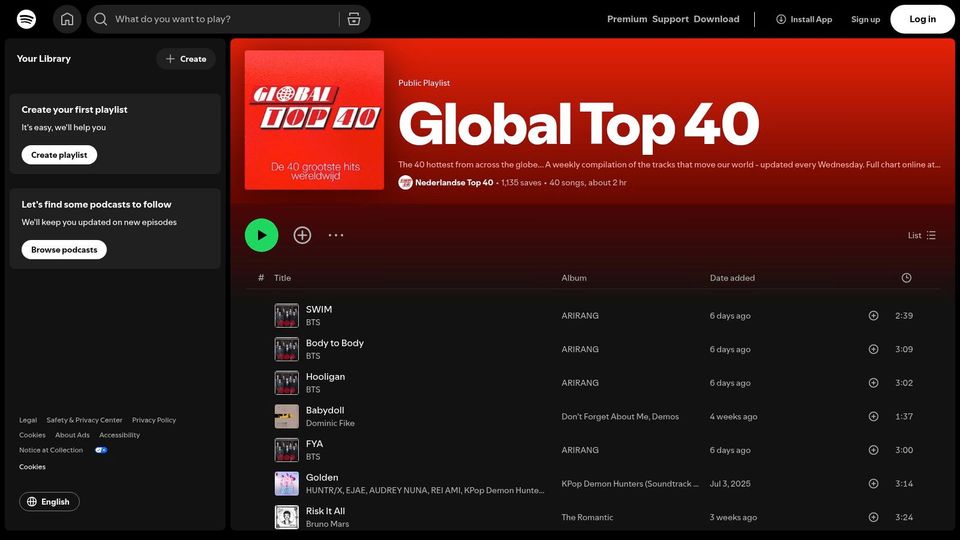
Monday morning. Your inbox has three submissions that all sound slightly more polished, slightly more crossover, and slightly less niche than what your channel usually posts. The question is not whether they are good. The question is whether the wider market is already pulling your niche in that direction.
The Global Top 40 playlist from Nederlandse Top 40 helps answer that fast. I use it to check whether a pattern showing up in submissions is isolated local mimicry or part of a broader push that could make a premiere easier to package and sell.
That distinction matters for SoundCloud premiere channels. If a global trend is already training listeners to accept a certain vocal style, tempo range, drop structure, or crossover hook, your upload has less educating to do. That lowers friction on first listen, which is useful when you rely on reposts, feed clicks, and quick conversion from casual listeners.
Best use case
Global Top 40 is a fit-check for records that sit between niche credibility and mainstream accessibility.
It is especially useful if your channel covers melodic dance, indie-electronic, commercial house, afro-influenced club edits, or pop records with underground styling. Those genres often move through international momentum before they feel obvious in a local inbox. Spot that early and you can pick premieres that still feel current when they go live, not late.
I usually check three things:
- Genre spillover: Is your lane borrowing from a bigger global sound in a way listeners already recognize?
- Energy cycle: Are current winners built for uplift, tension, sentiment, or pure escapism?
- Collab logic: Are cross-market features helping songs travel faster than solo releases?
Those checks are practical, not academic. If ten similar demos hit your inbox, this playlist helps you decide whether to back the cleanest one, ignore the whole wave, or ask for a stronger edit before you commit a slot.
The trade-off
Global reach does not always convert neatly into Dutch traction. A record can feel massive in worldwide streaming culture and still miss local radio instincts, club context, or language comfort.
That is why I treat this playlist as a market-direction tool, not a booking decision on its own. It tells you where attention is building. It does not tell you whether your audience will repost the track, whether a Dutch tastemaker will support it, or whether the release assets are strong enough for your channel format.
Bad Bunny is a useful reference point here, as noted earlier. His kind of global momentum creates openings far beyond his core market. Channel owners should not copy the surface details. The better lesson is to watch how large international waves change listener tolerance for rhythm, language, and crossover production choices. Once that shift starts, records that would have felt too broad or too unfamiliar a few months earlier can become much easier to position.
For premiere planning, that changes the work. If a submission matches a wider global current, write the title and description with confidence, schedule repost support closer to peak attention windows, and frame the upload as part of an active sound movement. If it does not, sell the record on specificity and community fit instead. That is the trade-off. Chase momentum when it helps, and stay selective when global heat does not translate to your audience.
4. Alarmschijf
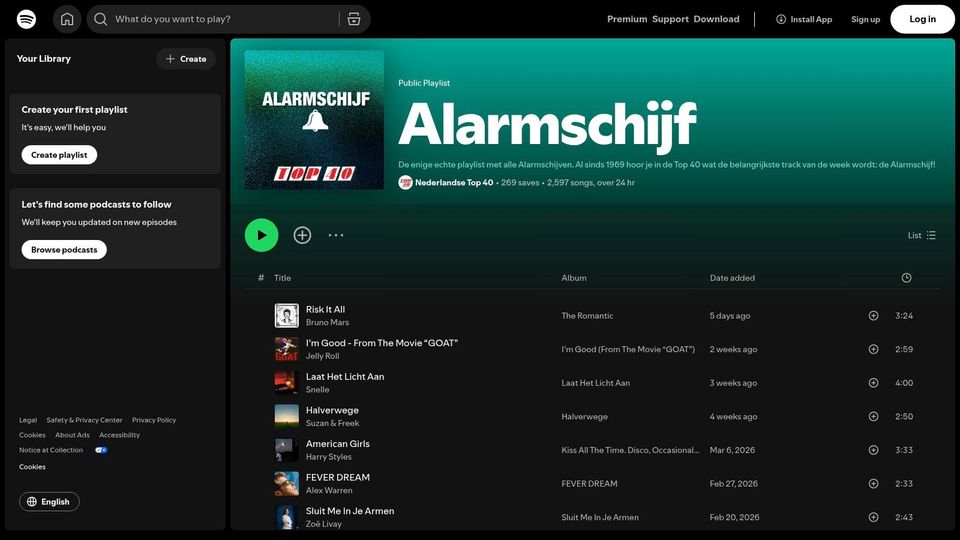
A familiar problem for SoundCloud premiere channels. The inbox is full, release dates are close, and the tracks with the best chance of breaking have not shown full chart proof yet. The Alarmschijf playlist helps at that exact stage because it reflects what gatekeepers are willing to push before the broader market fully catches up.
That makes it more useful for premiere operators than a finished chart snapshot. Once a record is already settled into a ranking, the discovery advantage is usually gone and the value shifts to reposting, recap content, or piggyback exposure.
Why channel owners should care
Premiere channels win on timing. A key decision is rarely, “Is this track good?” The pertinent decision is, “Is this early enough, clear enough, and marketable enough for my audience right now?”
Alarmschijf is useful because it gives you a read on editorial conviction. That is closer to A&R work than simple chart watching. For a channel owner, that matters. You are not only reacting to audience demand. You are deciding which records deserve borrowed attention before the crowd consensus is obvious.
What to watch for
Use a tighter screen than personal taste.
- Intro strength: Does the first section grab quickly enough for a premiere post, teaser clip, or repost snippet?
- Emotional clarity: Can a listener place the mood fast without needing three sections to understand it?
- Promo fit: Can you pitch the track in one clean sentence for the title, caption, and upload description?
Those checks save time because a lot of submissions fail on positioning, not production. A track can be well made and still be wrong for a premiere slot if the hook arrives too late, the angle is muddy, or the artwork and copy team have nothing sharp to work with.
There is a practical genre trade-off here too. Electronic channel owners usually need earlier signals than pop-focused outlets because crossover happens later and less often. The linked Kworb artist page shows how chart visibility tends to cluster around established mainstream names, which is the relevant takeaway for Dutch chart watchers and premiere operators.
Early-signal playlists matter more for electronic premieres because waiting for full chart validation usually means the best upload window has passed.
For channels built around premieres, a structured booking system becomes more effective than email chaos. Early picks need same-day triage, fast rights checks, and a clear yes or no. If a strong submission sits in DMs for three days, another channel gets the exclusive and your chart reading no longer matters.
5. Top 50 Netherlands
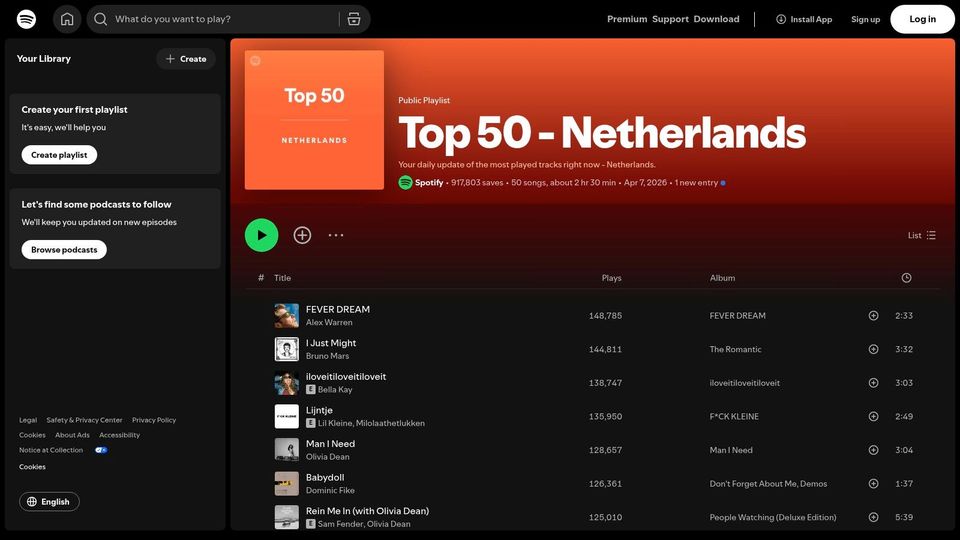
A track lands in your inbox at 10 a.m., starts getting clipped on TikTok by lunch, and another channel wants the repost by evening. That is the job Top 50 Netherlands helps with. The Top 50 – Netherlands playlist on Spotify updates daily, so it is the quickest way in this article to check what Dutch listeners are pushing right now.
For SoundCloud premiere and repost channel owners, that speed matters more than prestige. This playlist will not tell you what has cultural weight over a full week. It will show whether a sound, feature, tempo range, or vocal style is gaining traction today. That is useful if you sell reposts, package promotional slots, or advise artists on whether a record still has timing on its side.
Where it helps in real channel operations
Daily movement is messy, but it is actionable. You can spot a jump early, decide whether a similar submission still feels fresh, and avoid posting into a wave that is already saturated.
Use it for practical decisions such as:
- Repost timing: Back tracks that already have upward listener behaviour instead of forcing attention onto a flat release.
- Positioning: Adjust title copy, thumbnail choices, and short descriptions to match the phrasing and energy listeners are already responding to.
- A&R filtering: Pass on submissions that copy a trend too late, even if the production is solid.
That last point saves a lot of wasted uploads.
Top 50 Netherlands is also a better source for pattern reading than for song picking. The value is rarely “post this exact chart record.” The value is noticing that Dutch listeners are rewarding a certain hook style, language mix, feature format, or emotional tone, then applying that insight to premieres that still need discovery help.
The trade-off
Fast charts can push channel owners into reactive programming. One sharp spike can make a weak trend look bigger than it is. If you approve tracks only because they sound adjacent to a daily mover, your channel starts chasing noise and your identity gets blurry.
Use this playlist as a market pulse, not a substitute for selection discipline. Strong operators keep their taste, their audience fit, and their upload standards intact. The chart just helps them make better timing calls.
6. 538 TOP 50
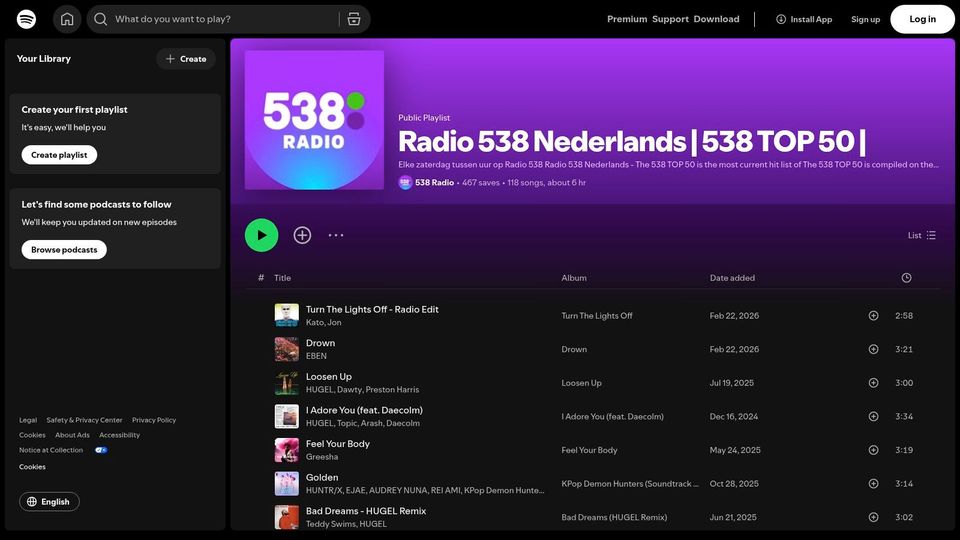
A familiar situation for premiere channel owners. A track performs well on Spotify, the artist team gets excited, and the pitch lands in your inbox with “this is moving” as the main argument. The missing question is whether that movement is still platform-specific, or whether the record is crossing into wider public recognition.
The 538 TOP 50 playlist helps answer that. It gives you a more commercial read of the Dutch market, shaped by a radio brand that reflects broad listener awareness rather than pure streaming momentum.
That difference matters if you run a SoundCloud premiere business.
Spotify-first charts are good at spotting acceleration. 538 is better for checking whether a song already feels familiar to a mainstream audience. For channel owners, that changes the job. You are no longer introducing a record from scratch. You are deciding whether to frame it as a credibility post, a strategic repost, or a paid upload attached to a larger campaign.
Here is the practical use:
- Client filtering: If a track fits 538 energy, ask whether your audience wants early discovery or recognised momentum. Those are different products.
- Offer design: Broad-appeal records usually suit repost packages, network support, or short campaign bursts better than “exclusive premiere” language.
- A&R judgment: Use 538 to test whether a submission has mass-market polish without assuming it belongs on your channel.
This playlist is also useful for identifying how mainstream records are packaged. Pay attention to vocal tone, chorus clarity, feature choices, tempo comfort, and how quickly the hook arrives. Those details matter for SoundCloud operators because many submissions are trying to borrow pop accessibility without losing dance or electronic credibility. 538 helps you hear where that balance is working in the market.
There is a trade-off. Radio-informed charts usually react slower than the fastest Spotify lists, so they are weaker for catching the very first lift. They are stronger for judging whether a record has enough staying power to support a paid placement, a repost run, or a safer upload that will not feel dated three days later.
That is the core value here. 538 TOP 50 is less useful for copying exact songs and more useful for checking commercial readiness. If you own a premiere channel, that helps you separate tracks that need discovery support from tracks that are already entering the wider hit cycle.
7. Hot Hits NL
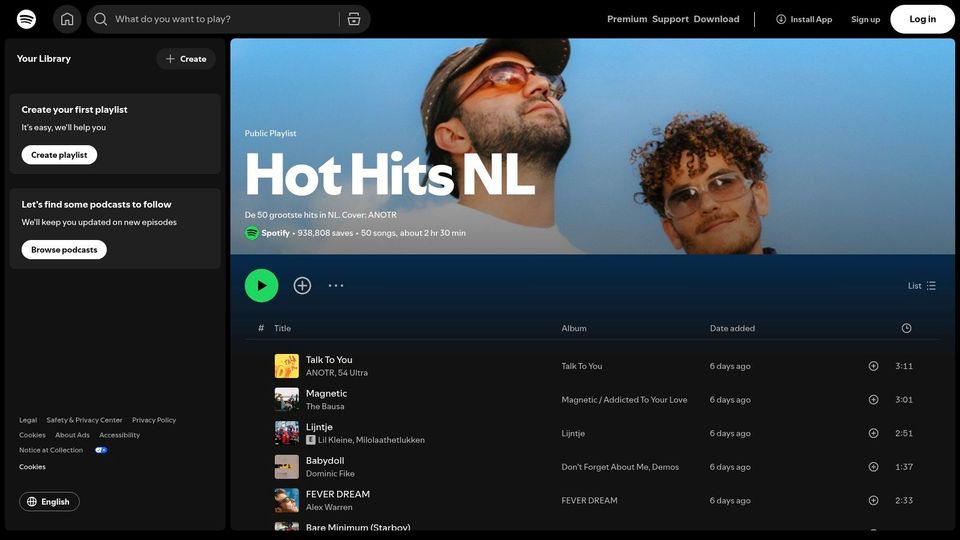
A client sends you a polished crossover record at 11 p.m. It is too pop for a niche upload, not strong enough yet to hide behind pure chart momentum, and you still need to decide whether it belongs on your SoundCloud channel. That is the kind of call Hot Hits NL helps with.
This playlist is useful because Spotify editorial teams are shaping listener expectations in real time. For premiere channel owners, that makes it less about chart rank and more about market framing. You can hear what Dutch listeners are being trained to accept as current, accessible, and commercially safe.
That matters for channels sitting between discovery and promotion. A lot of submissions are not trying to be underground records. They are trying to sound mainstream enough to convert, without feeling late or generic.
Use Hot Hits NL to judge fit in four areas:
- hook speed
- vocal clarity
- crossover potential
- how polished the drop, chorus, or topline feels on first listen
Those details decide whether a premiere campaign feels like early access or like a mispositioned repost.
The top 40 on spotify often overrepresents established names, as noted earlier. Smaller acts on your channel do not have that built-in audience weight. The practical move is to borrow the packaging, not the status. Study how tracks in Hot Hits NL open, how quickly they establish mood, and how little friction they create for casual listeners.
That is the trade-off. Hot Hits NL is weaker for proving hard demand than a stream-based chart, but stronger for spotting records that can survive outside a niche circle. If you sell premieres, sponsored uploads, or timed repost support, that distinction saves you from backing songs that sound good in isolation but stall the moment they meet a broader audience.
Use this playlist as an A&R filter, not a playlist to imitate track for track. It helps answer a more useful business question. Can this submission live in the same listening environment as current Dutch editorial winners, even if the artist is still early?
7-Item Comparison: Dutch Top 40 on Spotify
| Playlist | 🔄 Complexity | ⚡ Resources | 📊 Expected outcomes | 💡 Ideal use cases | ⭐ Key advantages |
|---|---|---|---|---|---|
| Qmusic Top 40 – Official Dutch Top 40 (Spotify playlist) | 🔄 Low: direct official playlist | ⚡ Minimal: Spotify access | 📊 Authoritative weekly NL chart; stable mainstream signal | 💡 Weekly programming, official chart reference | ⭐ High credibility; strong brand recognition |
| Nummer 1 – Nederlandse Top 40 (Spotify playlist) | 🔄 Low: single-focus playlist | ⚡ Minimal: Spotify access | 📊 Concise list of #1s for benchmarking | 💡 A&R benchmarking, quick reference | ⭐ High signal-to-noise – peak tracks only |
| Global Top 40 – Nederlandse Top 40 (Spotify playlist) | 🔄 Low: curated global lens | ⚡ Minimal: Spotify access | 📊 Global trend snapshot for comparison | 💡 International release planning, local vs global checks | ⭐ Single source for worldwide momentum |
| Alarmschijf – Nederlandse Top 40 (Spotify playlist) | 🔄 Low: editorial picks list | ⚡ Minimal: Spotify access | 📊 Early-warning list of potential hits (speculative) | 💡 Early discovery, scouting emerging tracks | ⭐ Strong early-signal for breakouts |
| Top 50 – Netherlands – Spotify Charts (daily chart playlist) | 🔄 Low: requires daily monitoring | ⚡ Low: automation recommended for frequent checks | 📊 Real-time, stream-based ranking; high recency and volatility | 💡 Day-to-day trend tracking, viral detection | ⭐ Direct reflection of Spotify user behavior |
| 538 TOP 50 – Radio 538 (Spotify playlist) | 🔄 Low: weekly multi-metric list | ⚡ Minimal: Spotify access | 📊 Broader market heat (airplay + streaming + others) | 💡 Market-level cross-checks, campaign planning | ⭐ Multi-source inputs closer to overall market |
| Hot Hits NL – Spotify Editorial (flagship NL hits) | 🔄 Low: editorial curation | ⚡ Minimal: Spotify access | 📊 Editorially curated trending hits; frequent rotation | 💡 Programming, discovery of radio-ready tracks | ⭐ Combines editorial insight with data; early inclusion |
Turn chart insights into automated bookings
Friday afternoon. You spot a track that fits your channel perfectly. By Monday, the label has sent three follow-ups, the artist has changed the artwork, the payment is still hanging in DMs, and your repost partners do not know the date. The problem is not taste. The problem is workflow.
Spotify chart tracking helps you decide what deserves attention. Channel operations decide whether you can act on that signal while it still matters.
For SoundCloud premiere owners, that gap is where good opportunities get lost. Qmusic Top 40 can signal broad Dutch appeal. Top 50 Netherlands can show sudden listener movement. Alarmschijf can flag a record before it becomes obvious. Those inputs should shape booking priority, pricing, slot selection, and promo timing. If they only influence what sits in your notes app, they are not doing enough work.
The operators who book consistently treat A&R and admin as one system. A track with crossover potential gets a faster review path. A release with early momentum gets a tighter launch window. A niche electronic record with strong tastemaker upside may deserve the slot even if it will never chart high in a mainstream playlist. That trade-off matters. Charts are useful for demand reading, but premiere channels still make money by spotting tracks before mass consensus arrives.
This is especially true in electronic music. Mainstream Dutch charts still skew toward broader pop appeal, so channel owners often have to do more packaging and context work to move a record from scene support into wider awareness. That means cleaner artwork collection, better teaser clips, firmer premiere dates, and a repost plan ready before upload day.
Manual handling breaks first at intake. Email threads hide approvals. DMs lose asset links. Bank transfers slow down scheduling. If you are running paid premieres or repost packages at any volume, booking needs a structured form, clear status tracking, fixed delivery requirements, and payment tied to the same process.
Promotion needs structure too. A chart-informed pick should not stop at the upload. It should feed into short-form clips, repost sequencing, download capture, and follow-up releases. These viral video marketing strategies for music are a practical fit if you want to turn one strong premiere into repeat audience growth instead of a one-day spike.
The operational stack matters because the business model is two-sided. Artists and labels need a professional buying experience. You need control over schedules, assets, approvals, and cash collection without spending release week chasing people.
Premierely is built for that use case. It gives SoundCloud channel owners a structured booking page for submissions, Stripe Connect payments, scheduling, automated posting, gated downloads, repost automation, and revenue tracking in one workflow. That setup cuts admin drag and makes chart insight usable. You can review faster, book cleaner, collect payment on time, and keep strong releases from stalling in your inbox.
If you are also reviewing your wider posting stack, these automation tools for social media are a useful companion read.