A label opens your SoundCloud page, checks the last ten uploads, and still cannot tell what you want sent next. That is a programming problem, not a submission problem.
A well-used party music top 100 gives your channel structure. It helps you turn scattered premieres and reposts into named slots that listeners recognise and labels can pitch against. For a busy channel owner, that means fewer random submissions, clearer briefing, and faster approval decisions.
Many channel owners run into the same issue after the channel starts getting traction. Good tracks arrive, but they arrive in mixed contexts. A melodic house premiere sits beside a hard techno repost, then a pop edit, then a bootleg aimed at student nights. Each upload may work on its own, but the feed does not signal a clear lane.
That hurts in two places. Listeners do not know what to come back for. Labels and managers do not know whether your channel is a fit for the next release on their schedule.
Party charts solve that if you use them properly. The goal is not to copy a list and repost whatever ranks highest. The goal is to treat each list as a curation input. One list can feed a club-focused Friday slot. Another can support a singalong or crossover series. A third can help you test whether your audience responds better to nostalgic classics, current dance records, or regional party staples.
That is the useful angle for premiere channels. These lists help you design repeatable content formats, write tighter submission briefs, and spot gaps in your current inbox. Once the formats are clear, you can build simple automations around them with forms, tags, and filtering rules so better-fit submissions rise to the top faster.
For Dutch channels, this matters even more because party demand does not sit in one lane. Electronic momentum, classic feest energy, pub hits, and broad crossover records can all perform, but they attract different senders and need different branding. A generic "party" bucket is too loose to curate well.
The seven lists below are useful because they serve different parts of that market. Used together, they give you a practical system for planning themed slots, attracting more relevant submissions, and reducing manual digging time.
1. Beatport Global Top 100
Beatport is the best starting point if your version of party music top 100 means club-ready, current, and electronic first. It isn't trying to please every wedding crowd or pub singalong crowd. That's exactly why it's useful.
Direct link: Beatport Global Top 100
Why it works for premiere channels
Beatport gives you a clean signal for DJ-facing momentum. If you run a house, techno, mainstage, hard dance, or crossover channel, that signal is more useful than a generic "party songs" article.
I use Beatport less as a playlist and more as a filter. You can scan the global chart, then narrow into genre charts that match your audience. That makes it easier to name recurring slots such as:
- Peak-time techno Fridays: Built around tracks that sit close to current DJ demand
- Mainstage party edits: Better for channels taking vocal, festival-ready submissions
- Hard dance spotlight: Useful if your audience responds to harder energy and faster pacing
This matters in the Dutch market. Existing party lists often ignore the electronic centre of gravity in NL scenes, even though Dutch party coverage needs more attention on electronic subgenres rather than only mainstream pop and classic hits, as noted in this review of generic party lists at DJ Crashers.
Where Beatport falls short
Beatport is weak if your audience expects broad recognisable hits. It also doesn't hand you a tidy mood-based "party top 100" package. You still need taste and structure.
That's the trade-off. Beatport gives stronger relevance for electronic channels, but it asks more from the curator.
Practical rule: Use Beatport to source the backbone of a themed electronic slot, not the whole editorial identity of your channel.
A few things work well:
- Track genre drift: If your accepted submissions keep missing your sound, compare them against Beatport chart movement in your core category.
- Write tighter briefs: "Looking for vocal house with crossover party energy" performs better than "send us bangers."
- Separate listening from booking: Chart popularity doesn't mean every track deserves a premiere. Some work better as reposts.
Best use case
Beatport is best for premiere and repost channels that already have a defined dance identity. It helps you keep the channel current without guessing what DJs are backing right now.
It pairs well with a proper booking system too. If you build public themed slots around chart-led genres, labels understand where they fit. That's where Premierely is useful. You can turn those slots into structured submission pages instead of juggling emails and DMs.
2. Apple Music 100 Greatest Party Songs
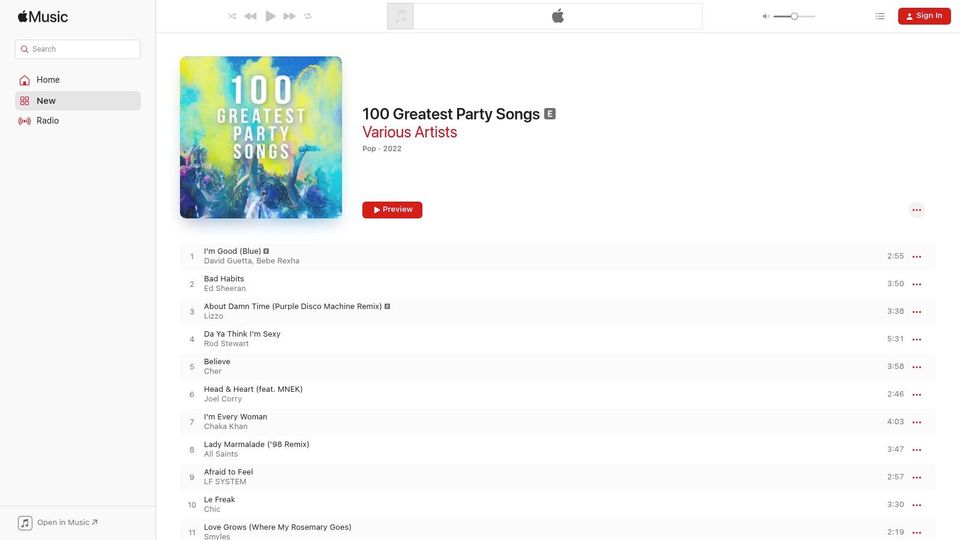
This one is the opposite of Beatport. Apple Music's 100 Greatest Party Songs is broad, familiar, and static. That's a feature, not a bug, if your problem is programming recognisable anchors around newer premieres.
Use it as a reference library, not a discovery engine
If you build SoundCloud content for party audiences, you need more than underground credibility. You also need reference points. This compilation gives you a fast reminder of which songs people instantly clock as party staples.
That helps with positioning. A label submission doesn't need to sound identical to a known party anthem, but it should be easy to place in a lane. Apple's compilation makes that easier.
Good channel applications include:
- Edit calls: Ask for flips, remixes, or bootlegs with clear party familiarity
- Warm-up slots: Pair less risky premieres with content framed around known crowd triggers
- Audience calibration: If your recent uploads drift too niche, this list helps you reset your balance
The downside for active curators
It's static. It won't tell you what's moving this week. It also reflects compilation logic, which means catalogue bias is always possible.
So don't use it to decide what's current. Use it to decide what's legible.
A lot of channels don't have a taste problem. They have a packaging problem.
If a label lands on your page and can't tell whether you favour classic vocal hooks, commercial dance crossover, or heavier club material, submissions get weaker. A broad party reference like this can help you create clearer lanes.
Best use case
Apple Music's compilation works best for channels that need recognisable editorial guardrails. It's especially useful if your feed mixes originals, edits, and more accessible dance releases.
It also pairs well with payment-led bookings. Once you define a familiar slot, you can charge for placement more confidently because the offer is clearer. If you're collecting placement fees, use Stripe Connect payment processing through Premierely so labels can book and pay inside the same workflow instead of paying after a long message thread.
3. Time Out dance-party playlist
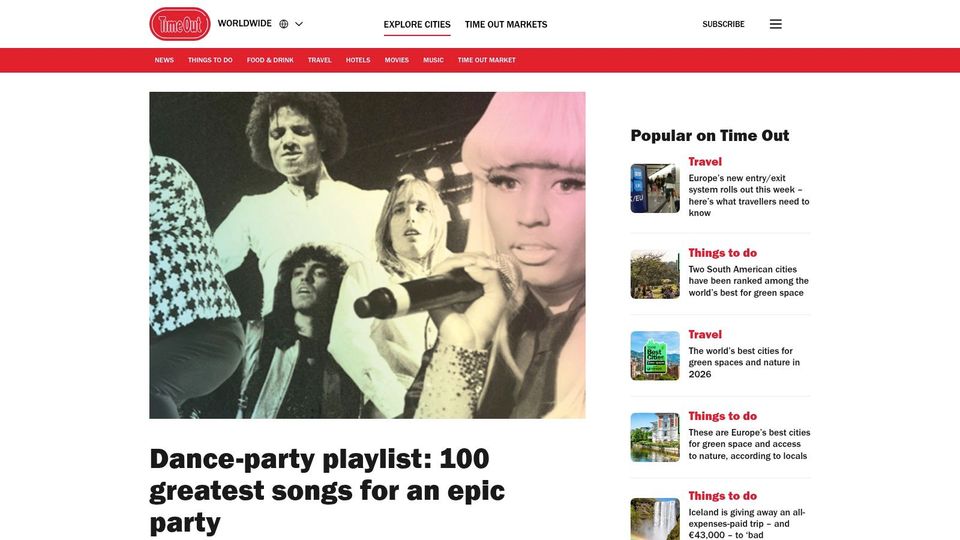
A label sends over a strong track, but it does not clearly fit your channel. The problem is rarely audio quality. The problem is slot definition. Time Out's dance-party playlist of 100 songs helps fix that because it gives you an editorial model, not just a pile of titles.
Direct image reference for the list:
Why this list is useful for channel programming
Time Out explains why songs work at parties. That matters if you run premieres, reposts, and themed uploads on a schedule. A plain top 100 list can help with recognition. This one helps with structure.
Use it to build repeatable content slots such as:
- Peak-hour premieres: Vocal edits, disco-house, crossover club records, and high-recognition remixes
- Bridge uploads: Tracks that connect commercial energy with slightly tougher club material
- Callback posts: Throwbacks, refixes, or bootlegs that make a newer submission feel easier for casual listeners to accept
That gives labels and managers a clearer target. Instead of asking for "party music," you can ask for "high-recognition dance records with fast payoff, strong hooks, and room for weekend positioning." Submission quality usually improves once the brief sounds like a real programming decision.
The practical trade-off
This is an editorial article, not an active chart. You cannot treat it like a live demand signal, and you will need to copy the useful patterns into your own workflow.
That extra step is worth it.
For a busy SoundCloud operator, the smart move is to turn the list into tags inside Airtable, Notion, or your submission form. Mark tracks by energy level, familiarity, vocal presence, decade reference, and crossover potential. Once that structure is in place, you can sort incoming demos into actual content lanes instead of reviewing every submission from scratch.
Best use case
Pick Time Out when your channel needs a better party format, not just more party tracks. It works well for cross-genre channels, event-linked brands, and premiere pages that want to attract labels sitting between commercial dance and club-friendly edits.
It also works well with download-driven promotion. If you offer free edits, bootlegs, or DJ tools, download gates on Premierely give you a direct way to turn a familiar party angle into follows, reposts, and contact capture without adding manual admin.
4. Muziekweb Mega Feest Top 100
A Dutch listener lands on your SoundCloud page before King's Day weekend. They are not looking for a generic global party set. They want something that feels local from the first hook. Muziekweb's Mega Feest Top 100 helps you program for that moment.
This list is useful because it gives channel owners a cultural filter, not just a pile of recognizable songs. The signal is Dutch party context. Feestmuziek, singalongs, novelty crossover, and tracks that already carry social meaning in NL rooms.
That matters if you want better submissions.
A lot of premiere channels ask for "party tracks" and get a mess of unrelated demos. Use this list to tighten the brief. Ask for Dutch-facing edits, local-language vocal cuts, festival-friendly remixes of familiar party records, or crossover submissions that keep your channel's sound but clearly fit an NL audience. Labels respond better when the slot is specific.
I would use Mega Feest Top 100 to build fixed programming lanes such as:
- Weekend NL party slots for local-language or culturally familiar records
- Event-led features around King's Day, carnaval, summer festivals, or city-week programming
- Remix calls aimed at producers reworking recognizable Dutch party references
- Submission tags inside Airtable, Notion, or Google Sheets for language, chant value, crowd familiarity, and regional fit
The trade-off is simple. Muziekweb is strong for reference and weak for current momentum. It helps define what your audience already associates with a party, but it will not tell you what is breaking this week on TikTok, in clubs, or in DJ promo pools.
That limitation is still useful if you treat the list as infrastructure. Build a repeatable curation system around it. Tag incoming submissions by Dutch vocal presence, tempo, singalong potential, event relevance, and whether the track works as a full premiere, repost, or themed filler slot. Once that framework is in place, you can sort submissions faster and reject off-brief tracks without second-guessing every inbox entry.
Best use case
Use Mega Feest Top 100 when your channel needs a clear Dutch identity block inside a broader party strategy. It works well for regional promoters, Dutch-facing labels, event brands, and SoundCloud owners who want more targeted submissions instead of generic EDM promos.
I would not build a whole electronic channel around this list alone. I would use it to anchor recurring themed slots that show labels you understand local audience behavior and have a real place to feature the right track.
5. Muziekweb Party Classic Top 100
Muziekweb's Party Classic Top 100 solves a different problem. Some channels get so obsessed with current submissions that they lose the reference frame older audiences still care about.
Classics still do a job
If your channel supports weddings, bars, event promoters, or broad age-range crowds, classics aren't filler. They're utility. They tell listeners your curation isn't only trend-led.
That matters if you're building a party music top 100 concept with recurring SoundCloud features. Newer tracks pull discovery. Familiar classics help define what "party" means for your audience.
The smart play is not to upload nostalgia for its own sake. The smart play is to use classics to shape derivative content around them:
- Classic-inspired edits
- Reworks with updated drums
- Warm-up repost slots
- DJ tool packs tied to recognisable hooks
What works and what doesn't
What works is using this list to brief submissions around timeless structures. Big chorus, clear payoff, accessible rhythm, low explanation needed.
What doesn't work is forcing your whole channel into heritage mode if your audience expects current dance records. The list isn't refreshed often, and it won't guide you on present momentum.
Still, it can help with programming discipline. Many channels accept tracks that are technically good but socially vague. Party classics are the opposite. Their use case is obvious.
If a track needs a paragraph of explanation before it sounds like a party record, it's a weak fit for a mainstream party slot.
Best use case
This list works best as a balancing tool. Use it when your feed leans too far into niche releases and you need to reconnect your programming to broad audience behaviour.
It's also useful for channels selling reposts. Reposts do well when the audience can identify the vibe quickly. A classics-informed slot gives you a stronger frame for that than a generic "miscellaneous uploads" lane.
For operators managing a lot of those placements, a structured booking page does more than tidy admin. It turns vague requests into sorted categories by slot, style, and timing, which is exactly what most email-based channels lack.
6. Redlist KROEGEN HITS Top 100
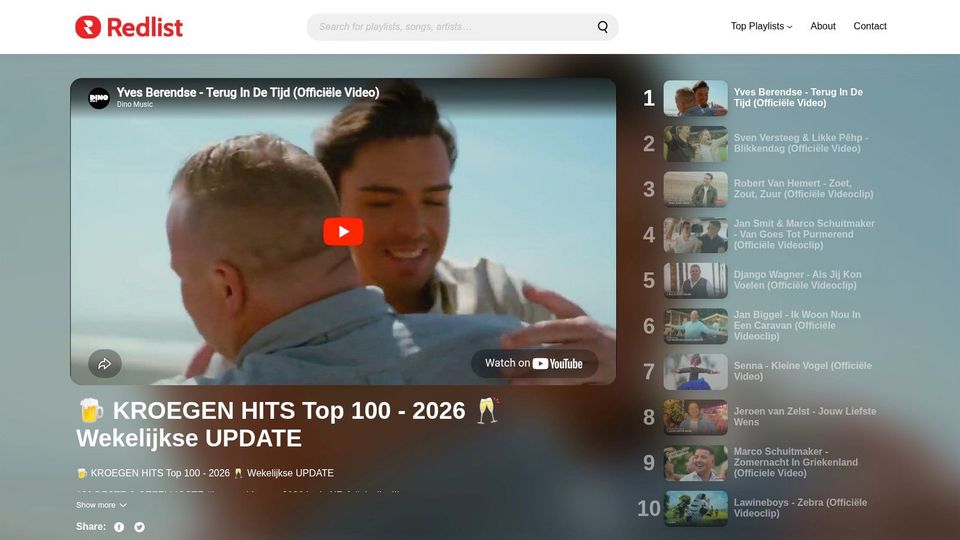
Redlist's KROEGEN HITS Top 100 is narrow, and that's why it works. If your channel touches Dutch bar culture, après-ski energy, or local singalong momentum, broad global party lists won't replace this.
Why active updates matter here
Unlike static compilation-style references, Redlist gives you a sense of movement inside a very specific party lane. That's useful for channels testing local trends or trying to attract submissions from labels that sit closer to Dutch nightlife than to underground club culture.
Many channels make a basic mistake here. They chase "viral" in general instead of "viral within the room they serve." Redlist is better for the second job.
That can shape profitable slots such as:
- Kroeg edits of the week
- Dutch party crossover reposts
- Holiday-week singalong premieres
- Après-ski themed free download drops
The risk
It's easy to overfit your channel to novelty. Third-party playlists can swing hard, and some selections won't travel outside that exact audience context.
So treat Redlist as a local trend monitor, not your master brand bible.
One reason to pay attention now is that AI-driven curation and posting have become a more visible part of Dutch party promotion workflows over the last year, while static top 100 coverage hasn't kept up, as reflected in this discussion of recent playlist gaps and platform behaviour at Spotify album context here. That gap creates room for channel owners who can package local trends faster.
Fast curation wins submissions only if artists can book the slot without chasing you for days.
Best use case
Redlist is best for Dutch-facing channels that want a more live sense of what bar and feest audiences are reacting to. It isn't a fit for every electronic brand. But if your channel sits near commercial dance, edits, mashups, or event promotion, it can feed strong themed weeks.
This is also where automation matters most. Fast-moving local slots die when booking is manual. If labels have to DM, wait, then resend files, the moment passes.
7. YourMusicCharts 100 Party Songs
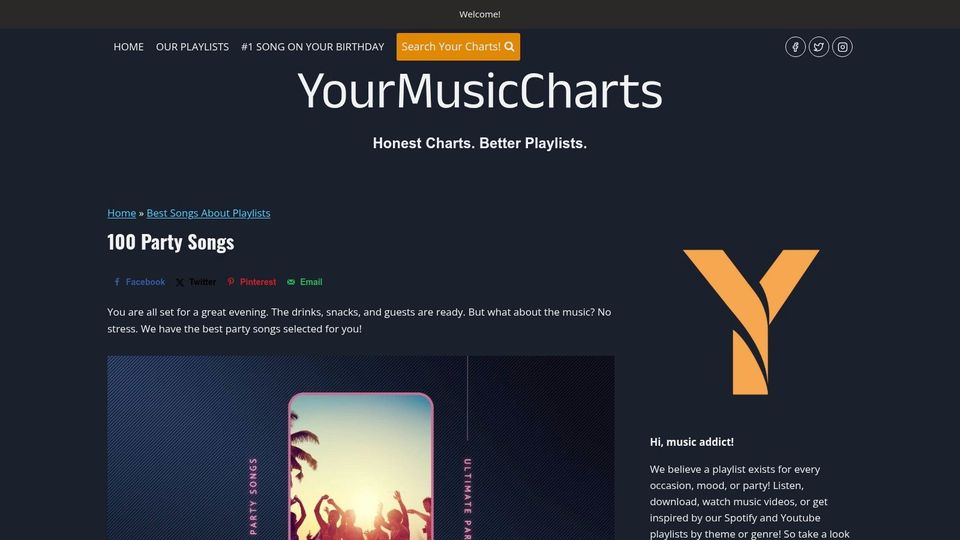
A label manager lands on your submission page, asks what "fits the channel," and sends three tracks that miss the brief. That usually means the brief is too abstract. YourMusicCharts 100 Party Songs fixes that fast because it gives you a mainstream reference point people recognise without explanation.
Why it earns a place
YourMusicCharts is useful when the job is alignment, not discovery. It helps premiere channel owners define the outer edge of "party-friendly" before they narrow into their actual niche. That makes it a strong tool for channels that get mixed submissions from indie labels, promo pools, and self-releasing artists.
Use it to create assets that save time on both sides:
- Submission reference pages that show the energy, familiarity, and vocal accessibility you want
- Themed content slots such as commercial crossover Fridays or warm-up party premieres
- Assistant training playlists so new team members can sort inboxes against one shared benchmark
- Label outreach packs that explain where your channel sits between mainstream party records and niche club cuts
The value is operational. A clear benchmark filters weak fits earlier and gives good senders a faster yes.
Real trade-offs
This list is broad by design. That helps with communication, but it will not surface underground records, local bar trends, or scene-specific edits the way narrower sources can.
Playback also depends on Spotify support, so you are still working through another platform's availability and regional gaps. For curation teams, that matters. A track can be perfect as a reference and still be useless if the sender cannot match that energy in a premiere-ready file.
Use YourMusicCharts as a briefing layer, then pair it with your own intake system. Add form fields for BPM range, vocal style, territory focus, and release priority. If you use Airtable, Notion forms, or Tally with Zapier, you can route "mainstream party crossover" submissions into one review lane and keep your core niche lane clean.
Best use case
Choose YourMusicCharts when your channel needs a common language that artists, managers, and junior curators can all read quickly. It works well for mixed-genre SoundCloud brands, event-linked channels, and newer premiere pages that need better submission quality before they need sharper taste differentiation.
It will not define your brand for you. It will make your brand easier to understand, and that usually leads to better-targeted submissions.
Comparison of 7 Party Top 100 Lists
| Item | 🔄 Implementation complexity | ⚡ Resource requirements | 📊 Expected outcomes | 💡 Ideal use cases | ⭐ Key advantages |
|---|---|---|---|---|---|
| Beatport Global Top 100 (Beatport) | Low – chart‑driven selection, minimal setup | Beatport account; purchases for full downloads; DJ files available | High club relevance for electronic/dance sets | Electronic/club nights, DJ floor‑oriented programming | Highly up‑to‑date; deep genre granularity; reflects DJ momentum |
| Apple Music – "100 Greatest Party Songs" (Compilation) | Very low – plug‑and‑play compilation | Apple Music subscription or purchase; native playback/offline | Predictable, broad crowd‑pleasers across eras | Consumer events, hosts who want a complete ready set | All tracks pre‑cleared; zero curation time; wide appeal |
| Time Out – "Dance‑party playlist: 100 greatest songs" | Low–Moderate – editorial list that needs rebuilding for playback | Free access; time to recreate list on streaming platforms | Curated, context‑rich selections with sequencing ideas | Discovery and programming for cross‑genre parties | Trusted editorial picks; helpful commentary and sequencing tips |
| Muziekweb – "Mega Feest Top 100" | Low – compilation but may require sourcing physical/digital editions | Library membership or retailer purchase; some CD editions | High local recognition for NL sing‑alongs and kroeg vibes | Dutch‑centric parties, après‑ski, local sing‑along events | Very NL‑specific repertoire; reliable source for local favourites |
| Muziekweb – "Party Classic Top 100" | Low – catalogue compilation, ready to mirror on streaming | Library/retailer access; may need playlist rebuilding | Crowd‑safe, multi‑age-friendly set of evergreen hits | Weddings, corporate events, bars seeking familiar tracks | Evergreen classics; good metadata for rebuilding playlists |
| Redlist – "KROEGEN HITS Top 100" | Low – actively maintained playlist, ready to use | Web access; Spotify linking; no purchase required | Timely, high local bar/feest relevance with weekly updates | Dutch kroegen, bars and local viral party environments | Actively updated; high NL relevance; easy Spotify export |
| YourMusicCharts – "100 Party Songs" | Very low – embedded Spotify playlist, one‑click save | Spotify account to save; minimal editing time | Turnkey mainstream/top‑40 party set, easy to preview | Fast setup for mainstream audiences and quick events | One‑click import; easy to adapt; free and accessible |
Turn curation into an automated system
Friday afternoon is when weak curation systems break. Three labels send WAVs by email, one artist changes the release date, a paid premiere still needs cover art, and your "party music top 100" concept turns into admin work.
Established SoundCloud channel owners rarely struggle to find source lists. The challenge is turning those lists into repeatable programming that labels want to buy into. A top 100 list should not just help you pick tracks. It should help you define fixed content slots, set submission criteria, and filter the right records before they hit your inbox.
The useful shift is simple. Stop treating curation as taste alone. Treat it as an operating model.
A strong slot starts with a list source and ends with a clear offer. Beatport can feed a weekly club-premiere lane. Apple and Time Out can support broader crossover slots. Redlist and Muziekweb can anchor Dutch sing-along, kroeg, or nostalgia-focused uploads. Once each source maps to a format, you can publish the rules once and stop explaining them in every DM.
For SoundCloud-first operators, the system needs to handle the work that usually gets scattered across email, notes, spreadsheets, and manual uploads:
- collect submissions through a branded intake page
- route tracks by slot, genre, or campaign type
- take payment inside the booking flow
- place approved uploads on a shared release calendar
- publish to SoundCloud without manual file handling
- add gated downloads for tracks that need follower or email capture
That structure improves submission quality. Labels stop sending mismatched records when the slot is specific. "Friday Party Weapons" is too vague. "Weekly vocal dance crossover premiere, 124 to 128 BPM, commercial club angle" gives A&Rs enough detail to self-qualify. The same applies to regional formats such as Dutch party edits or bar-ready sing-alongs.
Audience trust also gets stronger. Listeners learn what each recurring slot delivers. Labels learn where their records fit. That consistency matters more than volume. A channel with clear programming usually gets better submissions than a channel that posts every party track under one loose banner.
Channels that still run this by hand hit the same ceiling. Files arrive in mixed formats. Payment follow-up sits in email. Release dates drift. Metadata gets rewritten every time. The slot may look polished on the front end, but the back end wastes hours each week.
A dedicated workflow solves that operational drag. Premierely is built for SoundCloud channel owners running premieres and reposts as a business. It lets you accept track submissions, collect payments, schedule releases, automate posting, and manage download gates from one dashboard.
That changes the role of a party music top 100 list. It stops being research material and becomes the input for a content machine you can repeat every week.