It's release week. You've accepted the track, but the final title is buried in one email, the artwork is in a message, and the premiere time sits in a third thread. You copy the description again, while the artist checks their phone to see whether the post is live.
For the curator running a weekly premiere or repost series, that admin steals time from choosing records and following up with listeners. For the independent artist sending a release, scattered messages make it hard to know what's approved, what's due, and who owns the recording. Indie record labels still matter because someone has to choose the music, control the rights, and turn a first listen into a fan the label can reach again.
A clear campaign plan helps keep those jobs connected. If you need a model for organizing decisions, timing, and follow-up, a newsroom-tested framework for UK brands offers a useful way to think about planning before the release rush begins.
Your release week breaks when the label inbox does
A curator approves the track, but the final title is still in an email, the artwork is in a message, and the release time is waiting for confirmation. You chase each detail while the artist waits to hear what is going live. By the time the post is ready, there's less time to plan what listeners should do next.
A premiere earns attention for a moment. Your label's job is to turn that first listen into a connection you can build on, such as a follow, mailing-list signup, purchase, or show visit. Set the next step before the post goes live, then make sure the artist knows what to expect.
Keep the curator's placement decision separate from the label's ongoing work. The curator checks whether the track suits the channel and schedules the promotion. You manage the release details and give listeners a reason to stay connected after the post.
Use a newsroom-tested framework for UK brands to structure campaign timing and follow-up. For each premiere, confirm the title, approved recording, date, and required files in one place before booking. That gives the curator a complete request and leaves the artist with a clear record of the deal.
The week runs better when each channel uses the same approved information. Plan the follow-up around fans you can reach again, not just the reach a premiere gives you.
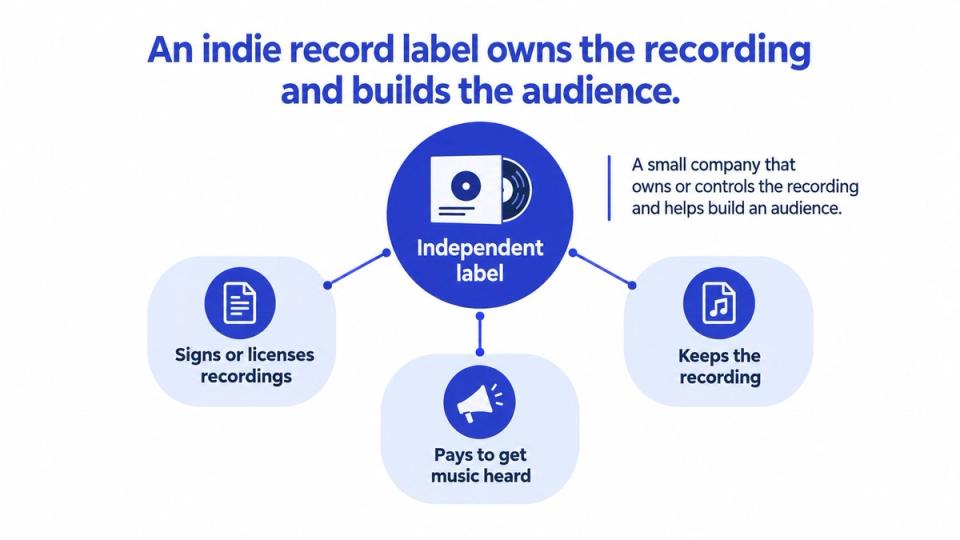
An indie record label owns the recording and builds the audience
On premiere day, a curator's post can send listeners to a track. The label's job is to make sure the recording's rights and the next way to follow the artist are clear.
An independent label signs or licenses recordings and helps bring them to listeners. It may own the master, or hold a license to use it under agreed terms. Distribution gets the recording to streaming services; it does not, by itself, determine who owns the master. A premiere also does not transfer those rights to the channel.
Keep the rights record with the label
Keep a file for each release, even when a distributor handles delivery. Record who owns the master, the chain of title, the ISRC, royalty splits, and territory limits. You need those details to confirm who can license the recording and to check reports and payments against the deal.
Distribution share can understate independent ownership because labels may own masters while relying on outside companies to deliver them. If you want a point of comparison with a major-label roster, discover music from Big Machine. Keep your own release decisions grounded in the recording, the artist's agreement, and the rights you can document.
Check partners for rights clarity, reporting detail, takedown control, and payment records. A broad store list does not tell you who can approve a later use or how revenue will be reported.
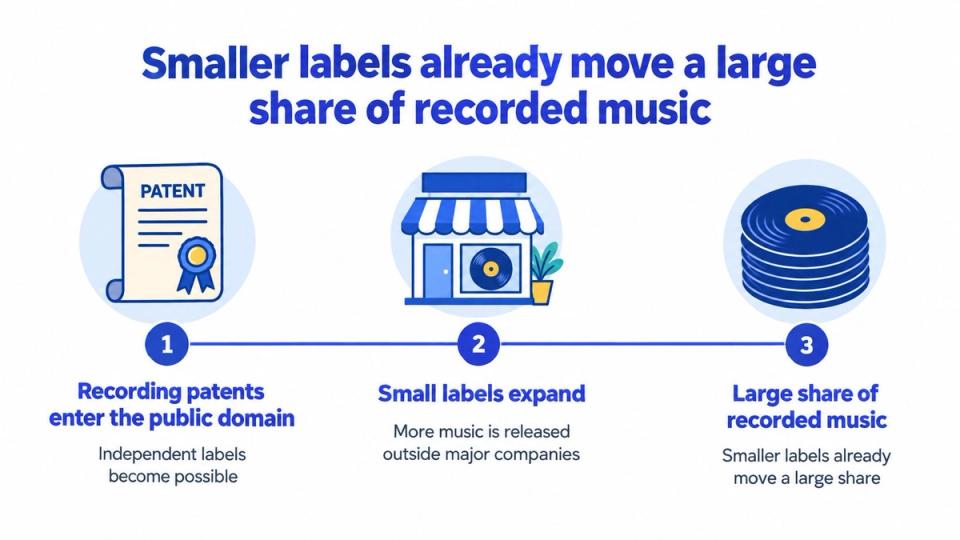
Smaller labels already move a large share of recorded music
Independent labels have opened paths into music business at different points in its history. When patents covering sound-recording technology entered the public domain in the 1920s, more small recording companies could enter the market. Later, during the postwar shift toward rhythm and blues and rock ’n' roll, smaller companies built audiences around music and artists large firms often overlooked.
From 1955 to 1959, major companies' reported share of the US market fell from 78% to 44%, while independent companies' share rose from 22% to 56% (Lumen Learning's history of popular music trends). Sun Records, King Records, Stax, Motown, and Atlantic became influential businesses in that period. Their history shows that a smaller label can develop a sound and serve an audience that centralized gatekeepers miss.
Read market share with care
Digital tools have given this fragmented sector new ways to reach international markets. In 2018, Merlin reported that it represented more than 20,000 independent labels across 55 territories, whose members collectively accounted for more than 12% of the global digital recorded-music market (Merlin's report on its independent members). A separate 2017 analysis estimated that the independent sector generated $5.17 billion, or 29.88% of a $17.3 billion global recorded-music market.
Those figures don't all measure the same thing. Ownership, distribution, recorded revenue, and artist-direct activity can be counted differently, so don't treat one market-share number as a complete picture of label control. The useful lesson is that indie record labels are a large, split field of independent businesses, not one company with one submission process.
For a curator, that means the work is to set clear terms for your own channel and assess every request on its fit. Genres, rates, rights, and delivery needs vary. A standard form can collect the details, but it can't replace a decision about whether the music belongs in your series.
A label turns one release into a repeatable week
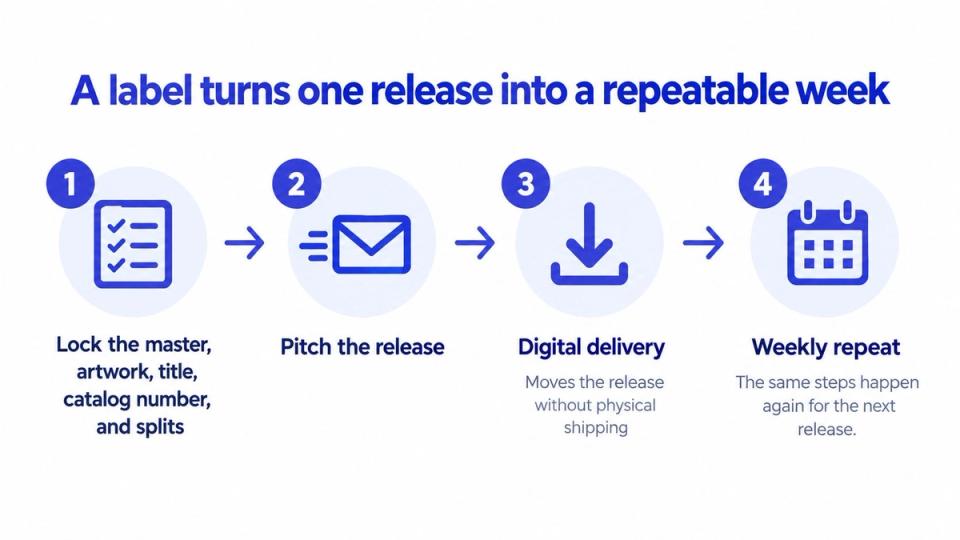
On Monday, the label approves a premiere. By Friday, the track is live, the artist has a clear next action, and the team knows which audience to follow up with. That routine starts with one accurate release pack: master, artwork, title, catalog number, and splits. Keep those details consistent across delivery, promotion, and reporting.
Streaming now accounts for most recorded-music revenue, so a premiere can put a release in front of listeners without giving the label a way to reach them again. Build that next connection into the week. An email sign-up, direct sale, live date, or merch offer can turn attention into a relationship the label controls.
Build the follow-up into the release
Set the follow-up before the premiere goes live. Keep metadata and identifiers consistent, then review plays, follows, and clicks by channel and territory. A Spotify pre-save release plan can help place that action on the calendar.
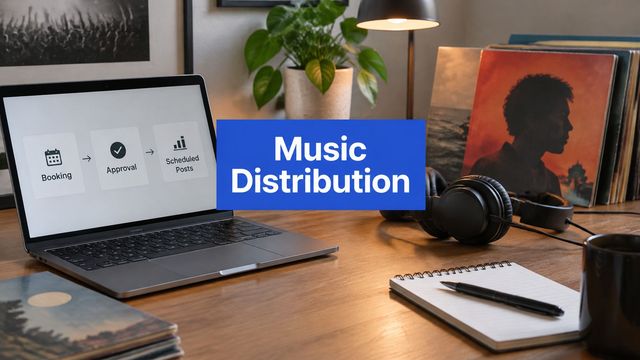
Track the work in a simple release schedule. For a premiere, the curator reviews the request first; after approval, the booker uploads the audio, artwork, and release details. Premierely lets channel owners review, schedule, and automatically publish approved premieres or reposts through the SoundCloud API, with accepted premieres also formatted for Instagram, YouTube, and TikTok.
Set a check-in after publication. Record which posts sent listeners to a link the label can manage, then compare that result with the effort and cost. If your team needs a framework for assigning launch tasks, plan your launch with SleekPost. Keep the release pack consistent and judge the week by whether listeners can hear from you again.
Artists and labels trade reach for a clear deal
A curator accepts a premiere booking for a set date and states the price, required files, and what the placement includes. The artist keeps the master; the booking does not transfer recording rights. A label deal can grant rights to use the master, so put the scope, term, royalty split, reporting, and exit conditions in writing.

Match the commitment to the work
A longer label deal asks both sides to commit. The label may invest time and money in artist development; the artist grants agreed rights for a defined period. Specify what the label can use, how long it can use it, when it reports and pays, and what the artist receives in return.
MIDiA's 2025 survey of 144 independent labels and distributors found that nearly three-quarters believed artist development was falling through the cracks under pressure for immediate hits. More than three-quarters also said retaining audience interest had become harder (MIDiA's 2025 label survey). That pressure makes launch-week views a poor measure of a deal's value.
Compare a premiere, repost, short video, editorial pitch, and direct fan action by fans retained per dollar and per staff hour. A strong first-day response has limited value if the label cannot reach those listeners again. Set out what each promotion delivers, what it costs, and what rights, if any, it requires.
For a label submission, send the music and release details the team needs to assess the fit. This guide to submitting music to record labels covers what to include. For a curator booking, state the service, date, price, and required files so the artist knows exactly what they are buying.
The video below offers another view of how a release plan brings people and tasks into focus.
You pick channels that keep fans you can reach again
A premiere can earn attention for a day. Your label owns the master, but it does not control the platform's feed or recommendation rules. Streaming makes up a large share of income for independent labels, and Spotify accounts for more than half of their streaming income. Treat each placement as a way to introduce listeners to the artist, then give them a reason to stay connected.
Before booking, decide what the label wants a new listener to do next. Email, direct sales, memberships, shows, merchandise, sync, and fan communities each need different staff time and follow-up. Choose a path the artist can maintain after release week, not just one that adds another task to the campaign.
Compare how the booking reaches the fan
Email keeps the conversation direct, but files, dates, and payment details can end up scattered across threads. A public channel list lets artists filter by genre and service, then book the promotions a curator offers. A shared pool can also show requests other channels declined, giving curators the option to review them and set their own price.
Premierely is a booking and scheduling platform for SoundCloud channel owners and music promoters. Artists pick a service and pay on the channel owner's booking page, so the request arrives with the release title, streaming link, and a short message. The curator approves or rejects it. After approval, the booker uploads the audio, artwork, and details, and Premierely schedules and publishes the premiere or repost automatically.
| Way you take the booking | What you still control | What you can lose |
|---|---|---|
| Email threads | The decision and direct conversation | Time spent finding files, dates, and payment details |
| Public channel list | Your service, price, and channel rules | A consistent record of what happens after the post |
| Shared booking queue | Approval, calendar limits, and your price | Fan contact if you don't add an owned follow-up |
A download gate can connect a SoundCloud action to a way of reaching that listener again. Use email capture from SoundCloud downloads as one option, then agree with the artist who will send the follow-up and what it will offer.
Questions to settle before you book the next premiere
Does a distributor own the release because it posts the files?
No. Delivery does not transfer ownership. Keep your chain-of-title records and ISRC information, even when a distributor delivers the release to services.
Is a premiere the same as signing to a label?
No. A premiere is a dated placement. A signing sets longer-term terms for the master, royalty split, and agreement period. State what the label can do with the recording, and for how long.
Can a label stay steady if one streaming service drives most of its income?
Build ways to reach listeners outside that service. A mailing list, live show, direct sale, or fan community gives you another route to your audience if a platform changes its terms or reach.
Who uploads the files after approval?
After the curator approves a request, the booker uploads the audio, artwork, and release details. A rejected request does not collect those files. The curator makes the decision; the booker supplies the approved release pack.
Set your offers, prices, and calendar limits on a booking link, then review requests in one queue. Premierely began as the internal tool for Gino Gagliardi's label Märked and is now used by other channel owners for premieres and reposts. The time saved is admin time, not a promise that the music will spread on its own.
Use a booking link and approval queue to keep requests, dates, and release files together. Premierely's Free and Plus plans support premiere bookings, reposts, and download gates.