Submit music to record labels if you want a shot at a release. Just don't confuse that with a reliable growth plan. Most advice still treats label submission like the main road, even though the better move for many electronic artists is splitting the strategy in two. Use the label route where there’s real fit, and use SoundCloud premieres and reposts to get music in front of listeners without waiting on a gatekeeper.
The mistake is thinking these paths do the same job. They don’t. A label can validate you. A premiere channel can expose you. If you run a SoundCloud channel, understanding that difference helps you position your service far better than vague promises ever will.
Why sending demos is a broken system
Cold demo advice usually sounds sensible. Research labels. Write a short email. Follow the guidelines. Wait patiently.
That advice isn't wrong. It's incomplete.
Top independent labels get flooded with submissions, and the odds of getting signed from an unsolicited demo are estimated at 1 in 100 (1%) even for top-quality music, according to The Label Machine's breakdown of unsolicited demo math. That same analysis explains why. A typical indie label may only release every 3 weeks, which means roughly 16 slots per year. Once roster priorities and competition are factored in, open space gets tight fast.
For artists, that creates a false sense of control. They polish one track, send a batch of emails, then assume silence means the music failed. Often, the issue is simple scarcity.
The traditional demo route is a lottery with taste filters, timing filters, and relationship filters stacked on top of each other.
There's another gap in most label-submission content. It focuses almost entirely on artists pitching labels, while ignoring a common electronic music workflow. Labels also submit unreleased tracks to SoundCloud channels for paid premieres and reposts. As noted by DropTrack's page on submitting music to record labels, standard guidance doesn't address that side of the market, even though operators in this space have processed 2,000+ manual premieres and dealt with the operational mess firsthand.
Separate signing from exposure
Artists usually want three things from a label:
- Validation: A respected imprint says your music belongs in its catalog.
- Distribution support: The release gets packaged, scheduled, and presented professionally.
- Audience access: The music reaches people who already trust the brand.
A SoundCloud premiere channel can deliver the third outcome directly. That matters because audience access is often the urgent need, especially for electronic releases with a short promo window.
What channel owners should hear in this
If you run premieres or reposts, your service isn't a consolation prize. It's a direct response to a broken process.
Artists get stuck behind A&R volume, network barriers, and limited release calendars. Labels also need fast promo options for upcoming EPs. A focused channel gives both sides something the cold demo system rarely gives them. A clear path to listeners.
Prepare your music and press kit for submission
Most submissions fail before anyone gets to the second sentence. The track isn't presentation-ready, the links are messy, or the artist sends too much.
If you want to submit music to record labels professionally, start with a small, controlled package. For demos, the benchmark is 1-3 tracks submitted as 20-30 second clips, and those clips should be rough-mastered to commercial loudness at around -8 LUFS short-term, based on Beatportal's demo submission guidance. That same source notes 78% of demos get rejected for style mismatch, while 15% are discarded for ignoring submission rules.
Get the audio to a usable standard
A&R people and channel curators don't want your “pretty much finished” file. They want to hear whether the track already behaves like a release.
Use this checklist before you send anything:
- Keep the selection tight: Send your strongest 1-3 tracks only. A long folder signals indecision.
- Lead with the hook: If the portal asks for clips, make the clip the section that sells the record fastest.
- Rough-master the demo: Commercial-level loudness helps the listener judge tone, energy, and arrangement without guessing.
- Check the fit first: If the track doesn't sound like it belongs near the label or channel catalog, don't send it.
Practical rule: A bad fit with a good mix still gets rejected. A good fit with a weak presentation often gets skipped.
For premiere channels, these standards matter just as much. Labels submitting promo material want confidence that the upload won't need repair work. The cleaner the incoming package, the easier it is to approve, schedule, and post.
Build a press kit that answers basic questions fast
Your press kit doesn't need hype. It needs clarity.
A workable electronic press kit usually includes:
- A short bio: A few sentences that explain style, recent activity, and where the project sits.
- Artist photos: Clean images that a label, blog, or channel can reuse.
- Social links: Put SoundCloud first if that's the main release environment.
- Private listening links: Don't send giant attachments. Send one clear destination.
- Release context: Is this a standalone single, part of an EP, or tied to a campaign?
If you need a reference for packaging those assets cleanly, this guide to a DJ and artist press kit is a useful starting point.
What channel owners should ask for
A good submission form should pull the same essentials every time. Not because forms are pretty, but because repeatability keeps you out of inbox chaos.
Ask for:
| Item | Why it matters |
|---|---|
| Track title and artist name | Prevents metadata mistakes |
| Private audio link | Lets you review quickly |
| Release date context | Helps avoid scheduling conflicts |
| Label name or self-release status | Gives campaign context |
| Artwork and short description | Speeds up posting |
| Preferred service | Distinguishes premiere from repost |
That level of structure helps everyone. Artists look more professional. Channel owners spend less time chasing missing files.
Find and qualify the right record labels
Label research decides whether a submission has any chance at all.
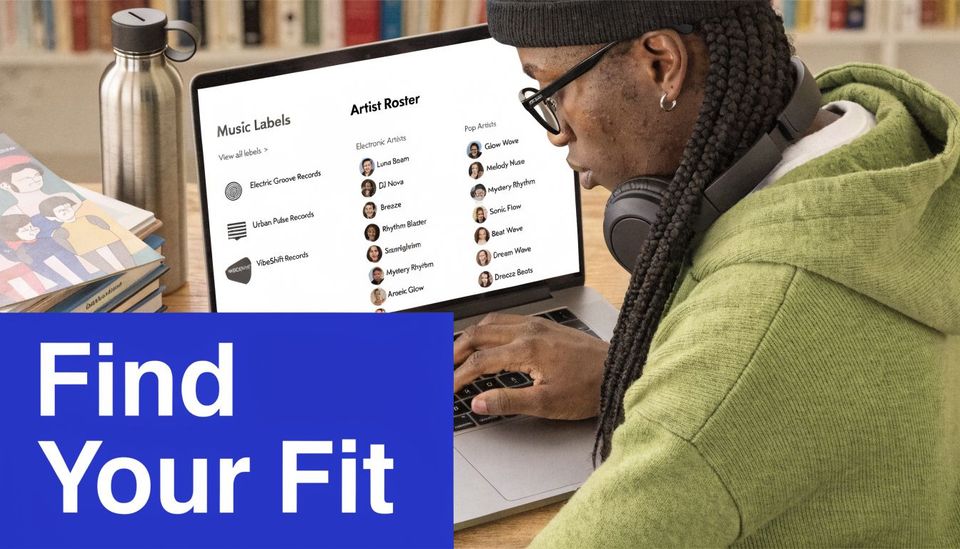
Artists lose weeks chasing labels that were never plausible targets. The usual mistake is sorting by brand recognition instead of actual fit. A label can like your genre in broad terms and still be the wrong home for your track.
Start with the last six to ten releases. Ignore the label bio for a minute and listen like an A&R manager with limited calendar space. Check whether your record matches the label's current taste, not the version of the label you remember from two years ago. Some imprints drift harder, slower, more vocal, more club-focused, or more playlist-friendly over time. If your song sits outside that direction, the submission is weak before anyone opens the email.
Check the roster, not just the genre tag
Genre labels are too loose to qualify a target properly. "House," "melodic techno," or "indie electronic" tells you very little about whether a label will take your record.
Look at the roster and ask better questions:
- Are new artists getting signed, or does the label mostly rotate familiar names?
- Do debuts sound polished but still raw enough to suggest discovery, or is everything coming from established acts?
- Are there artists one step above your level, or is the whole roster far ahead of where you are now?
- Does your track solve a gap in their catalog, or does it duplicate records they already have covered?
That last point matters. Labels do not need another decent version of something they released last month.
Read release frequency like a capacity signal
A label's posting rhythm tells you how much room they may have. If they release every Friday, they may have a packed pipeline months ahead. If they have gone quiet for long stretches, they may not have the team or momentum to do much with a new signing.
A simple check helps:
- Open their Spotify, Beatport, SoundCloud, or Bandcamp pages.
- Note the dates on the last several releases.
- See whether the cadence is steady, sporadic, or stalled.
- Compare that cadence with how quickly your track needs to come out.
This is a trade-off artists often miss. A respected label with slow scheduling can be worse for a time-sensitive single than a smaller outlet that can move in weeks.
Find the right contact, then verify it
Sending a strong demo to the wrong inbox is still a miss.
Use the label website first. Then check LinkedIn, Instagram bios, release posts, and distributor pages to see whether they name an A&R contact, demo form, or label manager. If the label gives a form, use the form. If they list a person, address that person directly. If all you can find is a generic info address, make sure the email body proves you know who they are and what they release.
Even subject lines matter here. EmailScout's subject line best practices are useful because label inboxes behave like every other crowded inbox. Clear beats clever.
Build a working shortlist
A useful list is small enough to research properly and broad enough to give the track options.
Split it into three groups:
- Primary label targets
Strong catalog fit, realistic roster fit, active release schedule. - Secondary label targets
Good sonic fit, but either more competitive or slightly less aligned. - Premiere and promo outlets
SoundCloud channels, repost networks, and tastemaker pages that can give the record attention without waiting for a signing decision.
That third group is where smart channel owners have an edge. Artists often come to premiere channels after spending too much time on labels that answer slowly, sign rarely, or are not set up for discovery anymore. A good channel can position itself as the direct route. Faster feedback, clearer placement, and a defined promotional outcome.
Good qualification protects the artist from wasted submissions. It also gives premiere services a sharper sales message, because the more precisely you understand why a label is a weak fit, the easier it is to explain why your channel is the practical one.
Write a pitch email that avoids the trash folder
Most label emails fail because they sound interchangeable. The sender praises the label vaguely, pastes the same bio into every message, and drops a link with no context.
That gets ignored fast.
Hyper-personalizing a pitch by referencing 2-3 specific label releases can boost open rates by 50%, while BCC mass emails have a nearly 100% chance of going straight to the trash, according to DropTrack's breakdown of demo submission mistakes.
Keep the subject line plain and useful
You don't need a clever subject line. You need one that tells the recipient what the message is.
A simple structure works well:
- Demo Submission – Artist Name – Style
- Promo Submission – Label Name – Track Title
- Premiere Request – Artist Name – Release Date
If you want to tighten the wording, EmailScout's subject line best practices are worth reviewing. The same logic applies here. Clarity beats cleverness.
Use a short structure that proves fit
A working pitch has four parts:
- A direct opener: State who you are and why you're writing.
- A fit sentence: Mention specific releases or a series from the label.
- A one-line track description: Give the recipient a reason to click.
- A clean link package: Private audio, short press kit, and any release context.
Here's a practical template:
Hi [Name],
I'm sending a new [genre/style] track for consideration. Your recent releases by [artist] and [artist], especially [release name], sit in the same lane as this record.
The track is a [brief description of groove, energy, or mood]. Private link below, plus a short press kit.
[private audio link]
[EPK link]
Thanks for listening,
[artist name]
This works because it respects time. It shows research without trying too hard.
What not to do
Avoid the habits that make curators stop reading:
- Don't write a life story: A&R needs context, not autobiography.
- Don't paste huge blocks of praise: Specificity sounds real. Generic flattery sounds copied.
- Don't attach giant files: Use private links that open quickly.
- Don't chase with repeated follow-ups: One polite check-in is enough.
A premiere request to a SoundCloud channel should follow the same logic. The difference is the ask. You're not asking for a signing. You're asking for placement, timing, and promotional support. That means release date, assets, and service type need to be obvious from the first message.
The alternative path paid SoundCloud premieres
For a lot of electronic music, the smarter question isn't “how do I get signed first?” It's “how do I get heard while I keep building?”
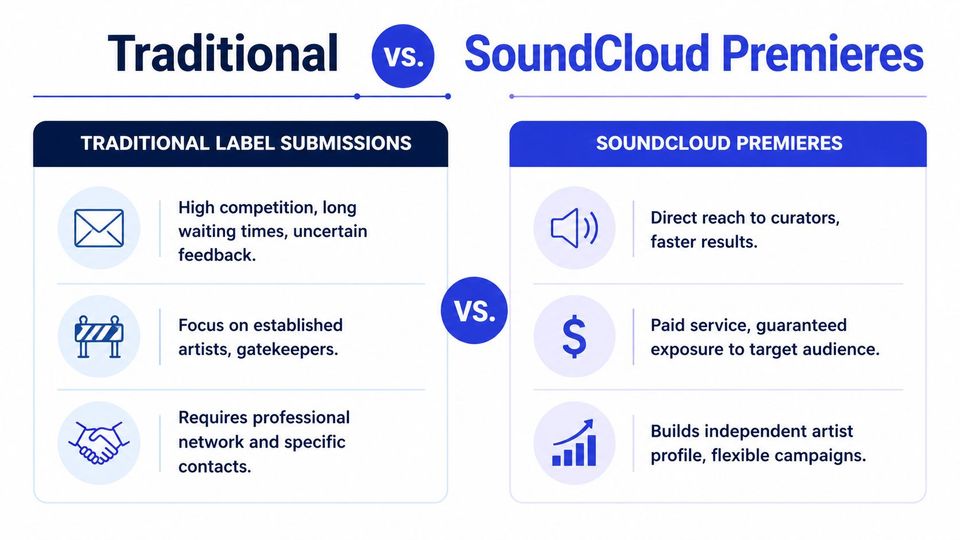
Paid SoundCloud premieres answer that question directly. A label or artist gives an unreleased track to a trusted channel. The channel uploads it, presents it to an audience that already follows that style, and turns a private file into a public event.
This isn't the same thing as a signing. That's the point.
Why this path works differently
Traditional label outreach asks one gatekeeper for approval. A premiere campaign asks a curator for audience access.
That distinction matters because many labels still prioritize artists inside their network. The “friends of friends” barrier is real, and the decline of open demo platforms points toward more targeted networks and paid SoundCloud promotion as a bypass, as discussed in this analysis of networking barriers and the shift away from open label demos.
For artists, paid premieres offer a few practical advantages:
- Speed: A release can move into promotion without waiting on long A&R cycles.
- Context: Genre-specific channels frame the track for the right audience.
- Control: The artist or label still decides how the wider release plan runs.
- Access: You don't need a warm intro to start the campaign.
For channel owners, this is the core value proposition. You are selling trusted placement to a defined audience, not pretending to be a record deal.
What artists and labels are really buying
The buyer usually wants one of these outcomes:
| Buyer need | Why a premiere helps |
|---|---|
| Early attention for an EP track | Creates a focal point before release day |
| Credibility in a niche scene | Association with a known channel adds context |
| Support for a self-release | Gives the track a launch asset outside the artist page |
| Backup when label outreach stalls | Keeps momentum instead of waiting on inboxes |
A good premiere can also outperform a weak label outcome in practical terms. A minor signing with no real promo support may look nice on paper but do little for discovery. A well-placed premiere puts the music in front of listeners who already care about the style.
Position your channel as a business, not a hobby page
If you run premieres, your messaging should reflect what buyers need.
Don't sell vague “exposure.” Sell a clear service:
- Genre fit: Explain what your audience comes to you for.
- Placement type: Distinguish premieres from reposts.
- Scheduling clarity: Show how release dates and booking work.
- Asset handling: Make it obvious what files and metadata you need.
If you want a deeper look at how the model works, this guide on SoundCloud premiere strategy covers the channel side well.
A premiere channel wins when it removes friction from a promo decision. The artist should know what to send, what they get, and when the track goes live.
This is why the two parallel worlds matter. One world asks for permission. The other lets artists and labels buy a relevant audience touchpoint and keep moving.
How to manage your premiere submissions efficiently
The business side of premieres gets messy fast.
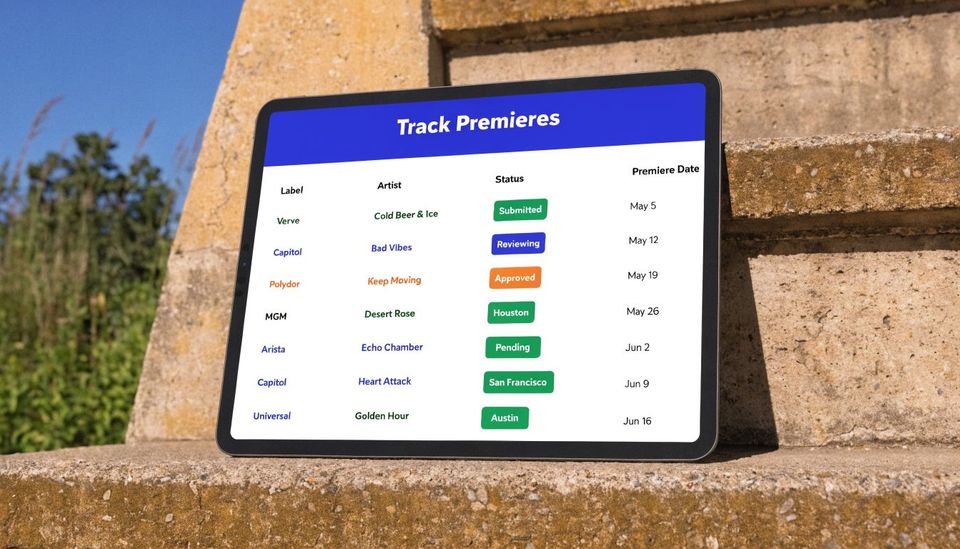
A label sends a DM. An artist follows up by email. Another client asks for a repost next week. Payment arrives separately. Artwork comes late. Someone changes the release date. You update one spreadsheet but forget the calendar. That’s how channels end up double-booking tracks, chasing files, and posting at the wrong time.
The workflow is usually scattered across inboxes, chat threads, notes, calendars, payment links, and SoundCloud drafts. Operators who treat premieres as a real business need a real intake process.
Replace inbox chaos with a fixed intake system
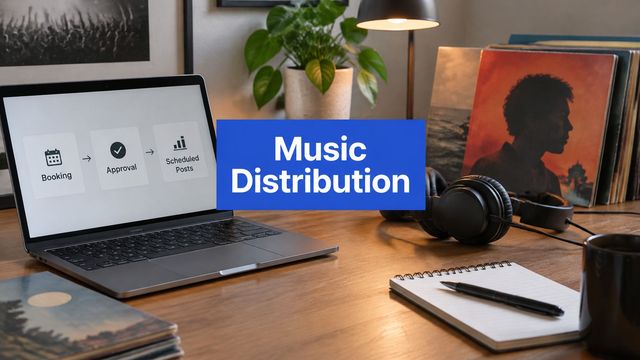
At minimum, every premiere channel needs a repeatable booking flow:
- Submission form
Collect track link, artist name, label name, artwork, release date, and service type in one place. - Approval step
Accept or decline based on fit, schedule, and audio quality. - Payment collection
Get payment confirmed before the booking is treated as live. - Calendar slot
Assign the upload date clearly so nothing overlaps. - Posting package
Store title format, description, credits, and links together.
The point isn't admin for admin's sake. The point is reducing mistakes that make your service look unreliable.
Treat reposts and premieres differently
A lot of channels lump these together. That's where confusion starts.
- Premieres need unreleased audio, timing coordination, title formatting, and release-window discipline.
- Reposts usually move faster, but they still need clear terms and a record of what was promised.
- Download support adds another layer if you want the campaign to collect emails or require follows, likes, comments, or reposts before access.
That last part matters because a premiere shouldn't just be a one-off post. It can also become a list-building asset. With a proper submission management setup for SoundCloud channels, operators can think beyond the upload itself and build a cleaner client experience around the campaign.
Administrative mistakes hurt trust faster than a weak caption ever will.
Make your service easier to buy
Artists and labels are more likely to book when the process feels defined.
That means:
- Clear submission requirements: Tell clients exactly what files and details you need.
- Visible service options: Separate premiere requests from repost requests.
- Payment certainty: Use a proper payment flow rather than back-and-forth reminders.
- Consistent delivery: Post on schedule with the agreed metadata and links.
For channel owners using paid placements, this is the difference between running a respected outlet and running a crowded inbox. Buyers don't just pay for audience access. They pay for reliability.
Conclusion
If you want to submit music to record labels, do it with discipline. Target the right labels, send polished material, and write emails that show real fit. That still matters.
But the bigger lesson is this. Label submissions and audience building are not the same job. The traditional route is selective, slow, and shaped by limited release capacity and existing networks. The SoundCloud premiere market solves a different problem. It gives artists and labels a direct promotional path when they need listeners now, not just approval later.
For channel owners, that's the opportunity. A well-run premiere or repost service meets a real market need. It turns scattered promo requests into a defined offer with clear value for both sides.
Premierely is built for channel owners who treat premieres and reposts as a business. Accept track submissions, collect payments through Stripe Connect, schedule uploads, automate SoundCloud posting, and use download gates to collect emails or require likes, reposts, comments, and follows from one system.