
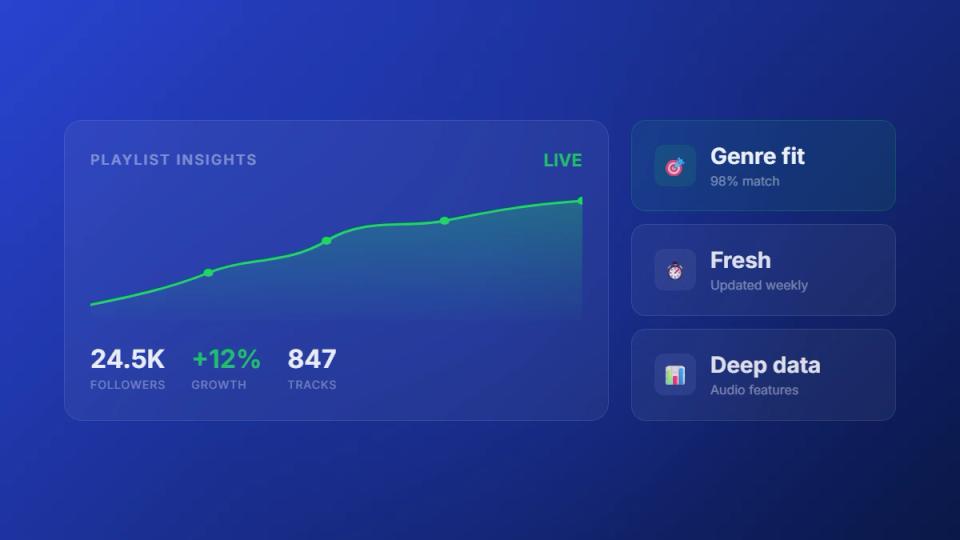
A proper spotify playlist analysis is no longer just for major labels. For serious SoundCloud channel owners, it is a critical tool. This process is not about guesswork. It is about using data to understand why a track performs well on Spotify. You can then apply these insights to your SoundCloud premiere and repost strategy. This gives you an advantage backed by real numbers. The goal is to turn data into actions that build your channel's authority.

Use Spotify data for a winning SoundCloud strategy
If you are a SoundCloud promoter running a premiere channel, you are in business. You manage a two-sided marketplace. You serve labels submitting music and the audience that trusts your curation. A solid Spotify playlist analysis provides the intelligence to serve both sides better. It helps you pick tracks with proven performance and schedule them for maximum impact.
This guide gives curators practical steps to professionalize their operation. We will show you where to find key metrics. We will also show how to read listener data to spot real opportunities.
Understanding a track's Spotify performance before you premiere it on SoundCloud is like getting a cheat sheet for your content calendar. It reduces the risk in your schedule. It also helps you deliver better results to the labels you work with.
Why this data matters for your premiere business
When you treat your channel like a business, you must make informed decisions. Digging into Spotify data helps you hit several key goals. These goals directly affect your premiere and repost services.
- Spot high-potential tracks: Find songs with strong listener engagement before you agree to a premiere. Look for high save rates and low skip rates.
- Justify your premiere pricing: Use hard data to show labels the value you bring. This makes it easier to justify your placement fees.
- Improve your scheduling: Align your SoundCloud premieres with a track’s existing momentum on Spotify. This creates a much bigger promotional wave. You can learn more in our guide on connecting SoundCloud to Spotify.
This approach is about moving from a messy email inbox to a structured booking system. Platforms like Premierely are built for this model. They help you automate what you're already doing manually with submissions and scheduling.
By adding data analysis into your workflow, you build a more credible premiere service. This data-first strategy improves your channel’s reputation. It also delivers better results for the artists and labels who count on you.
Find the data that actually matters
A proper spotify playlist analysis is built on good data. Your goal is to piece together a complete picture of a track's journey. That starts with knowing where to look. For premiere services or labels, a few places provide the numbers that count.
The most important one is Spotify for Artists. This is the official dashboard for artists and their teams. If a label wants you to premiere their track, make getting access a standard part of your intake process. It is the only way to get verified performance metrics without guesswork.
By making Spotify for Artists access a requirement for premiere consideration, you professionalize your operation. It tells labels you’re running a data-driven service, not just a casual repost channel. This ensures you're working with real numbers.
Look inside the Spotify for Artists dashboard
Once inside, you need to know where to focus. The dashboard has a lot of information. For analyzing playlist quality, you want data showing listener engagement and audience fit.
Your main destination is the Audience tab for the specific track. This is where you find the breakdown of stream sources. This is critical for understanding where listeners are actually coming from.
- Your profile and catalogue: Streams from people who searched for the artist directly.
- Listeners' own playlists and library: A huge signal of fan loyalty, meaning people saved the track.
- Other listeners' playlists: The key source for our analysis, from user-curated playlists.
- Spotify editorial playlists: Streams from official, Spotify-curated lists.
- Spotify algorithmic playlists: Discover Weekly, Release Radar, and other algorithm-driven recommendations.
Move beyond the dashboard for a full picture
Spotify for Artists does not tell you everything. It will not show you the follower counts or growth trends of third-party playlists. For that, you need to pull in data from other places.
The Spotify API is a powerful option for developers. But it is often too technical for busy channel owners. This is where third-party services come into play. To dig into a spotify playlist analysis, knowing which data collection software tools are available is a major benefit.
These platforms can export playlist data and track follower trends. They help you build a complete performance overview. That overview informs your SoundCloud premiere strategy and helps you make smarter curation decisions.
Interpret key playlist performance metrics
Once you have your data, the real work of your spotify playlist analysis begins. You must focus on the metrics that signal an engaged audience. It is easy to be impressed by a big follower count. That number alone rarely tells the full story.
As a channel owner, your job is to find playlists with the right listeners. These are people who are actively listening and connecting with the music.

Before we start, it’s worth understanding KPI vs metrics in a practical sense. We are looking for numbers that point to a playlist’s health. These metrics guide your premiere pitching and help you prove real value.
The most valuable playlists are not always the ones with the most followers. They are the ones with the highest engagement-to-follower ratio. A list with 10,000 active fans is more powerful than one with 100,000 passive followers.
The table below breaks down the key numbers inside Spotify for Artists. It explains what they mean for your curation or promotion strategy.
Key Spotify metrics and what they mean for curators
| Metric | What It Measures | What It Tells You |
|---|---|---|
| Saves-to-listeners ratio | The percentage of listeners who save a track to their library. | A high ratio means the track is resonating deeply; it’s a keeper. This is a powerful signal of a perfect genre fit. |
| Skip rate | The percentage of listeners who skip the track before 30 seconds. | A high skip rate is a major red flag. It suggests a poor track-to-playlist match or low-quality audio. |
| Stream sources | Where the streams are coming from (e.g., active listening vs. algorithmic). | High numbers from "Listeners' own playlists and library" show that people are adding the track to their personal collections for repeated plays. |
| Follower growth | The rate at which a playlist gains new followers over time. | Steady, organic growth indicates a healthy, well-curated playlist. Sudden spikes can be a sign of fake followers. |
| Listener demographics | Age, gender, and location of the playlist's audience. | This tells you if the playlist's audience aligns with the artist's target market, which is crucial for regional campaigns. |
These figures move you beyond vanity metrics. They give you context to know if a placement is genuinely helping an artist build a fanbase.
Core engagement metrics to track
When you get into Spotify for Artists, these numbers paint a clear picture. They show whether a track is hitting home or getting ignored.
- Saves-to-listeners ratio: This is a go-to indicator for genuine fan love. When someone saves a track, they're saying, "I want to hear this again." It is a huge vote of confidence.
- Skip rate: A high skip rate is your biggest warning sign. It tells you listeners are hitting "next" almost immediately. This usually means a serious mismatch between the track and the playlist's vibe.
- Stream sources: Pay close attention to streams from "Listeners' own playlists and library." This metric confirms that people are actively incorporating the track into their own lives.
For more granular analysis, you can also use tools for a technical breakdown. For instance, a reliable BPM analyzer can help you quickly check if a track's tempo and energy align with a playlist.
Analyze follower growth and audience location
Beyond immediate engagement, you need to look at the playlist's overall health. Look at the follower growth trend over the last few weeks or months.
You want to see steady, organic growth. That is the hallmark of a well-run playlist. If you see sudden, massive spikes in followers, be skeptical. This can often point to botted followers, which add zero value.
Finally, always check the audience location data. This is non-negotiable. If you are a channel owner focused on a specific scene, you need to see that listeners are concentrated there. A playlist with a huge following elsewhere will not deliver the targeted exposure your clients pay for.
How to analyze regional trends in the Dutch market
If you're in the electronic music scene, the Netherlands is more than just another market. It's a global hub for techno and house music. Focusing your spotify playlist analysis here is a strategic move. It gives you an advantage when working with labels targeting this audience.
Your first move should be to look beyond your niche. Dive into big Dutch playlists, even mainstream ones. Figure out what makes them tick. Look at follower growth, save rates, and how fast new music gains traction. This gives you a blueprint for local listener habits.
The real power comes when you connect these Spotify insights to your SoundCloud operations. Imagine scheduling a premiere just as a track gets added to a popular Dutch playlist. For channel owners using a premiere booking platform like Premierely, this data-driven approach turns an upload into a strategic launchpad.
Zero in on Dutch playlist performance
The playlist scene in the Netherlands is a major driver for music discovery. Charts like 'Playlist Top 40 Nederland 2026' shape what people listen to.
Diving into the numbers, you'll see how engaged these listeners are. The 'HITS 2026 – Beste Muziek – Qmusic TOP 40 NL' playlist shows consistent organic follower growth of 49 points. That signals a healthy, active audience. This aligns with broader Spotify listener habits in the Netherlands, where 82% of users listen to personalized playlists weekly.
To get this level of detail, you'll need to go beyond Spotify for Artists. Third-party tools that track playlist health are essential here.
This screenshot from a playlist analysis tool shows the vital signs you should look for.
Metrics like follower trends and energy levels separate a real audience from inflated numbers.
Translate NL data to your SoundCloud strategy
Once you find healthy, growing playlists, put that intel to work. This is how you shift from just another premiere service to a strategic partner.
- Align your curation: Did your analysis show certain BPMs or moods are popular in NL playlists? Start prioritizing similar tracks for your premiere schedule. This shows labels you know what's working now.
- Time your premieres: If a key Dutch playlist updates every Friday, schedule high-potential premieres for Thursday. You build initial hype, making the track a more attractive pick-up.
- Inform your clients: Share your data. A simple message like, "Your track has a similar vibe to what's trending on 'Hits Top 50' in the Netherlands," is powerful.
By using regional Spotify data, you’re not just selling a premiere slot. You’re selling targeted market intelligence. This positions your channel as an essential promotional partner for labels breaking into the Dutch electronic scene.
Turn analysis into actionable SoundCloud tactics
Good data is useless until you act on it. A deep spotify playlist analysis gives you a map. The real work starts when you connect those numbers to your SoundCloud operations. This is where charts become smart business decisions for your premiere and repost service.
It is about creating a direct line from verified listener behavior on Spotify to your promotional moves. For instance, if a track is popular with a specific demographic, you have a clear target. You are no longer guessing. You are executing a data-backed plan.
The entire workflow is simpler than it sounds. You gather the data, find patterns, and turn insights into strategy.
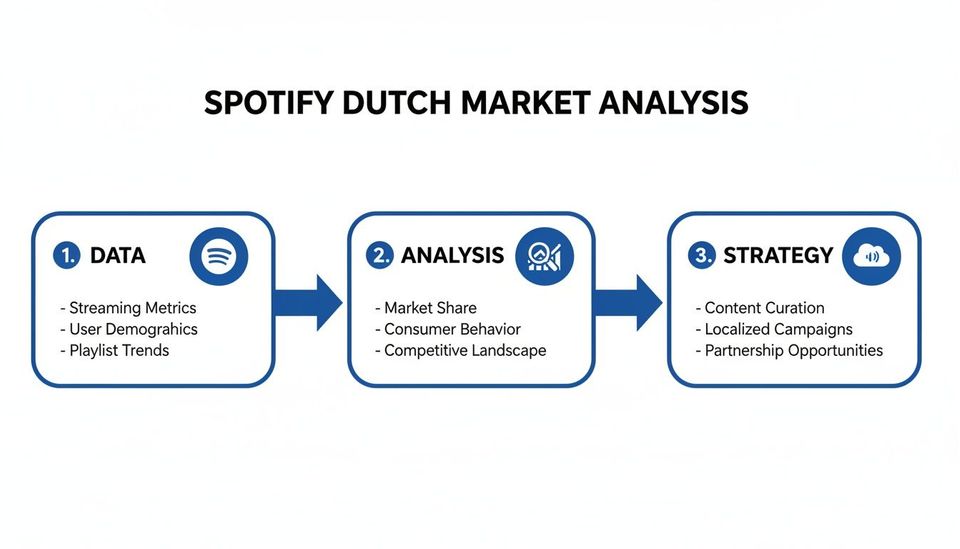
This process turns raw Spotify data into a concrete foundation for your SoundCloud premiere channel. It allows you to make decisions backed by real numbers.
Align your premiere schedule with Spotify momentum
One of the quickest wins is using your analysis to fine-tune your premiere schedule. Stop booking tracks on a first-come, first-served basis. Start timing them to ride existing waves of momentum.
- Coordinate with playlist updates: Is a track gaining steam on a major Spotify playlist that refreshes every Friday? Scheduling your SoundCloud premiere for Thursday builds pre-release hype.
- Target similar tastes: Did analysis show a track resonates with fans of a specific artist? Group it with other premieres on your channel that fit that exact vibe. This gives your followers a more cohesive listening block.
Use data to prove your value to labels
When you run your channel like a business, communication is everything. Spotify data is the best tool to show labels the value you provide and justify your rates.
Your Spotify analysis isn't just for you. Share highlights with labels to prove you’ve done your homework. Presenting data like low skip rates or a high saves-to-listeners ratio shows you’re a serious partner.
Take the Dutch Spotify market in 2026 as an example. Local hitlists are a big deal. The playlist 'Hits Top 50 | Hitlijst NL februari 2026' has a massive 294,063 saves. This proves there's a huge appetite for chart-ready hits. This list overlaps with the techno-house circles many Premierely users cater to.
When you can show a label that their track’s sound matches these trends, your premiere offer becomes a strategic partnership. You can check out more insights on the Dutch music market on Spotify yourself.
Optimize your download gates and repost strategy
Finally, your Spotify analysis should inform how you grow your own audience on SoundCloud. Use demographic and location data to sharpen your cross-promotional game.
If you discover a track is popular in a certain city, focus your repost network efforts there. This targeted approach is more effective than a scattergun strategy. For more ideas on channel growth, read our guide on how to effectively promote on SoundCloud.
This data also helps you build better download gates. Knowing the audience allows you to tailor your call-to-action. You can collect emails from the most dedicated listeners. This turns a free download into a long-term asset for your community.
Answer common spotify playlist analysis questions
Got questions about spotify playlist analysis? You’re not alone. I see the same ones from label managers and curators trying to make sense of the data.
Let's cut through the noise. Here are some real-world answers to the most common questions.
How often should I analyze my target playlists?
For your active channels, a monthly check-in is a great rhythm. It’s frequent enough to spot trends without drowning you in data. This keeps you informed on which playlists are moving the needle.
However, there is one big exception: premiere pitches. Always run a fresh analysis one to two weeks before pitching a big release. You need the most current data on that playlist's audience and engagement.
Can this analysis help me price my premiere services?
Yes, absolutely. This is one of the most powerful ways to justify your pricing. When you can show a label your SoundCloud premieres lead to placements on healthy Spotify playlists, you're selling a result.
Point to the hard numbers. High save rates and low skip rates are concrete proof of your value. This data shows you offer more than a simple upload. From there, a premiere booking platform like Premierely can help you set premiere prices and collect payments automatically.
Data-backed pricing transforms your service from a simple placement to a strategic investment for labels. It shows you understand the market and can deliver measurable impact, justifying a premium fee.
What is a good follower growth rate for a playlist?
Forget about finding a single magic number. It depends on the playlist's size, age, and niche. Instead, what you want to see is steady, consistent growth. Slow and steady is the best sign of a real, organic audience.
Be wary of sudden, massive spikes. Those are often a red flag for botted followers, which bring zero value. For a well-run niche playlist, a few hundred to a few thousand new followers each month is a fantastic signal. Just cross-reference that growth with other engagement metrics.
Should I track both my own and other playlists?
Absolutely. You need to do both. Tracking your own playlists is non-negotiable. It helps you understand your audience and prove your value to labels. This data is your report card.
At the same time, keeping an eye on other playlists is about spotting opportunities. It’s how you find the next great placement for a client’s premiere. A smart strategy requires you to do both to get a complete picture of your musical corner.