
Chasing the best playlist spotify is usually framed as an artist growth tactic. For a SoundCloud channel owner, that framing misses the core lesson. Spotify playlists compete with you. They shape attention, trust, and the idea of who gets to break a record first.
Spotify runs on a closed editorial system. Access is limited, timing is controlled upstream, and the platform owns the listener relationship. A SoundCloud premiere channel is the opposite. You can set terms, define your niche, build direct label relationships, and turn curation into an actual service instead of waiting for platform approval.
That difference matters more than any single playlist placement. Spotify is useful to study because its best playlists package authority with discipline. The branding is tight, the update cadence is predictable, and the user always understands what each playlist is for. Channel owners should copy that operating standard, not the illusion that playlist success alone builds a durable business. If you want a good example of how Spotify steers listening behavior at the product level, even outside editorial, look at how Smart Shuffle changes recommendation flow on Spotify.
I have seen too many premiere channels treat curation like a favor instead of a product. That approach creates slow replies, vague submission rules, inconsistent posting, and weak repeat business. Spotify wins because the offer is clear. A strong SoundCloud channel can do something Spotify cannot. It can pair taste with access and close deals directly.
The playlists below matter for two reasons. They show how Spotify organizes demand, and they expose what a better premiere service should borrow, avoid, and sell more directly.
1. Today’s Top Hits
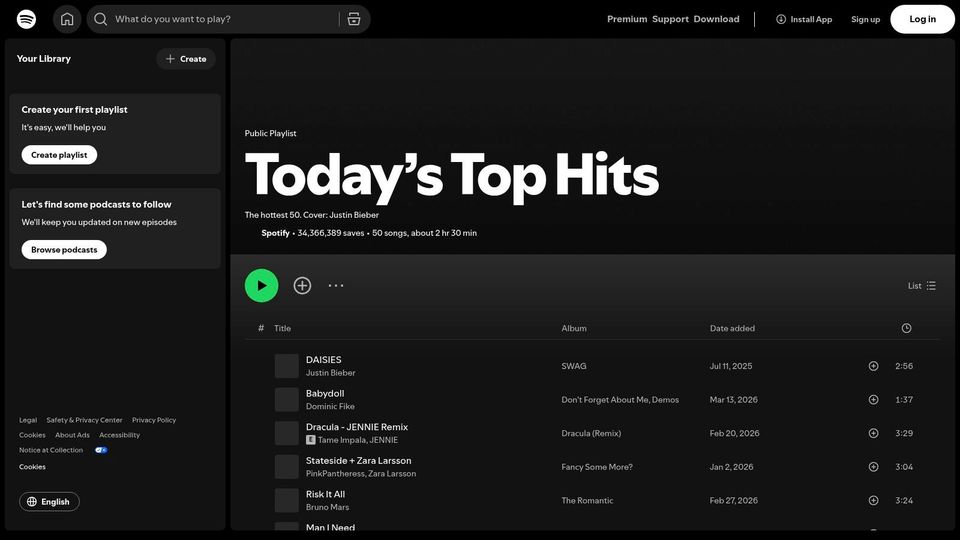
Today’s Top Hits on Spotify is what a controlled distribution machine looks like. Spotify decides the frame, the timing, and the audience access. The playlist does not just reflect demand. It helps set it.
That matters if you run a SoundCloud premiere channel, because your business works under the opposite model. Spotify owns the listener relationship inside a closed system. You can build direct relationships with labels, managers, and artists, then turn trust into repeat premiere bookings. The takeaway is not "copy Spotify's scale." The takeaway is to study how clearly Spotify packages authority, then apply that discipline in a business you control. I break that down further in this Spotify playlist analysis from a channel strategy perspective.
Today’s Top Hits feels bigger than a normal playlist because every part of it signals editorial confidence. The title is simple. The purpose is obvious. The updates feel current. Listeners know what they are getting before they press play.
Many SoundCloud channels miss that standard. They post strong music behind inconsistent cover art, loose naming, slow replies, and vague submission instructions. Good taste alone does not fix weak presentation. If a label has to guess how your premiere process works, you lose business before the record is even heard.
What channel owners should copy
Use this playlist as an operating model for presentation and process:
- One clear promise – Define exactly what your channel premieres and what it does not.
- Consistent packaging – Keep artwork style, title format, and metadata clean across every upload.
- Reliable cadence – Train labels to expect specific posting windows and response times.
- Visible intake rules – Put genre fit, file requirements, lead times, and fees in one place.
Spotify can reinforce playlists with product features, algorithmic distribution, and interface control. A SoundCloud channel cannot. Chasing platform mechanics you do not own is a distraction. Building a premiere service that is easy to understand, easy to book, and hard to confuse is a better use of time. That is also why product-level features like Smart Shuffle behavior and playlist steering are interesting to study, but not a substitute for a clear offer.
My rule is simple. If a label cannot understand your niche, turnaround time, and submission method in under a minute, your channel is leaving money on the table.
Today’s Top Hits reduces uncertainty for the listener. A strong SoundCloud premiere page should reduce uncertainty for the buyer.
2. RapCaviar
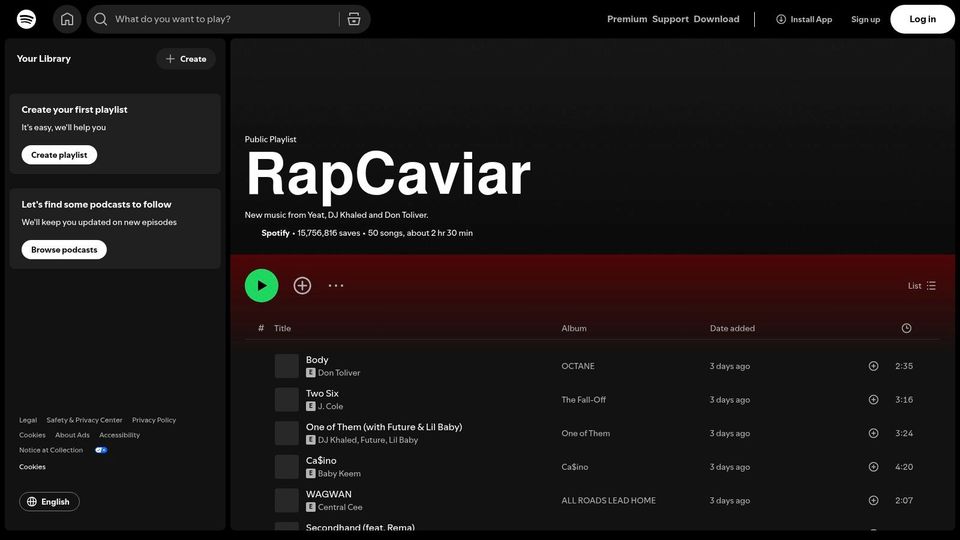
RapCaviar on Spotify isn't just a playlist. It's a brand. That's why it matters. A playlist becomes much harder to replace once people associate it with a scene, not just a track list.
Most SoundCloud channels undersell this. They act like uploads are the product. They aren't. The product is the trust you've built with a specific audience.
Brand matters more than volume
RapCaviar is a good reminder that curation works best when it has a point of view. Spotify's closed system can turn that point of view into mass distribution. You probably can't. But you can make your channel mean something specific.
That usually looks like this:
- Genre clarity – A label should know within seconds whether you're right for their record.
- Cultural context – Your captions, art direction, and repost choices should signal taste.
- Submission standards – Better filters attract better submissions.
I've seen channel owners chase "best playlist spotify" logic too rigidly. They start broadening into adjacent sounds because they think bigger catalog equals bigger reach. On SoundCloud, that often weakens your pitch. Broad playlists can win inside Spotify because Spotify supplies the traffic. Your channel has to earn attention directly.
A better way to think about it is through pattern recognition. Spotify's editorial machine rewards signals and momentum. Channel owners can study those signals through tools and breakdowns like this Spotify playlist analysis guide, then decide how to present their own offer.
RapCaviar shows the difference between audience size and audience identity. The second one is what makes a premiere channel sell.
If your audience follows you for a specific kind of record, labels treat your upload slot as a targeted placement. That's a better business position than being vaguely "good for exposure."
3. mint
mint on Spotify is one of the few major Spotify playlists that electronic operators should study closely. Not because it is the biggest prize, but because it exposes how Spotify handles a genre that still has real scene rules.
That matters if you run a SoundCloud premiere channel.
Spotify can take a dance record and route it through a closed editorial system built for scale, retention, and broad listener fit. A premiere channel works in a more direct market. Labels submit, you choose, the audience reacts, and the value is easier to trace back to taste, timing, and trust. mint sits right between those two worlds. It favors records that feel current, accessible, and playlist-ready, while still carrying enough dance identity to make sense to genre listeners.
That balance is hard to fake.
mint rewards controlled range
A lot of electronic labels treat mint as a status marker. The more useful way to read it is as a selection model. Tracks that get traction there usually sit in a controlled middle. They are polished enough for passive streaming, but not so abrasive, long-form, or niche that they break the playlist environment.
That is a useful lesson for channel owners, especially in electronic music, where "open-minded" curation often turns into brand drift. A page that starts with a clear house or techno identity can lose its commercial value fast once the feed slides into melodic crossover, vocal dance, Afro house, indie edits, and whatever else arrived that week.
The operators who hold attention usually get three things right:
- The genre line is obvious. A label can tell in seconds whether the channel fits the release.
- The upload pattern is predictable. Regular premieres train both the audience and the submitter base.
- The presentation adds scene context. Artwork, captions, and track selection show judgment, not just access.
Spotify's chart consumption is also concentrated. The top 20% of songs in Top 200 charts account for 80% of streams globally, according to SQ Magazine's Spotify user statistics summary. In Spotify's system, concentration increases the value of editorial access because a small number of tracks capture a disproportionate share of listening. On SoundCloud, a narrower outcome can still be commercially useful. A few thousand right listeners can matter more than broad but weak exposure.
That is the main trade-off.
Spotify rewards genre accessibility at scale. A SoundCloud premiere business usually gets better results by staying narrower, clearer, and more opinionated than Spotify can afford to be. As a channel owner, I would rather have a lane that a label can buy into than a vague "electronic" brand with no filtering power.
What channel owners should copy, and what they should avoid
mint gets one thing very right. It packages electronic music for repeat listening without making the experience feel random. That discipline is worth copying. Your premiere page should have a stable taste profile, consistent release quality, and enough visual and editorial consistency that a label knows what it is paying for.
What does not translate is editorial neutrality. Spotify can stay broad because Spotify owns distribution. Independent channels do not. If your page tries to please every electronic subgenre equally, it stops feeling selective, and selective is what sells.
4. Fresh Finds
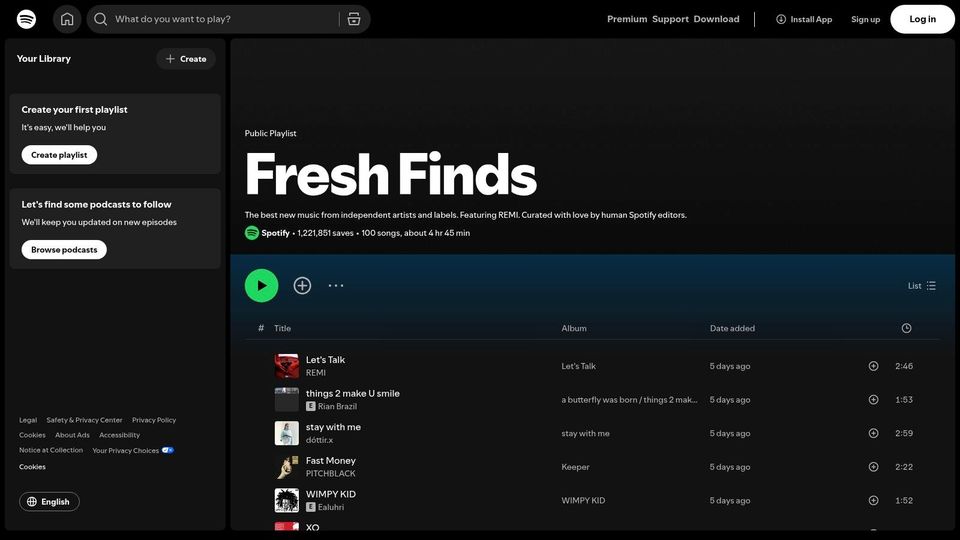
Fresh Finds on Spotify matters because it solves a problem many independent channels still mishandle. Discovery only works if the audience trusts you to find records early, before everyone else starts calling them obvious.
That premise fits the SoundCloud premiere business better than prestige-led branding ever will. Spotify can turn early signals into scale because it controls listening, recommendation, and retention inside a closed system. A SoundCloud channel owner works in a more direct market. Labels pay for attention, context, and timing they can use. That makes your positioning simpler and more commercial. Be known for first support in a defined lane.
I have seen smaller premiere pages lose credibility by presenting themselves like broad editorial magazines. The offer sounds impressive, but the catalog says otherwise. Fresh Finds takes the cleaner route. It tells artists and listeners what the playlist is for.
That clarity helps on the business side too.
If your channel is discovery-led, you can reject tracks that arrive too late, feel overworked, or already did the rounds elsewhere. You can also write copy that frames a premiere as early validation, not a recycled repost with new artwork. That difference affects conversion. It is easier for a label to buy a believable niche story than a vague promise of tastemaker status.
A practical version looks like this:
- Homepage clarity. State the genres, release stage, and audience you serve.
- Submission control. Filter for records that benefit from first exposure, not tracks already saturated across promo channels.
- Release framing. Treat each upload like a selective co-sign with context, credits, and a reason it is arriving now.
- Follow-up logic. Build a process that connects premieres to later platform support, including Release Radar timing and playlist follow-through.
Smaller channels sell best when they offer credible early discovery for a specific audience, with a process labels can understand and book against.
Fresh Finds is useful because Spotify proves discovery can be packaged at scale. The lesson for SoundCloud operators is narrower and more practical. Copy the clarity, copy the early-positioning, and skip the platform-wide neutrality. Your advantage is not acting like Spotify. Your advantage is running a selective premiere service that makes business sense for artists, labels, and your own channel.
5. New Music Friday (US)
New Music Friday (US) on Spotify teaches one lesson better than any other playlist here. Cadence creates habit.
Listeners know when it updates. Artists plan around it. Teams watch it because timing matters as much as taste.
Weekly rhythm beats random activity
Most premiere channels lose momentum through inconsistency, not weak music. They post three tracks in two days, then disappear for a week. That pattern makes your audience passive and your submitters nervous.
New Music Friday works because everyone knows the clock. You can borrow that logic without copying the exact schedule.
A practical setup for SoundCloud is:
- Fixed upload windows – The audience learns when premieres land.
- Clear lead times – Labels know when to submit for realistic placement.
- Calendar-first operations – You stop booking from memory and inbox chaos.
This is also where Spotify becomes a bad comparison if you run a business manually. Spotify can absorb fast turnover because it owns the listening environment. You don't. If a booked premiere gets delayed because a payment is missing or artwork arrived late, that hurts trust quickly.
That's why release-aware operators pay close attention to systems like Release Radar workflows and timing signals, even if the actual execution on SoundCloud is different. The lesson isn't "copy Spotify's release stack." It's "treat scheduling as part of the product."
What labels actually value here
Flexibility sells, but only if it stays organized. Labels like channels that can work around release plans, embargoes, and short-notice pushes. They don't like channels that promise flexibility and then lose track of dates.
A real booking system beats friendly chaos every time.
6. ¡Viva Latino!
¡Viva Latino! on Spotify exposes a mistake I see all the time on SoundCloud. Channel owners treat specificity like a ceiling, when it usually works better as a sales asset.
Spotify can scale a playlist around language, region, and cultural cues because its editorial system is built for audience segmentation. It controls search, recommendations, follow behavior, and listening context inside one closed product. A SoundCloud premiere channel does not get that advantage. You have to earn fit more directly, then prove it to artists and labels in business terms.
That difference matters.
On Spotify, a playlist like ¡Viva Latino! can pull in broad listener demand while staying culturally legible. On SoundCloud, the lesson is not "cover more Latin records." The lesson is to define exactly who your premiere service is for, then package that identity clearly enough that submitters can buy with confidence.
A focused channel usually performs better than a vague one because the audience knows why it is there. Labels know whether the slot matches the release. Your repost network, artwork choices, caption language, and upload history all reinforce that promise.
For a SoundCloud premiere business, that usually means:
- Owning a clear lane. A language niche, diaspora audience, city scene, or regional club pocket is enough if the fit is real.
- Using recognizable cultural signals. Titles, visuals, and partner accounts should match the audience you claim to serve.
- Selling relevance, not generic reach. A smaller channel with the right listeners often beats a larger one with weak alignment.
I have seen niche channels outperform broader ones on repeat bookings for one simple reason. They are easier to trust. If a label handles Latin house, reggaeton, dembow, or bilingual pop crossover, it wants a channel that already speaks to that audience instead of a catch-all page trying to please everyone.
Field note: The tighter the audience definition, the easier it is to price your premiere as targeted exposure instead of interchangeable upload space.
¡Viva Latino! is a useful reference because it shows how big platforms turn identity into scale. SoundCloud operators should borrow the discipline, not the distribution model. Spotify owns the ecosystem. You own the relationship, the packaging, and the pitch.
7. Dance Hits
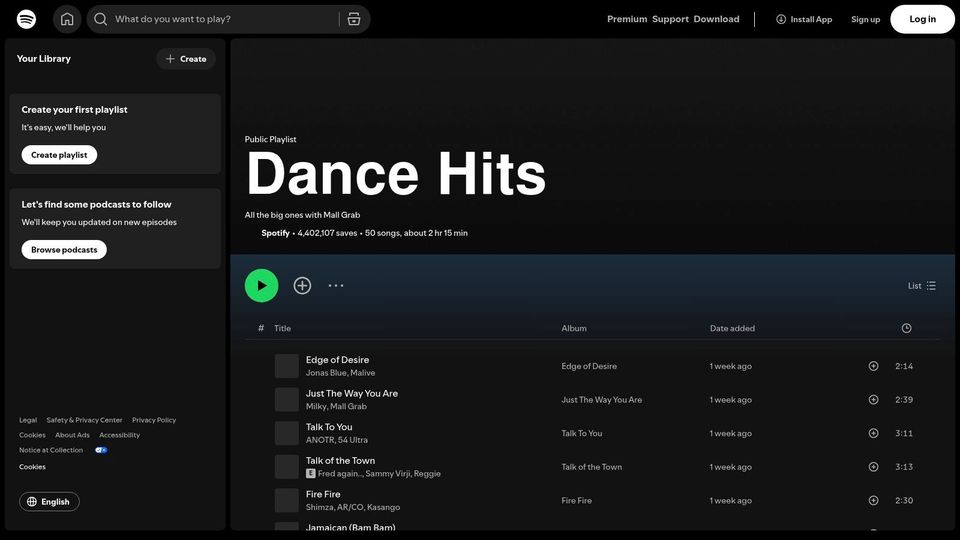
A lot of channel owners overrate cool factor and underrate function. Dance Hits on Spotify works because it favors records people can use fast. Big toplines, immediate drops, familiar pacing, low friction on repeat.
That makes it a useful counterweight to mint. mint often signals taste and electronic identity. Dance Hits pushes harder toward consumption at scale. From a SoundCloud premiere operator's perspective, that distinction matters because these are two different products. Spotify can separate them inside a closed system and route listeners accordingly. An independent channel owner has to make that positioning obvious upfront or spend half the week correcting bad submissions.
Separate utility from identity
Some dance records win because they fit a context. Gym playlists, party sets, commute listening, background repeat. Others win because they mean something to a scene. They travel through DJs, niche pages, small labels, and trusted tastemakers before they ever touch broad numbers.
Dance Hits usually sits closer to the first camp.
That is where many SoundCloud channels misprice themselves. They promise underground credibility while posting records built for easy, mainstream replay. Or they advertise reach to commercial dance labels while their audience really responds to heads-down club cuts. The result is predictable. Wrong submissions, weak conversion, annoyed clients.
The user-built benchmark playlist Most Streamed | Top Played | 500Mil+ notes that only about 1,000 tracks have passed 500 million lifetime streams. I do not read that as a target. I read it as a business reminder that mass-repeat listening concentrates around a very small pool of songs.
For a premiere channel, the practical lesson is simple. Decide what kind of demand you serve, then package it clearly.
Better positioning for dance channels
- Mainstream-leaning channel. Sell reliable exposure for vocal-forward, accessible records with immediate replay value.
- Underground-leaning channel. Sell selection, scene fit, and an audience that cares who is early.
- Hybrid channel. Works only if your branding, upload history, and submission rules explain the split without confusion.
Dance Hits is useful because it shows how Spotify organizes by listening job, not just genre label. SoundCloud operators can borrow that discipline even if the business model is different. Spotify controls discovery from inside the platform. You have to sell the fit directly.
8. Your SoundCloud channel The premiere business you control
Spotify trained artists to chase access they cannot buy directly. A SoundCloud premiere channel works on the opposite model. You set the terms, define the audience, price the slot, and decide what goes live. Spotify is not the only place to find listeners, and this list of free Spotify alternative platforms shows where else your music can grow.
That control has commercial value if you run it like an operator.
A label cannot email RapCaviar and book next Thursday. It can do that with your channel if your process is clear. That is the contrast between Spotify's editorial machine and the direct world of premieres. Spotify is excellent at platform-scale discovery. Your advantage is a visible offer, faster decisions, and a business relationship the client can understand.
Channels that monetize well usually fix the same operational problems early:
- One intake path for submissions, instead of scattered email threads and DMs
- A defined payment step tied to approval, instead of manual invoicing and payment chasing
- A live release calendar that prevents booking conflicts
- A post-premiere action plan that turns attention into follows, reposts, comments, downloads, or email capture
I have seen good curation undermined by weak admin more times than weak music. The record is strong, the audience fit is real, then the channel loses trust because assets are missing, dates slip, or nobody can confirm whether the slot is still booked.
That is avoidable.
The practical lesson from Spotify is not "act like editorial." You do not have Spotify's closed distribution advantage, and pretending otherwise creates the wrong client expectations. The better lesson is to copy the parts Spotify gets right. Clear standards, consistent packaging, predictable release timing, and a recognizable product. Then apply them to a business model Spotify does not serve.
Tools matter here, but only if they remove friction in the sales process. Payment handling inside the booking flow helps because it replaces back-and-forth collection with an actual checkout step. Download gates matter for the same reason. They turn a premiere from a one-day upload into an audience-building asset with measurable actions attached.
This also affects promotion outside SoundCloud. Labels care about how a premiere spreads after it posts, including sharing playlists on platforms like YouTube, private fan groups, and DJ networks. If your service ends at upload, you are selling a post. If your service includes distribution habits and audience actions, you are selling a campaign.
Spotify owns listener attention inside its walls. Your channel can own the transaction, the communication, and the client experience. That is the business you control.
9. The anatomy of a perfect pitch for any platform
Most bad submissions fail before you even hit play. The music might be fine. The pitch is messy.
That applies on Spotify and on SoundCloud. The difference is that you can define your intake rules directly. Spotify doesn't explain itself to every submitter. You can.
Make the pitch format part of the service
Good channel owners don't just evaluate pitches. They shape them. If you publish a clear intake structure, you cut follow-up, reject faster, and spot strong fits earlier.
A useful minimum looks like this:
- Clear subject line – Artist name, track title, and request type.
- Private streaming link – Not a raw file dump.
- Release details – Date, label, and whether the track is exclusive.
- Short story – Two or three sentences on why the record matters now.
- Fit explanation – Why your channel specifically makes sense.
The best submissions also respect your audience. They don't say "great for any electronic platform." That's instant weak signal. They tell you why this record belongs on your page.
Spotify's editorial dominance shapes expectations here too. Existing content around best Spotify playlists often focuses on underrated tracks and hidden gems, but leaves out how electronic labels connect playlist strategy with paid promotion workflows and SoundCloud premiere support (Hidden Gems playlist context). That's the practical gap channel owners can fill.
What to tell submitters
Send them a pitch template. Put it on your booking page. Reject incomplete requests fast and politely.
A lot of channels fear this will reduce submissions. Usually it improves them.
For a broader angle on audience packaging beyond audio platforms, this piece on sharing playlists on platforms like YouTube is a useful reminder that presentation matters almost as much as selection.
Better intake doesn't just reduce admin. It improves your catalog because stronger labels take organized channels more seriously.
10. Strategic timing The premiere scheduling game
Timing decides whether a premiere feels coordinated or accidental. Spotify has strict editorial timing logic. Your SoundCloud channel can be more flexible, which is a real selling point if you manage it properly.
Flexibility is valuable only when the calendar is real
A lot of labels come to SoundCloud channels because they need speed. Maybe the release plan shifted. Maybe another placement fell through. Maybe they want a premiere timed against a broader campaign push.
That flexibility is useful, but only if your process can support it.
Spotify's latest playlist trend line also points toward more AI-driven curation and recommendation behavior in newer playlist products and updates (AI playlist trend context). That makes manual relationship-based channels more valuable, not less. A label may not control algorithmic recommendation systems. It can still buy a defined placement on your channel.
Scheduling rules that actually help
- Set standard lead times – Even if you allow rush bookings, define normal windows first.
- Keep buffer space – Leave room for strong last-minute submissions.
- Match timing to artist moments – Tours, label announcements, and video drops matter.
- Protect cadence – Don't stack similar tracks so tightly that they cannibalize each other.
I've found that channels grow faster operationally once they stop thinking of scheduling as admin and start treating it as inventory. Your calendar is part of what you're selling. Prime slots, genre spacing, exclusivity windows, and repost timing all affect the quality of the offer.
If you want a useful outside analogy, these content marketing calendar strategies translate well to release planning. The tools differ. The calendar logic doesn't.
A channel that can say "we have a slot next week, here are the asset requirements, here's the booking link" will beat a larger but disorganized page more often than people expect.
Best Spotify Playlists & Promotion: 10-Item Comparison
| Item | 🔄 Implementation complexity | ⚡ Resource requirements | ⭐ Expected outcomes | 💡 Ideal use cases | 📊 Key advantages |
|---|---|---|---|---|---|
| Today’s Top Hits | Very high, extremely competitive to access | High, label support, PR, social buzz | Very high ⭐⭐⭐⭐, mass global reach & trend influence | Mainstream pop releases with major‑label or viral momentum | Broadest exposure; strong short‑form/social spillover |
| RapCaviar | Very high, selective, editor‑led curation | High, targeted hip‑hop campaigns & narrative | High ⭐⭐⭐⭐, strong genre credibility and stream spikes | Hip‑hop artists seeking tastemaker recognition | Converts editorial slots into measurable momentum |
| mint | High, editorial fit for electronic scenes required | Moderate‑high, DJ/club support, festival timing | High ⭐⭐⭐, strong international/scene reach | Electronic producers aiming for club/festival audiences | Mixes headliners with rising producers; scene credibility |
| Fresh Finds | Medium, realistic entry point but curated | Moderate, clear pitch, indie promotion | Medium ⭐⭐⭐, discovery lift for emerging acts | Emerging/independent artists seeking first editorial signal | Early‑career visibility; discovery‑forward listeners |
| New Music Friday (US) | High, time‑sensitive weekly editorial process | Moderate‑high, pre‑release momentum & coordination | High ⭐⭐⭐⭐, release‑day discovery across audiences | Any release timed for Friday exposure; A&R monitoring | Reliable cadence; early editorial signal on release day |
| ¡Viva Latino! | High, competitive within Latin ecosystem | Moderate‑high, regional marketing & DSP traction | High ⭐⭐⭐⭐, strong US/global reach for Latin music | Latin artists targeting US/global Spanish‑language fans | Bridges regional scenes to mainstream streaming audiences |
| Dance Hits | Medium‑high, favors chart‑friendly, vocal dance tracks | Moderate, radio/club rotation and promo | Medium‑high ⭐⭐⭐, good pop crossover potential | Vocal‑forward dance records aimed at party/workout contexts | Translates club traction into broader pop audiences |
| Your SoundCloud channel: The premiere business you control | Medium, setup and ongoing management required | Moderate‑high, time, admin, payments, audience building | Variable ⭐⭐⭐, direct monetization & long‑term value | Curators building niche authority and direct revenue streams | Full control over pricing, schedule and curation; direct relationships |
| The anatomy of a perfect pitch (for any platform) | Low, simple template and guidelines | Low, time to create and enforce standards | Medium ⭐⭐⭐, speeds evaluation and reduces friction | Channel owners/label A&R handling inbound submissions | Standardizes intake; reduces follow‑ups and improves quality |
| Strategic timing: The premiere scheduling game | Medium, requires calendar and coordination | Moderate, planning tools and communication workflows | High ⭐⭐⭐⭐, optimized release impact when aligned | Scheduling premieres, rush slots, and marketing alignment | Flexible scheduling advantages; can command premium rates |
Run your channel like a business, not a hobby
Chasing the best playlist spotify is usually the wrong lesson for a SoundCloud channel owner. The useful lesson is how tightly Spotify packages demand inside a system you do not control.
Spotify owns the audience path from discovery to playback. Its editorial team sets the frame, the release context, and the rules for access. Artists can pitch into that machine, but they cannot control timing, placement, pricing, or the relationship once the track is inside it.
A SoundCloud premiere channel works differently, and that difference is commercial.
You control the niche, the submission rules, the calendar, the pricing, and the follow-up. That makes the business smaller than Spotify's editorial world, but often more practical. A label manager who gets a clear answer, a fixed slot, and a dependable posting date will often value that certainty more than vague exposure inside a closed platform.
That is where many channels underperform. They curate with taste but operate with hobby habits. Loose inbox management, inconsistent artwork rules, missing rate cards, slow replies, and unclear posting windows make buyers nervous. Labels are not only judging your audience. They are judging whether you can handle a release without creating extra work for their team.
Spotify's top playlists are useful case studies because their identity is obvious within seconds. The artwork is consistent. The audience expectation is clear. The update rhythm trains listeners to come back. The filtering is strict enough that a track feels like it belongs there. SoundCloud channels can apply the same discipline, even if the business model is completely different.
Start with positioning. Generalist channels blend into the background. Clear channels get remembered and booked. If you cover hypnotic techno, say that. If your strength is Latin club edits, melodic house, or fast-turn repost support for indie labels, put it in plain language and repeat it everywhere a buyer checks before sending music.
Then fix intake. Good submission handling is not cosmetic admin work. It is part of curation quality. Structured forms, required metadata, firm artwork specs, and visible booking terms reduce weak submissions and save hours of back-and-forth. They also make your operation look stable, which matters when someone is deciding where to place a premiere tied to a wider release plan.
Scheduling deserves the same discipline. Spotify trained artists and managers to think in release windows. Premiere channels should do the same. A published lead time, a reliable posting cadence, and a clearly priced rush option make your service easier to buy and easier to trust.
Monetization needs the same clarity. On Spotify, value is mostly indirect for the artist pitching in. On your channel, value can be sold directly, but only if the offer is defined well. Premiere slots, repost support, download gates, and add-on promotion should be presented as clear products with clear delivery, not vague favors negotiated in DMs.
I have seen this trade-off repeatedly. Closed platforms win on scale. Independent channels win on speed, flexibility, and direct commercial relationships. If you want your channel to last, build the parts labels pay for: consistency, filtering, communication, and dependable execution.
A dedicated operating system helps, but the primary shift is managerial. Treat submissions like pipeline. Treat calendar space like inventory. Treat your niche authority like a product you have to maintain every week. That is how a SoundCloud premiere channel stops behaving like a page and starts working like a business.