Tuesday looks the same on a lot of premiere channels. Three artists message you about the same Friday slot. Two sets of files arrive with the wrong artwork size. One booking sits unanswered in an email thread you forgot to check. The track may be fine. The slot is not, because nobody owns the yes, the files, or the clock.
That is why people search for the best music promotion services and still lose the week. Some of these services sell a pitch to an artist. The artist pays a credit or a campaign fee, a contact listens, and you may never see the request. Others are for the series you already run. The artist pays you, you approve or reject, and someone still has to collect the audio, size the art, and post before the slot passes.
Know which side of the table you are on before you compare prices. If you run premieres or reposts every week, a pitching marketplace does not clear your inbox. If you are the artist, a curator's booking page is not a blog pitch or a Spotify campaign. Playlist promotion for SoundCloud artists is one way artists shop for reach. It does not book your Friday.
The pile is large. CD Baby's summary of Luminate says artists uploaded more than 106,000 tracks to digital service providers every day in 2025, and 88% of tracks received 1,000 streams or fewer. Most promotion requests get lost before anyone hears the track. The ten options below split into curator booking and artist pitching.
1. Premierely turns one approval into the posts you already run
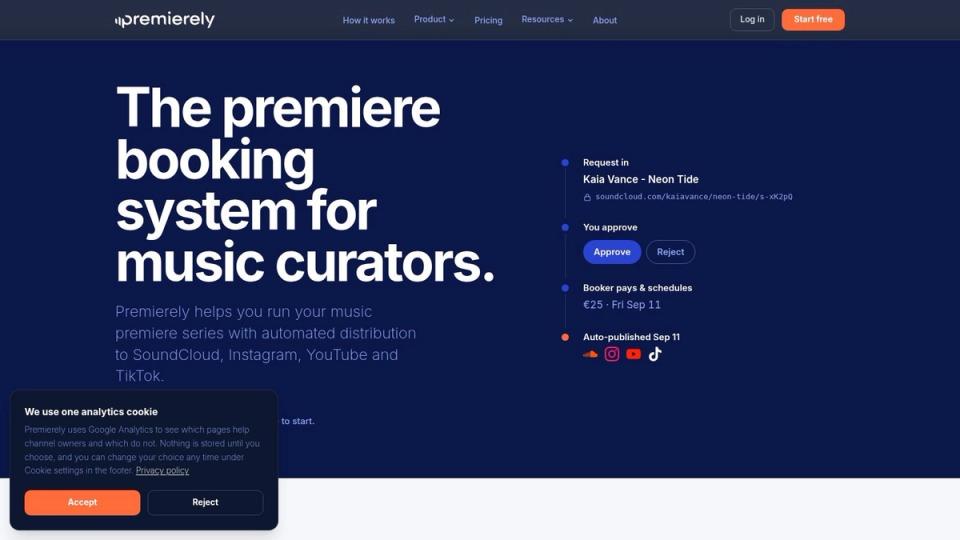
A Friday premiere can mean several jobs after approval: scheduling the track, formatting its details, and preparing posts for other channels. Premierely puts those steps in one booking workflow. Artists choose a curator's premiere, repost, Instagram Story, YouTube video, or TikTok post, then submit the release title, a streaming link, and a short message. The curator sets each service's price or offers it free.
Requests go into a queue for approval or rejection. After approval, Premierely schedules and publishes the promotion to connected channels, formatting titles and descriptions to the curator's conventions. The curator still chooses the music; the system handles the recurring booking and posting work.
YouTube's release-day guidance says official music videos uploaded on the same day as the audio release generate higher subscriber growth and higher views during the first two weeks. For curators offering both audio and video placements, coordinated scheduling can keep those posts aligned. Pro supports distribution to SoundCloud, Instagram, YouTube, and TikTok.
What you still handle after you approve
You still listen and decide. Free and Plus support one distribution channel. Free includes unlimited free bookings and three paid bookings a month; Plus costs €5 a month. Pro costs €10 a month or €100 a year and includes unlimited paid bookings, multiple publications per day, and all four distribution channels.
Download gates can turn free downloads into platform follows. Plus also adds lead capture, including email records the curator owns. A channel directory lets artists filter by genre and service, while curators can browse bookings declined by others in a shared pool.
Gino Gagliardi founded Premierely as an internal tool for his label Märked, which he still runs on the platform. The site reports that administrative work per premiere in that workflow fell from 10 to 20 minutes to under one minute. Premierely suits curators whose recurring work begins after a yes. It does not replace the curator's decision about which tracks deserve a slot.
Practical rule: Set the price, choose who approves, and decide which channels receive each accepted booking.
- The curator keeps editorial control: Requests can be approved or rejected.
- Distribution depends on the plan: Free and Plus support one channel; Pro supports all four.
- The system handles repeat tasks: Scheduling and formatted posts reduce manual work, but the curator still checks the release.
2. Groover sells the artist a reply, not your Friday slot
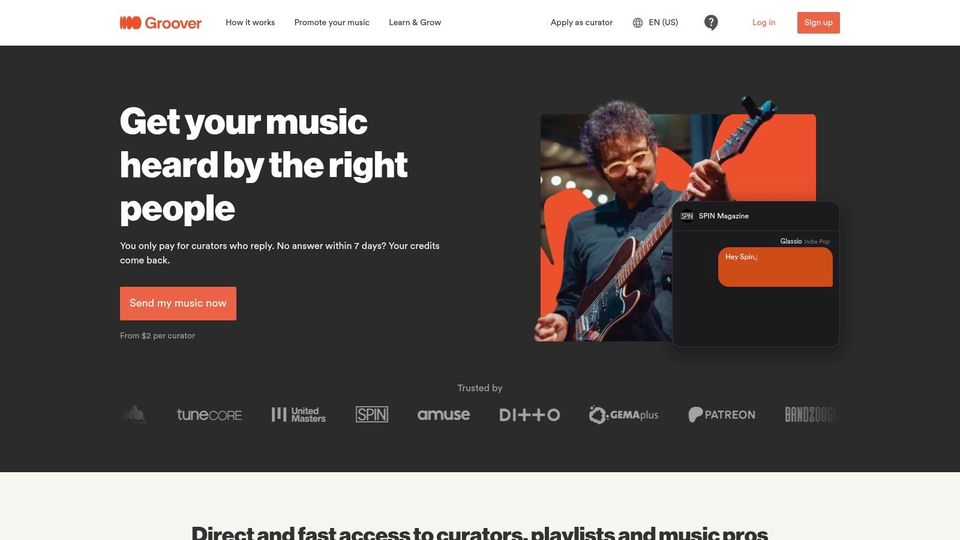
On Groover, the artist buys credits and picks the contact. Playlist curators, blogs, radio stations, and labels are all in the list. Groover says the artist gets the credits back if that contact does not respond within seven days. Submissions are listed from $2 per contact. A reply is not coverage, and it is not a place on your series.
If you are the contact, you still decide. After you answer, Groover does not take your audio, hold your calendar, or post the Story. The artist paid for a listen and a response. You still do the premiere yourself if you want the track.
What each side walks away with
- Artist pays for access: They choose who hears the pitch, and a silence should return the credit.
- You still owe the post: A kind reply does not upload the file or protect the slot.
- Fit matters more than volume: A blog that never covers your genre wastes the credit even when they write back.
I would send an artist here for feedback outside a playlist, and I would not use it to run a weekly repost channel.
3. SubmitHub lets the artist pick the inbox
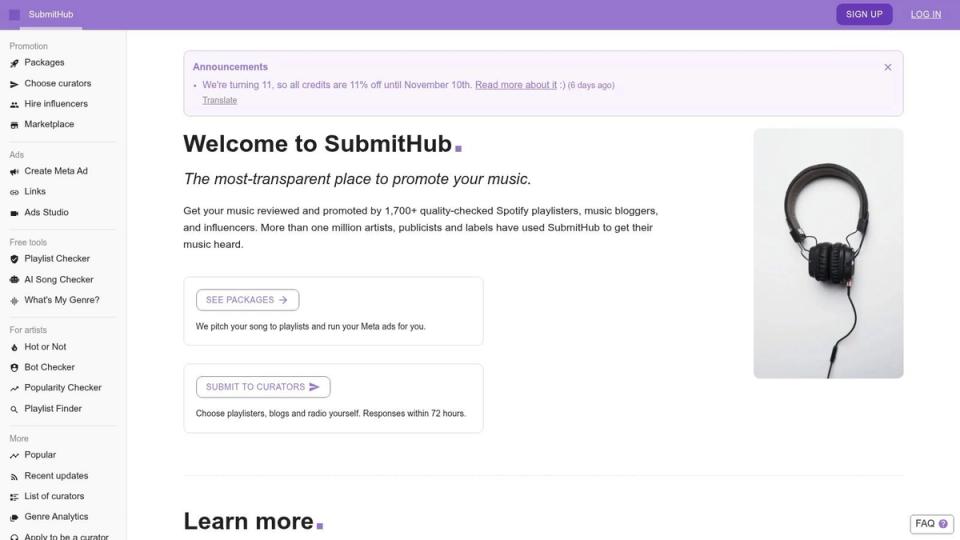
SubmitHub connects artists with independent curators, blogs, labels, and influencers. The artist picks the person, then uses a free standard submission or a paid premium one. Paying buys consideration. It does not buy acceptance. The artist can also watch whether someone opened the track.
The field behind those inboxes is crowded. MIDiA Research reported that self-releasing artists on services such as Amuse, CD Baby, DistroKid, and TuneCore generated US$2.0 billion in 2024, and that this segment reached 8.2 million artists. A curator who accepts every premium pitch will bury the channel. A curator who ignores the queue will get a bad name for a fee they did not design.
You still curate after the ping. SubmitHub will not format your SoundCloud title or stop two premieres landing on one Friday. Use a free submission to test a contact. Spend premium credits only after you read what that outlet covers.
4. Musosoup opens one campaign to many kinds of coverage
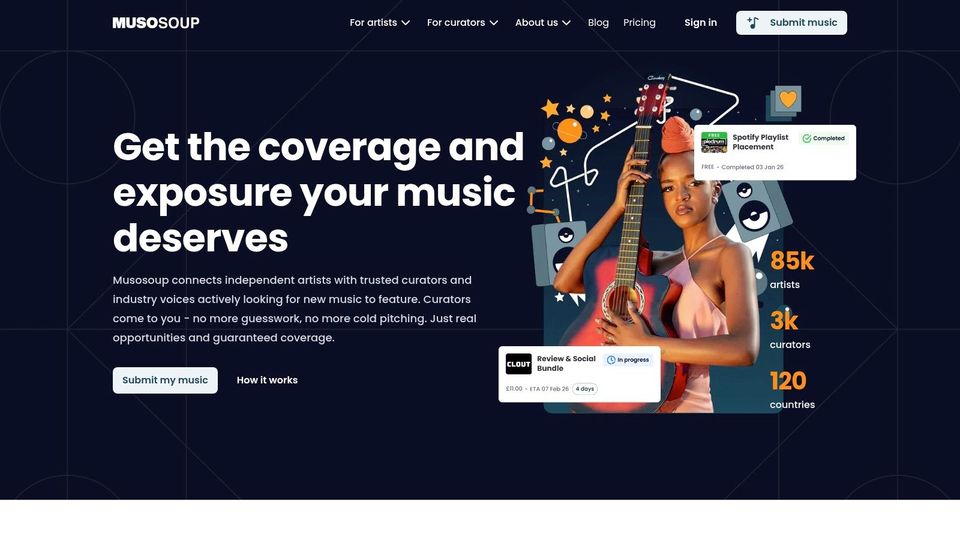
Musosoup is a campaign marketplace. The artist submits for free. Someone reviews the track. If it is accepted, the artist pays a campaign fee so blogs, playlists, radio, and other curators can see it. Curators may offer a review, an interview, a feature, or a social post. The artist can refuse the paid extras. The campaign fee does not make every offer free. The service says it refunds that fee if no coverage arrives.
Streaming is where the money sits, so a blog hit still has to point at listening. The IFPI 2024 market note says streaming generated US$20.4 billion in 2024, 69.0% of recorded-music trade revenue. A write-up with no link to the release is a dead end.
If you join as a curator, you still choose the offer and you still publish it on your own channel. Musosoup does not run your premiere calendar. I would use it when one release needs several kinds of coverage, and I would read each offer before paying for it.
5. Playlist Push runs a paid Spotify or TikTok push
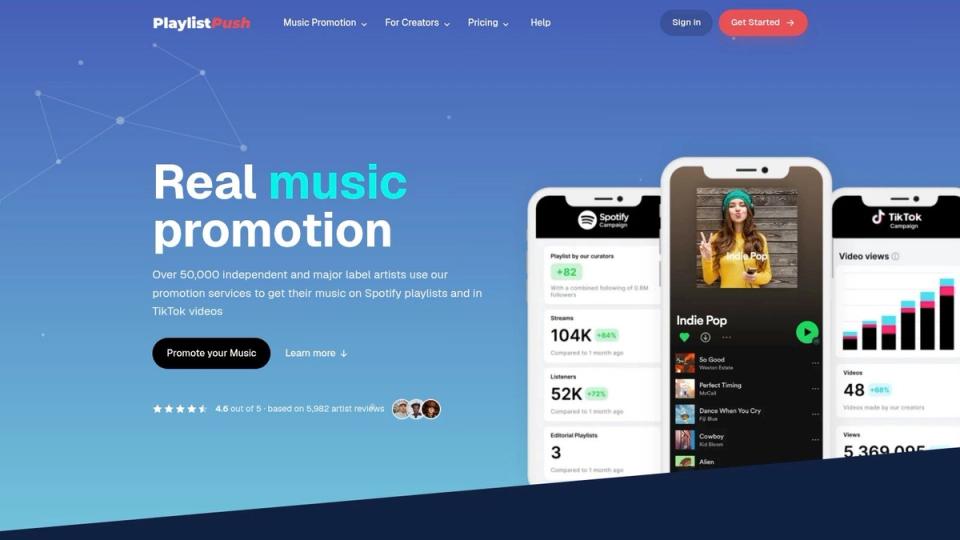
Playlist Push is a campaign the artist, manager, or label buys. It submits the track to Spotify playlist curators or, in a separate campaign, to TikTok creators. You set genre and goals. They report across a set campaign window. Spotify campaigns start at $280. A calculator sets the price expectation. Placement is not guaranteed, and a playlist add does not mean the listener comes back.
Fraud is the reason you should ask how any stream number is made. MusicPulse notes that Spotify removed more than 75 billion fraudulent streams in 2024, and that suspicious activity can also affect recommendation eligibility. Guaranteed stream totals are a warning, not a feature.
For your own series, this service does not fill the queue or post the premiere. Compare it with a curator-side Spotify playlist workflow if the goal is your channel, not a one-off campaign. The curator on the receiving end still decides whether the track fits.
6. Repost Exchange trades community reposts on SoundCloud
Repost Exchange is built around SoundCloud community activity. Artists earn credits by reposting and engaging with other members, then spend those credits on reposts, campaigns, or feedback. Buying credits is another option. Free participation costs time: artists have to engage with other members to earn credits.
For a curator, a community repost and an editorial premiere serve different purposes. The artist spends credits or money to seek community promotion; you still decide whether a track fits your channel. If you accept it for your own SoundCloud series, you also need the right audio file. SoundCloud's upload requirements list accepted file formats and recommend stereo audio at 16-bit/44.1 kHz or higher, with about −0.5 to −1 dBFS of headroom.
A technically suitable file can still be the wrong fit if your audience does not match the genre. Artists weighing paid SoundCloud repost options can read this SoundCloud repost service breakdown before spending on a community whose listeners may not match their fans.
7. DailyPlaylists is a small test, not a full campaign
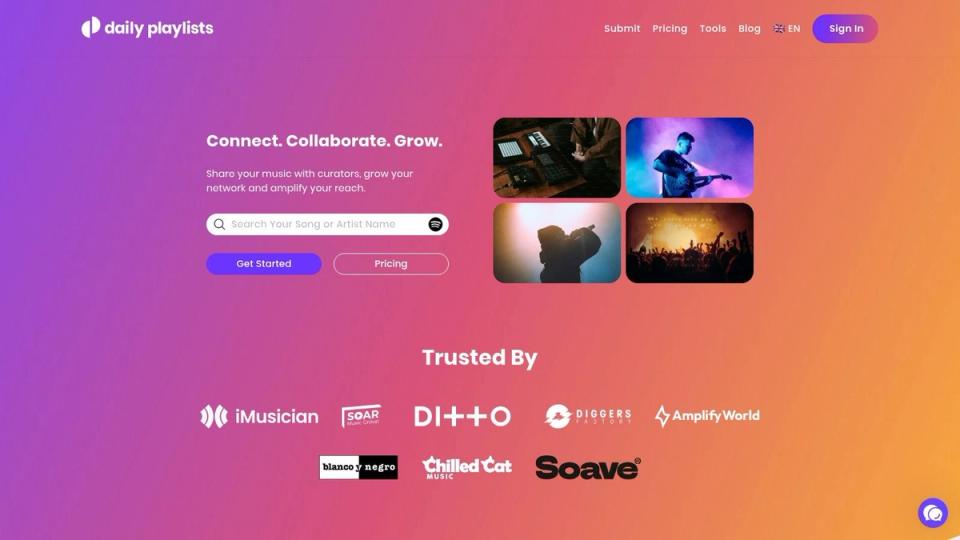
DailyPlaylists connects artists with independent Spotify playlist curators. There is a free standard submission and a paid premium one. Premium is meant to get a response, not an add. The curator still decides. The site also has playlist discovery, feedback, and playlist trades.
Small audiences are normal, so a cheap test beats a huge buy. The Xposure Music industry report says 53.3% of Spotify artists have fewer than 500 monthly listeners, while 64.4% of independent artists named money as their leading challenge and 55.6% named building a fanbase. A playlist add that does not match the city or the genre will not fix either problem.
What to check before you pay
- Response is not a placement: Read that line before you buy premium.
- Playlist quality is your job: Look at recent tracks and whether real people save them.
- Your series is separate: This will not schedule your SoundCloud premiere or your TikTok.
I would spend a few free submits here to see if a genre matches. I would not treat it as the whole release plan.
8. SoundCloud Promote buys reach inside SoundCloud
SoundCloud Promote is SoundCloud's own promotion for eligible creators. It can show a track to listeners who do not follow you yet. You read the result in SoundCloud analytics. Artist plans bundle other creator tools, and the tools change by plan. Access depends on eligibility. Paid reach does not promise a long-term listener.
Rights are the curator's problem even when the artist already paid for the song somewhere else. SoundCloud's upload guidance says buying or downloading a track does not give you permission to upload it or make it public. You need the rights holder. If the track is already on the artist's official SoundCloud, a repost is the cleaner path.
This spend stays inside SoundCloud. It will not post your YouTube video or your TikTok. Artists weighing native ads against a curator premiere can compare notes in this SoundCloud promotion service guide. Use the ad to test a track you already host. Keep the editorial slot for music you chose.
9. YouGrow Promo bundles pitching and ads
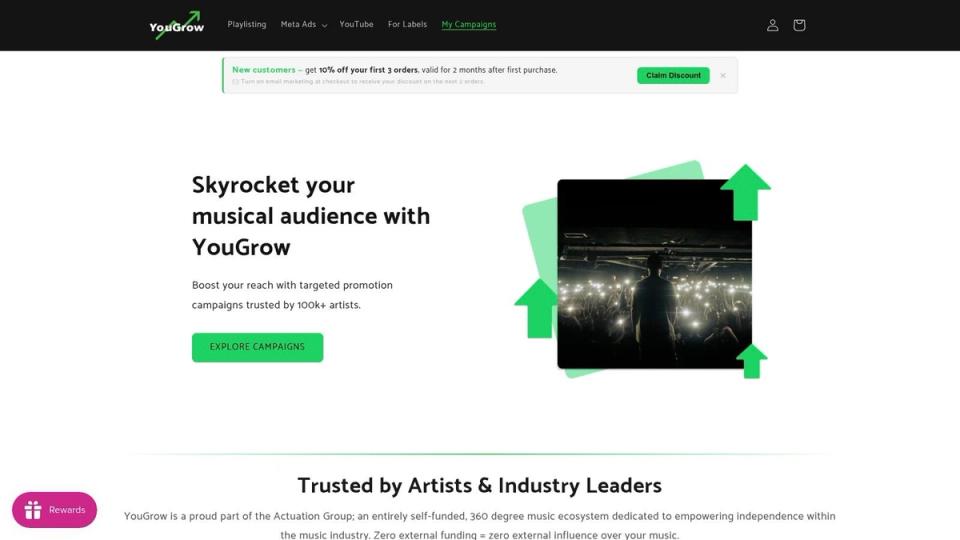
YouGrow Promo offers Spotify playlist pitching plus Meta ads, YouTube promotion, and TikTok promotion. Some Spotify packages show a public price. Other services are custom. The company describes direct curator pitching and updates from a campaign manager. You should ask how any advertised stream range is produced. A stream target is not a fan, and it is not proof the audience matches the record.
Listeners already hop channels. IFPI's 2023 global study found that 74% of respondents discovered a new artist at least weekly. That supports a campaign with a short video and a streaming link. It does not mean every package that names TikTok and YouTube will find the right people.
Ask which curators or ad sets will run, what is refundable, and what report you get when it ends.
If you are the curator, none of this schedules your series. The artist pays YouGrow. A playlist curator or an ad account still has to accept the creative. You still upload your own premiere if the track belongs on your channel.
10. Indie Music Academy mixes campaigns with teaching
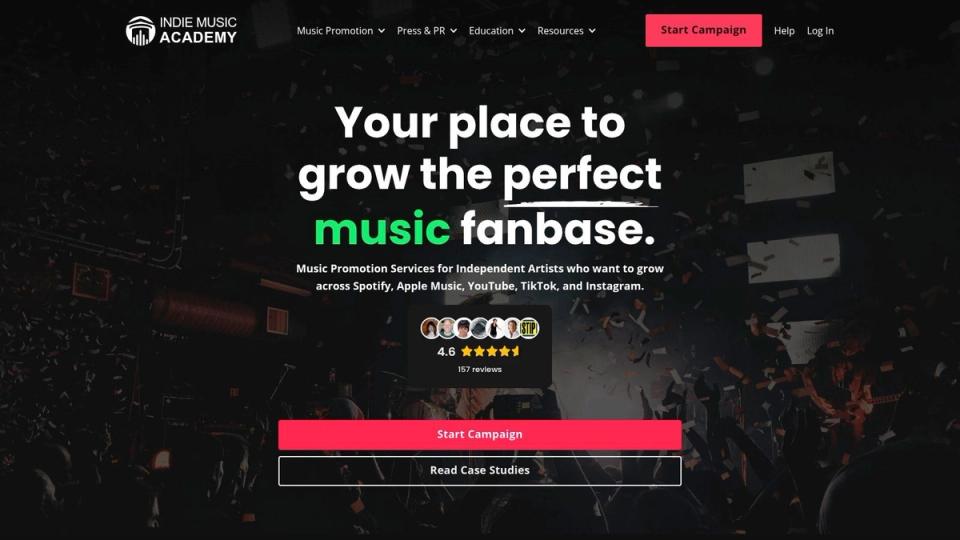
Indie Music Academy sells promotion and education for independent artists and labels. Options include Spotify promotion, TikTok creator posts that use the song, YouTube video ads, and wider campaign help. Some campaign types describe a refund if a suitable placement or influencer cannot be secured. Costs, applications, and terms change by product. Some prices only show up after you apply.
Views are a weak finish line. Luminate's 2025 midyear report found that 18% of U.S. music listeners qualified as super fans by engaging with artists or music in at least five different ways. A TikTok play or a YouTube view is one action. It does not save the track, follow the channel, or join a list you own.
You still judge the method. A playlist pitch, an influencer post, and a video ad are different jobs with different guarantees. If you run the channel, this service does not approve your queue or collect the artwork after the yes. I would read the refund line for the exact campaign type before anyone pays.
How the services compare on audience, free options, pricing, and channels
The key difference is who pays and what happens after approval. Premierely supports a curator's own booking series; the other services connect artists with curators, media, platforms, or campaign providers.
| Item | Best for | Free option | Pricing model | Channel focus |
|---|---|---|---|---|
| Premierely | Curators managing premiere bookings and publishing | Unlimited free bookings; three paid bookings monthly | Free, Plus €5/month, Pro €10/month or €100/year | SoundCloud, Instagram, YouTube, TikTok |
| Groover | Targeted outreach to music professionals | Paid submissions | Paid credits; submissions from $2 per contact | Playlists, blogs, radio, labels |
| SubmitHub | Targeted submissions to independent curators and media | Free standard submissions | Free standard or paid premium submissions | Curators, blogs, labels, influencers |
| Musosoup | Multi-format music coverage campaigns | Free submission; campaign fee applies after acceptance | Campaign fee plus optional paid offers | Blogs, playlists, radio, influencers |
| Playlist Push | Managed Spotify or TikTok promotion campaigns | Paid campaigns only | Paid campaigns; Spotify campaigns start at $280 | Spotify, TikTok |
| Repost Exchange | SoundCloud promotion and creator networking | Free participation; earn credits through activity | Earned or purchased credits; paid plans available | SoundCloud |
| DailyPlaylists | Testing Spotify playlist outreach | Free standard submissions | Free standard or paid premium submissions | Spotify playlists |
| SoundCloud Promote | Promoting tracks within SoundCloud | Access depends on plan and eligibility | Plan-dependent promotion tools | SoundCloud |
| YouGrow Promo | Managed promotion across streaming and social channels | Paid packages only | Public packages and custom pricing | Spotify, Meta, YouTube, TikTok |
| Indie Music Academy | Artists comparing campaign types and education | Paid campaigns and courses | Campaigns and courses; pricing by quote | Spotify, TikTok, YouTube, advertising |
For curators, Premierely puts the booking, payment, approval, and publishing workflow in one system. For artists, the other options mainly sell submissions, credits, campaigns, or access to promotion providers. Free submissions and participation can reduce the upfront cost, but they still require the artist to choose a target and the recipient to decide whether to act.
Choose the service that matches who pays and who decides
Start with the step that eats the week. If you run a premiere or repost series, the costly part is usually the admin after a yes. A booking system with approval, scheduling, and publishing saves more time than another pitching inbox. If you are the artist, pick a service that states what it guarantees and what it does not. Test one small campaign before you spend a full budget.
Ask how the outcome is made, whether a refund applies, and which channels are included. Plus costs €5 per month. Pro costs €10 per month or €100 per year, and Pro renews automatically unless you cancel, so check the renewal date before you commit. Free is enough while you publish on one channel and only take a few paid bookings.
Three questions worth asking first
Who approves the music? On your series, you do. On Groover, SubmitHub, and DailyPlaylists, the contact you pitched does. On a managed campaign, a curator or creator you may never meet does. If you cannot name that person, do not buy the promise.
Who pays? The artist pays you on your storefront, or pays a credit, a campaign fee, or an ad budget somewhere else. A free submission still costs the curator's time. A paid submission still does not force a yes.
Who handles the upload? After you approve, the booker should send audio, art, and text, and the post should go out on the date you set. If you are still downloading files from five apps, the service did not take the admin off your week.
What a good result looks like
Count saves, follows, and replies you can reach again. Do not stop at plays. Email only helps if the address was given freely and you can export it. Open-rate charts disagree with each other, so treat them as a hint, not a scoreboard. A Discovery Music Group summary cites a 45.93% average open rate for music-industry campaigns from MailerLite's 2025 benchmark, and a 27.35% average for entertainment and music from Mailchimp. The gap is why you check the list rules before you trust a vendor's screenshot.
Measure for a few weeks after the post, not only on day one. For an artist under a few hundred monthly listeners, a useful campaign is a relevant save and a repeat listen, not a spike from the wrong country. For you, a useful week is a full Friday with the right files in before you approve the next one.
Match the service to the step that eats your week. Pitching spends the artist's money on someone else's attention. Booking spends it on a slot you control, then still needs a clean handoff from yes to post.
If your week is three chats about one Friday slot, a booking system is the piece that keeps the yes, the payment, and the files together. You set the price or run the slot free, you approve the music, and the booker sends the assets after that yes so the premiere can go out on the channels you connected. See how Premierely handles that queue for a SoundCloud, YouTube, Instagram, or TikTok series.