It's Thursday. The inbox holds twelve pitch replies, three unpaid premiere requests, and a Friday release with no artwork uploaded. You still need to decide which option moves the release forward and which only adds another thread to answer.
Promotion for musicians covers two different jobs. Artists need a way to put their track in front of people who may share or feature it. Curators need the materials and a schedule to publish promotions without letting requests pile up. A 2023 survey by Two Story Melody found that 54 musicians spent an average of 3.6 hours a week on organic social promotion. That effort does not collect missing artwork or book a premiere slot.
This guide compares seven options across both sides of the market: paid pitching services for artists and booking software for curators. For each, the practical questions are what it promises, how much time it takes, and which release step it helps with. None guarantees a hit.
1. You book the premiere before you chase the files
A release booking works better when the offer, price, and request arrive together. On a channel owner's booking page, artists choose a premiere, repost, Instagram Story, YouTube video, or TikTok post, then send the release title, a streaming link, and a short message. Curators can set each service's price or offer it free. Requests enter one queue for approval or rejection.
The public booking page is the front of the system.
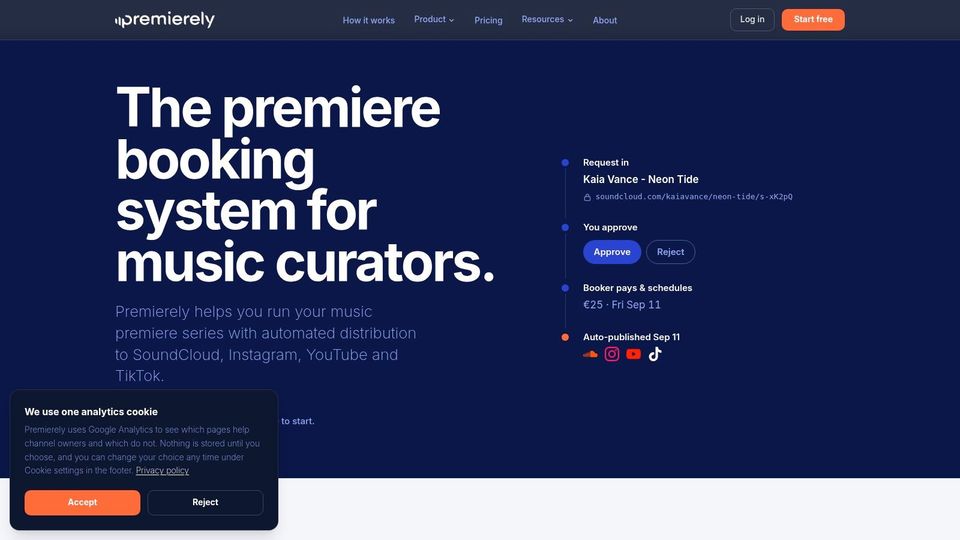
Premierely is a booking and scheduling platform for music curators. After approval, the booker uploads the audio, artwork, and release details. Premierely then schedules and publishes the promotion. It formats each destination for its platform: audio and a formatted title for SoundCloud, a vertical Story for Instagram, a wide video and vertical Short for YouTube, and a vertical video for TikTok.
The plan limits matter before you sell a slot. Free costs €0 and includes unlimited free bookings, three paid bookings a month, one published premiere per day, and one distribution channel. Plus costs €5 a month and also supports one distribution channel. Pro supports all four listed platforms and unlimited paid bookings. A booking calendar helps organize the schedule, but it does not promise that releases will reach an audience.
You still choose the music
Gino Gagliardi built Premierely as an internal tool for his label Märked, which he still runs on the platform. The system handles recurring booking and publishing work. Curators still decide which tracks fit their channels.
Check upload length and account limits before you promise a slot. YouTube treats qualifying square or vertical uploads after October 15, 2024 as Shorts, up to three minutes, and most songs in the Shorts Audio Library can run up to 90 seconds inside a Short. SoundCloud's Artist subscription rules give the Artist plan a three-hour upload limit. Individual uploads can't exceed four gigabytes, and monthly upload time can't exceed 20 hours. A track that breaks an account limit can hold up a scheduled post.
Practical rule: Approve the track first. Then ask the booker to upload the assets for the release you plan to run.
Artists can filter curator channels by genre and service, while declined bookings go into a shared pool other curators can browse. Download gates can turn free downloads into platform follows, and paid lead-capture features collect contact details. These tools help manage submissions and build an audience list. They do not guarantee streams, saves, or new fans.
2. Groover lets you pick who hears the track
You choose blogs, playlist curators, radio stations, labels, and other pros, then spend credits to reach them. Groover returns written feedback in the campaign dashboard. If a recipient doesn't answer within seven days, the credits come back.
The Groover dashboard is where those notes land.
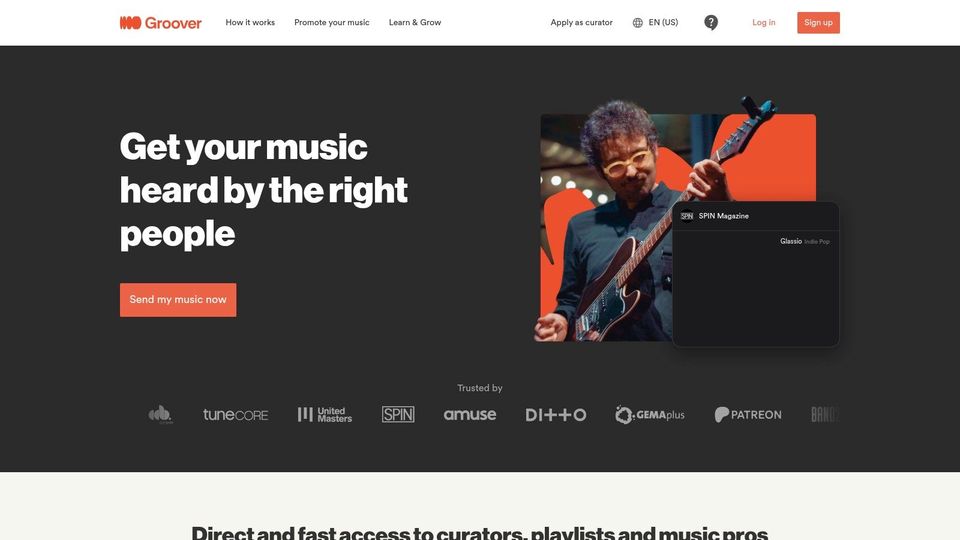
That refund is the genuine promise. A reply isn't a premiere, a blog post, or a playlist add. You are buying a read and a note.
Paid listeners do look for new artists. In IFPI's 2023 study, 44% of respondents who paid for streaming said they discovered at least one new artist every week, and 73% said they listened through licensed audio-streaming services. Groover tries to put your track in front of people who might create that first listen. It doesn't put the track on the service for you.
- Picking names: You check genre fit before you spend a credit.
- Reading notes: Feedback can tell you the track missed. It doesn't mean the curator owes you a slot.
- Stopping early: The bill grows when you message a long list.
I would use Groover when the missing step is "someone credible hears this." I wouldn't use it to fill a premiere calendar. Contact quality changes by genre. A response in seven days is the promise. Coverage isn't.
3. SubmitHub is a menu of outlets you choose one by one
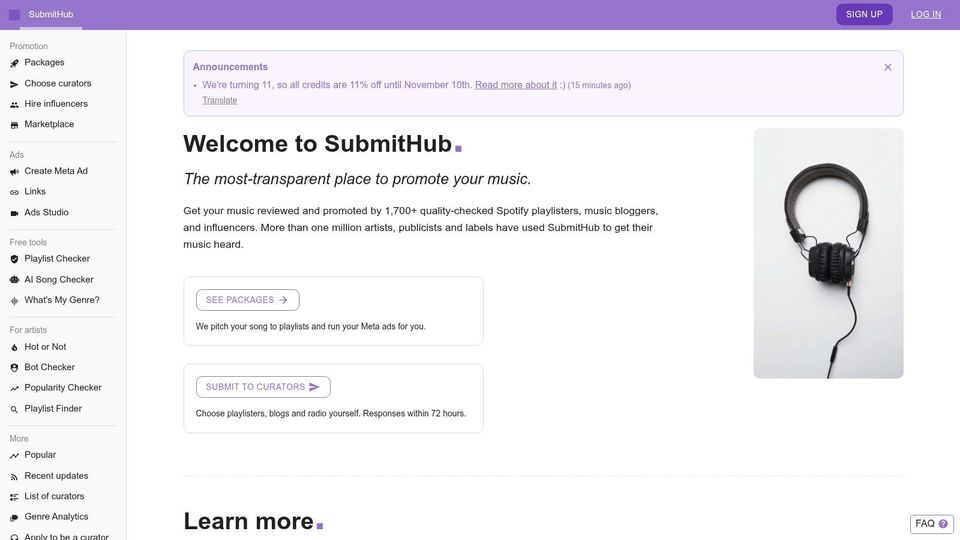
You pitch independent blogs, SoundCloud and YouTube channels, playlist curators, and influencers on SubmitHub. Standard submissions can be free where the outlet allows them. Premium submissions spend credits and come with response rules, including listening time and feedback. A feature still isn't included.
Outlet pages show response patterns before you pay.
Music Business Worldwide cites 106,000 new tracks entering DSPs daily, and says 88% of tracks receive 1,000 or fewer streams a year. A free pitch into that pile is a test, not a plan. A fast responder in the wrong genre wastes the credit the same way silence does.
Hot or Not can earn you some premium credits if you review other people's tracks. You trade your own listening time for more sends.
A premium response means they listened and wrote back. It doesn't mean they posted you.
If you want a wider look at companies that sell coverage, this guide to music promo companies separates pitching desks from channel owners who book a date. SubmitHub sits on the pitching side. You keep control of each outlet, and you also keep the research time.
4. Musosoup shows offers after it accepts the campaign
Submit your release to Musosoup. If the campaign is accepted, you pay a campaign fee. Blogs, playlists, radio outlets, and influencers can then send offers, some free and some paid. You choose which offers to accept, so the final spend can exceed the fee.
The offers come after the fee, not before it.
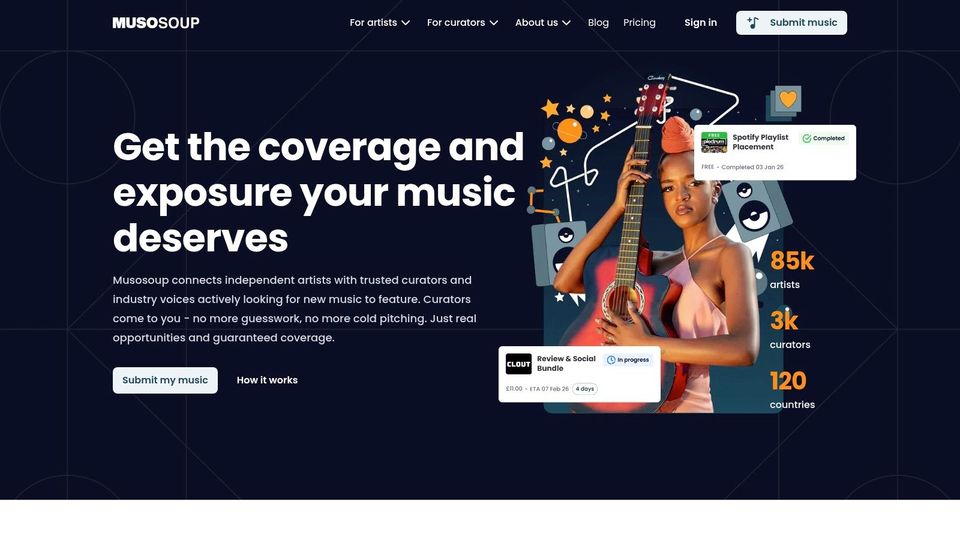
You pay before you see who bites
Musosoup saves you from building a contact list from scratch. In return, you pay before you know which outlets will respond, and acceptance does not guarantee coverage. Each paid offer adds to the campaign cost.
Playlists and social posts can serve different discovery steps. A playlist offer can put a track in front of listeners; a social offer can direct attention to an artist profile or another next step. Before accepting either, decide what you want the placement to do. Reach alone does not show whether listeners will take that next step.
Use Musosoup when finding and contacting outlets is the work you want to avoid. If you already know which curators you want, direct pitching gives you more control over whom you approach and what you spend.
5. Playlist Push prices a Spotify push and a TikTok push separately
Playlist Push offers separate campaigns for Spotify and TikTok. Its site says it has worked with more than 50,000 artists and labels. That history does not promise a placement or a particular audience response.
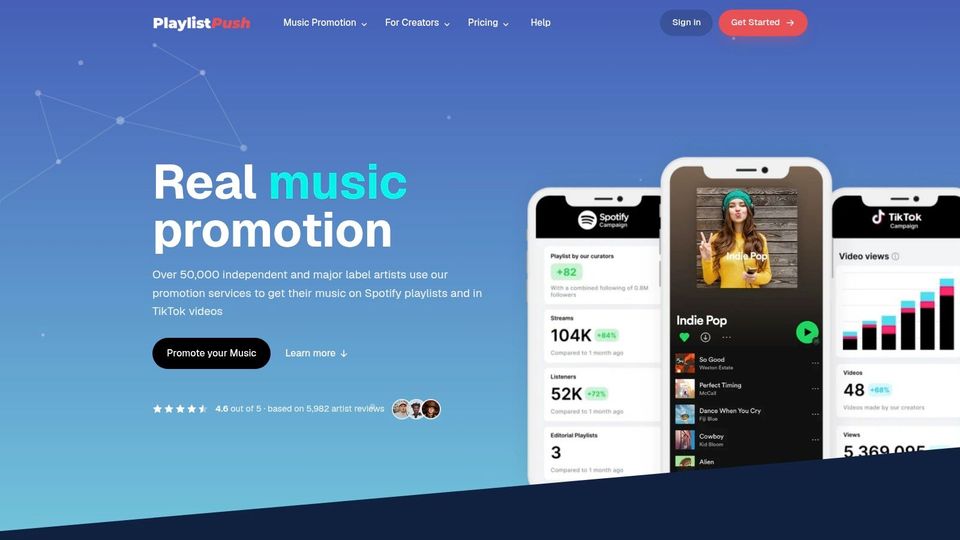
The two routes help at different release stages. A Spotify campaign aims to put a track in front of playlist curators. A TikTok campaign focuses on short-form discovery. Each has a different cost and outcome to assess, so decide what you need before choosing a campaign.
A short video can introduce a song without leading listeners to the full track. MIDiA's research on TikTok discovery found that 26% of people who followed an artist after discovering them on TikTok later listened to more of that artist's music, compared with 45% after a follow on other social platforms. YouTube ranked among the top three discovery sources for 52% of consumers in the research. Treat short-form reach as an entry point, and make sure the full track is easy to find.
For playlist tactics beyond a single campaign, see this Spotify playlist guide. Before paying, compare the campaign's stated cost with the release goal. A high view count alone does not show whether listeners continued to the full track.
6. One Submit sells consideration by the recipient
You add Spotify curators, YouTube channels, TikTok creators, blogs, radio, and labels one at a time on One Submit, and you see a price for each. Curators write reviews. Most submissions buy a listen, not a slot. The exception in the product's own wording is TikTok. Those campaigns promise a featured video on the plan you pick. Playlist adds don't get that promise.
Prices are listed per recipient, so a small test is possible.
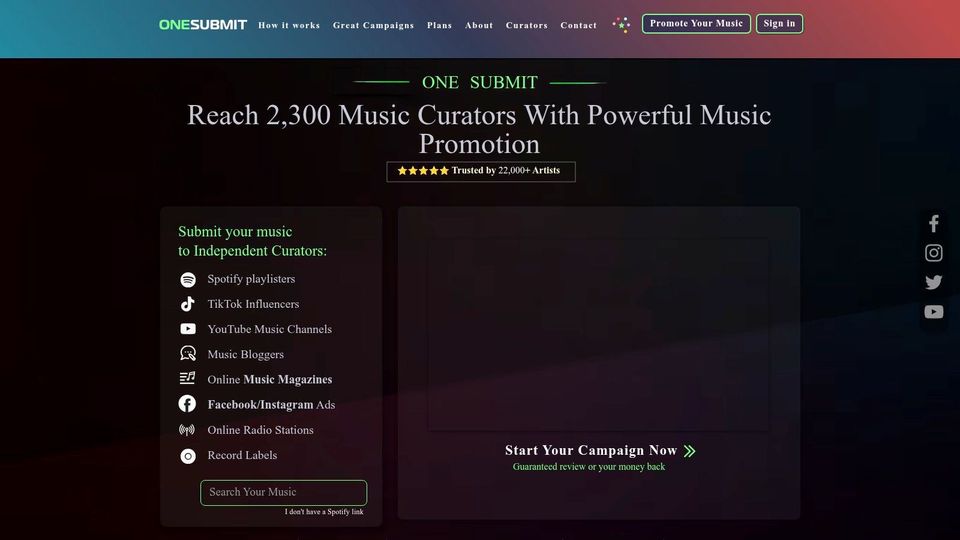
Finished campaigns generally can't be edited or refunded, and some competitive genres set a minimum spend. Build the list small. Ten well-fit recipients beat a wide net you can't undo.
Where someone first hears a song changes what they do next. In a MIDiA survey of 9,019 consumers, 74% of people who preferred streaming as their main discovery environment listened to more of an artist afterward, compared with 48% who preferred TikTok. A YouTube or playlist submission is worth more to me when it can start a full play. A TikTok video is worth it when the plan includes the post, and you still send people somewhere they can finish the song.
7. SoundCampaign bundles playlists, creators, and ads
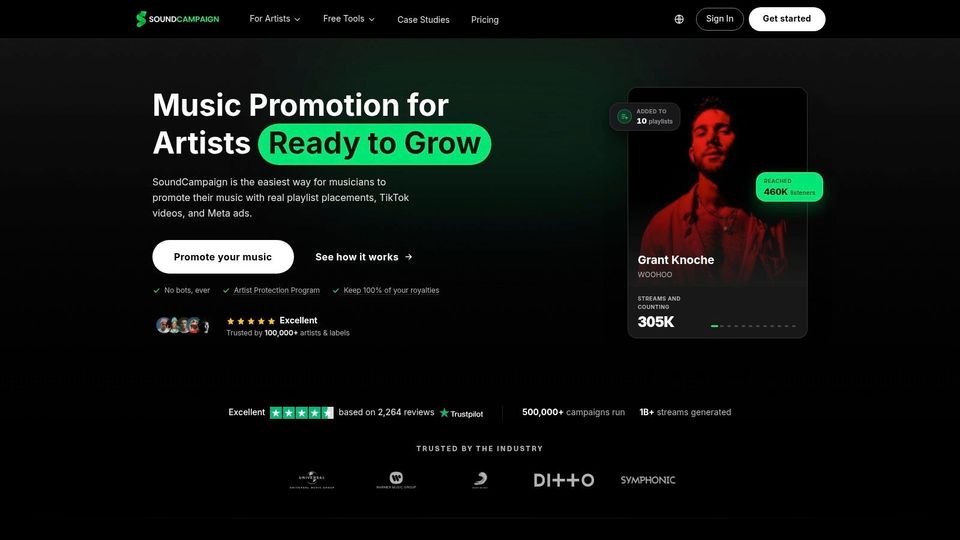
SoundCampaign offers Spotify curator outreach, TikTok creator posts, and Meta ads through one service. Playlist campaigns provide a review, not a guaranteed add or stream count. Your track must already be live on Spotify, and campaigns can be declined. Paid campaigns are non-refundable. If a curator or creator does not review a submission, the Artist Protection Program offers credits rather than a cash refund.
You can choose among three campaign types on the same site.
A Wasserman study of 1,600 music fans across five European markets found that TikTok led social discovery, at 35%, with Instagram at 27%. Those figures support testing a creator post or Meta ad, not assuming an ad has created a fan. Judge your own campaign by saves and repeat plays.
SoundCampaign suits a release that is live on Spotify and needs playlist outreach, creator content, or ads from one provider. It offers less certainty if you need a guaranteed playlist add or a refund after rejection. Curators who prefer SoundCloud reposts to ads can compare a SoundCloud repost service with this approach.
How the seven promotion for musicians options differ
| Item | Main service | Free option | Results guaranteed? |
|---|---|---|---|
| Premierely | Booking and distribution tools for music curators | Free plan available | No; curator approval is required |
| Groover | Paid pitching to music professionals | No free option stated | No |
| SubmitHub | Music submissions to curators and media outlets | Free standard submissions at some outlets | No |
| Musosoup | Release campaigns with offers from curators and media outlets | Free offers may be available; campaign fee applies | No |
| Playlist Push | Paid Spotify playlist and TikTok creator campaigns | No free option stated | No |
| One Submit | Per-recipient music submissions across multiple channels | No free option stated | Generally no; a TikTok plan promises a featured video |
| SoundCampaign | Spotify, TikTok, and Meta ad campaigns | No free option stated | No |
Match each option to the step it helps
Name the step that is eating the week. Finding curators is a pitching problem. Groover, SubmitHub, Musosoup, Playlist Push, One Submit, and SoundCampaign all sell a version of that. Collecting artwork and posting on time is a curator problem. A booking system fits when you already have the channel. A playlist add is neither of those. It is a maybe, after a person says yes.
Start with one release and one option. Write down what you were promised, what arrived, and what it cost in hours and money.
- A credit back: The recipient didn't answer, and you weren't charged for silence.
- A written note: Someone listened. You still don't have a post.
- A featured video: Only count this when the plan said the video was included.
- Files after a yes: The curator step worked if the artwork and audio showed up with the slot.
Keep the record specific. Impressions, full plays, saves, follows, and email opt-ins don't belong in one total. IFPI's 2023 report found short-form video was the top way 16 to 24 year olds engaged with music, cited by 82%, ahead of audio streaming at 72%. Use that to pick a format. Don't use it as proof the format built a fan.
Share the private mix before any of this spend. LinkShip for sharing client mixes keeps that handoff out of a public post. Then pick the option that fixes the step in front of you, and don't add a second invoice until the first one shows a next action you can name.
Questions worth asking before you pay
Does a pitch guarantee a playlist add?
No. The pitching options above sell a review, feedback, or an offer. Read a guarantee only where the product states one, such as a TikTok featured video on a named One Submit plan.
Can you run a free premiere?
Yes. You can price a slot at zero and still approve it in the same queue as a paid booking. Free doesn't mean you skip the artwork check.
What should you count?
Count the next action. A save, a full play, a follow, or an email is a result. A view with no second step is awareness, and you should label it that way.
No service on this list guarantees a career result. If the promise is consideration, pay for consideration. If the promise is a post on your own channels, check that the missing piece was the files and the slot.
If your week is the queue, not the pitch, artists can pay on your page, upload after you approve, and land on the channels you already run. That is the curator side of promotion for musicians, next to the pitching tools above. Open Premierely and set the prices for the premieres and reposts you already know you can post.